
The sensory appeal of baked goods is intrinsically linked to their visual presentation. From vibrant “Galaxy” breads to elegant “Tiffany Blue” macarons, the demand for colorful pastries has never been higher. However, for decades, the industry relied on synthetic FD&C Blue No. 1 to achieve these shades. As the “Clean Label” movement reshapes global food standards, manufacturers are facing a significant hurdle: finding a natural alternative that doesn’t perish in the heat of an oven.
Gardenia Blue for baking has emerged as the definitive solution. Unlike other botanical sources that fail under stress, this pigment provides the industrial reliability required for large-scale production. This guide explores the technical advantages of using Gardenia Blue as a heat stable natural blue in various bakery matrices.
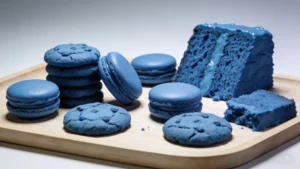
To understand why Gardenia Blue for baking is superior, we must look at its chemical composition. Most natural blues, such as Spirulina (Phycocyanin), are protein-linked pigments. When exposed to temperatures above 60°C, these proteins denature, causing the color to flocculate and fade into a muddy grey.
In contrast, Gardenia Blue extract is produced through the enzymatic biotransformation of geniposide from the Gardenia jasminoides fruit. The resulting blue polymer is not protein-dependent. This molecular resilience is what makes it a heat stable natural blue, capable of maintaining its chromatic intensity even when the internal temperature of a loaf reaches its peak. For R&D managers, this means a reliable plant-based blue for bakery that behaves more like a synthetic dye than a fragile botanical extract.
The primary challenge in any bakery application is the “Oven Factor.” A typical baking cycle involves surface temperatures exceeding 180°C and prolonged exposure to dry heat.
Internal vs. External Stability: While the crust of a loaf undergoes the Maillard reaction (turning brown), the crumb interior must retain the intended hue. Gardenia Blue for baking demonstrates exceptional thermal endurance. Internal testing shows that even after a 30-minute bake at 200°C, the pigment retains over 90% of its color value.
Resistance to Degradation: This heat stable natural blue does not undergo thermal oxidation. This ensures that the blue remains vibrant and “cool” in tone, rather than shifting toward the yellowish-green shades common with lower-quality natural pigments.
One of the most complex variables in baking is the pH of the batter. Ingredients like baking soda, buttermilk, and various fruit acids can swing the pH from highly acidic to moderately alkaline.
When evaluating Gardenia blue vs anthocyanins in baking, the difference is stark. Anthocyanins (found in red cabbage or butterfly pea) are highly pH-sensitive; they turn red in acid and teal or grey in alkaline environments. For a baker making a chemically leavened sponge cake, this unpredictability is a nightmare.
Gardenia Blue for baking is pH-independent. It maintains a consistent blue profile from pH 3.0 to 8.0. Whether you are formulating a tangy sourdough or a high-pH soda bread, this plant-based blue for bakery remains locked in its true blue state. This stability also makes it the preferred pH stable blue for cake frosting, where dairy proteins or cream cheese could otherwise cause color shifting.
Implementing natural blue bread coloring requires a pigment that can survive the biological stress of fermentation.
Yeast Interaction: During the proofing stage, yeast produces carbon dioxide and organic acids. Some natural colors are sensitive to these metabolic byproducts. Gardenia Blue extract is chemically inert toward yeast, ensuring the color does not diminish during the long fermentation cycles of sourdough or brioche.
Crumb Uniformity: Because it is highly water-soluble, Gardenia Blue for baking disperses evenly throughout the gluten network. This prevents “specking” or uneven color pockets, resulting in a natural blue bread coloring effect that is smooth and professional.
For delicate pastries like macarons, éclairs, and shortcrust, color precision is everything.
Macarons: The high sugar content and almond flour base of a macaron require a pigment that doesn’t interfere with the “feet” or the texture of the shell. As a plant-based blue for bakery, Gardenia Blue provides a clean, vibrant aesthetic that mimics the performance of synthetic lacquers.
Frostings and Glazes: Achieving a pH stable blue for cake frosting is often the final hurdle in a clean-label project. Gardenia Blue extract can be pre-blended into the aqueous phase of a buttercream or royal icing. It resists “bleeding” (migration), which is critical for multi-colored decorations where a blue layer sits adjacent to a white one.
By using Gardenia Blue for baking as a primary building block, bakers can unlock a wider spectrum of heat stable natural blue derived shades:
Stable Greens: Blending Gardenia Blue with Gardenia Yellow creates a lime or forest green that survives the oven. This is a massive upgrade over chlorophyll, which turns brown when heated.
Stable Purples: When you mix Gardenia Blue with Beetroot Red, you produce a “Berry” purple that is far more resilient than single-source anthocyanin purples.
To successfully implement natural blue bread coloring or cake tinting in a commercial setting, precision in dosage is mandatory.
Concentration: Typically, a dosage of 0.05% to 0.3% (based on total weight) is sufficient to achieve most target shades.
Preparation: It is recommended to dissolve the Gardenia Blue extract in the liquid component (water or milk) of the recipe before adding dry ingredients. This ensures the plant-based blue for bakery is perfectly homogenized.
Shelf Life: Baked goods colored with Gardenia Blue show excellent light fastness. Unlike some berry extracts that fade under retail LED lights, products using this heat stable natural blue maintain their visual appeal throughout their intended shelf life.