
In the complex landscape of food technology, blue has long been considered the most elusive color. For decades, the industry relied heavily on synthetic dyes such as Brilliant Blue FCF (FD&C Blue No. 1) due to its unparalleled stability and low cost. However, the global “Clean Label” movement has shifted the paradigm. Consumers are increasingly scrutinizing ingredient lists for artificial additives, forcing R&D managers to seek botanical alternatives.
While options like Spirulina Blue (Phycocyanin) and Butterfly Pea Flower have entered the market, they often falter when faced with high temperatures, acidic environments, or prolonged light exposure. In this context, Gardenia Blue has emerged as a high-performance champion, offering a robust physical and chemical profile that makes it the definitive stability leader in the natural pigment sector.
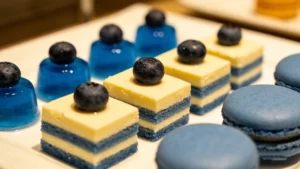
Gardenia Blue does not exist in a ready-to-harvest state in nature; rather, it is a triumph of modern biotechnology. It is derived from the fruit of the Gardenia jasminoides Ellis, a plant with a rich history in botanical extraction.
The process is highly technical:
The Raw Material: The fruit is rich in iridoid glycosides, primarily Geniposide.
Enzymatic Conversion: Through the use of beta-glucosidase, geniposide is hydrolyzed into its aglycone form, Genipin.
Amino Acid Coupling: Genipin then reacts with specific amino-bearing compounds (typically amino acids or hydrolyzed proteins) through a condensation reaction. After oxidation and polymerization, it transforms into the deep, stable blue pigment we utilize today.
This enzymatic biotransformation creates a molecular structure that is significantly more resilient than protein-based pigments like phycocyanin.
One of the primary failure points for natural blues is heat sensitivity. Spirulina is a protein-linked pigment; when exposed to the high temperatures of UHT processing, pasteurization, or baking, the protein denatures, causing the color to fade or flocculate.
Gardenia Blue is not protein-dependent. Its molecular structure remains stable at temperatures exceeding 100°C, and even in sterilization environments of 121°C. This heat resistance makes it the ideal candidate for hard candies, extruded snacks, and high-temp beverage processing where other natural blues would perish.
Most anthocyanin-based pigments (such as purple sweet potato or butterfly pea) are highly pH-sensitive. Butterfly pea, for instance, shifts dramatically from blue to purple or pink when the pH drops below 4.0.
Gardenia Blue offers a rare pH-independent stability. It maintains its true blue hue across a wide range, from pH 3.0 to 8.0. Whether formulated in a neutral dairy product or a slightly acidic functional water, it remains consistent without precipitation or color shifting.
“Photo-fading” is a common issue for botanical pigments on retail shelves. Gardenia Blue’s polymerized molecular structure provides a robust defense against UV and ambient LED light. This ensures that the product’s visual appeal remains intact from the factory floor to the consumer’s hand, significantly extending the marketable shelf life.
Gardenia Blue is not only a standalone pigment but a critical building block for secondary colors:
Natural Green: When blended with Gardenia Yellow or Safflower Yellow, it produces vibrant greens—from lime to forest green—that outperform heat-sensitive chlorophyll.
Sophisticated Purples: When combined with Beetroot Red or Purple Sweet Potato, it creates deep, elegant purples that are more stable in acidic environments than single-source anthocyanins.
As a botanical extract with a long history of use in Asian markets (China, Japan, Korea), Gardenia Blue is increasingly recognized by global brands seeking “Clean Label” status.
For international manufacturers, we provide a transparent supply chain ensuring that every batch meets rigorous standards:
Standardized Color Value (E Value): Ensuring batch-to-batch consistency.
Purity Control: Rigorous screening for heavy metals, pesticide residues, and microbial contaminants.
Documentation: Full support with COA (Certificate of Analysis) and TDS (Technical Data Sheets) for seamless R&D integration.
As processing techniques continue to evolve, Gardenia Blue has reached new heights of purity and flavor neutrality. It is no longer just a colorant; it is a technical solution for formulators who refuse to settle for the limitations of fragile pigments.
Ready to see how Gardenia Blue performs in your specific formula?
Visit our Gardenia Blue to download the latest specifications, application guides, and to request your free sample.