Color value: E140
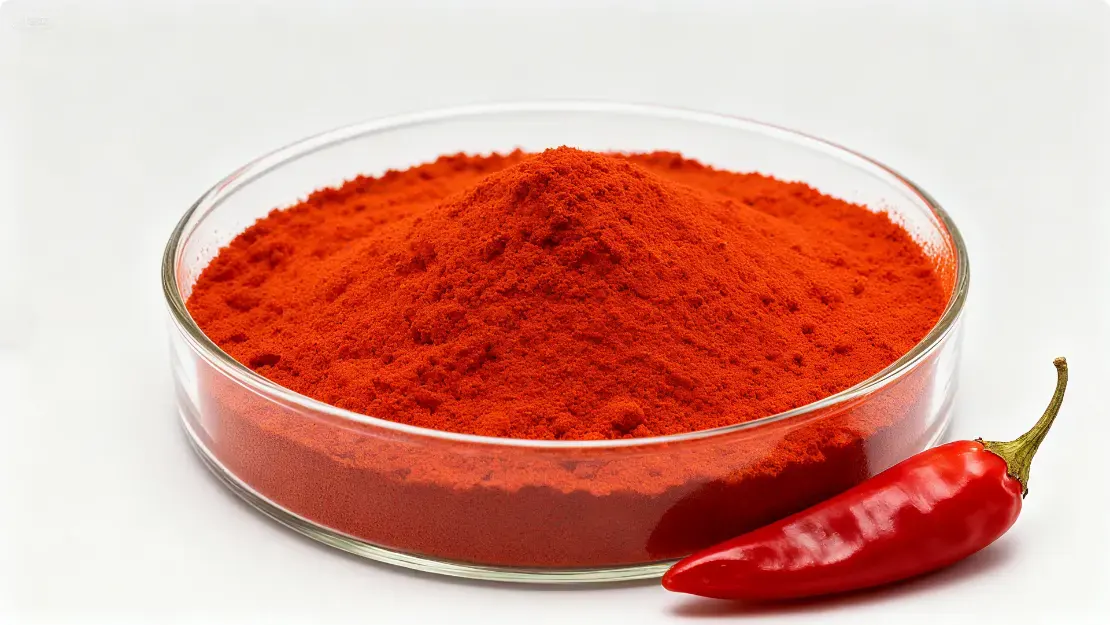
Appearance: Red Fine Powder
Certificate: ISO9001/ISO22000/FDA/Kosher/halal/IFS/BRC
Sample: Free Sample Available
Package: 1kg/Bag, 25kg/drum
In the industrial landscape, Capsanthin stands as the definitive solution for brands seeking a vibrant pigment with exceptional stability. Derived from premium paprika extract, this oil-soluble carotenoid is the primary molecule responsible for the deep reds found in nature.
While many in the industry use generic terms to describe coloring agents, our refined product offers a standardized solution. It allows food scientists to achieve a specific, repeatable natural red color without the variability associated with raw botanical materials. By concentrating the active molecules through advanced distillation, we provide an ingredient that is as potent as it is pure.
For large-scale food manufacturing, the choice of coloring can determine the shelf-life and visual appeal of the final product. While paprika oleoresin is a common industry staple, our concentrated extract provides several distinct technical benefits.
Vivid Tinctorial Strength: Our process ensures a high color value, meaning a lower dosage is required to achieve a brilliant appearance.
Superior Thermal Stability: Unlike many other botanical pigments, this substance can withstand high-temperature processing, including frying and extrusion, without losing its intensity.
Clean Sensory Profile: Through rigorous purification, we eliminate residual pungency, ensuring the ingredient adds beauty without altering the intended flavor.
Achieving a consistent look in oil-based matrices—such as dressings, processed meats, and snack seasonings—has historically been a challenge. The specific structure of this carotenoid solves this by providing excellent oil-solubility and oxidation resistance.
The concentrate is stabilized using natural tocopherols, ensuring that the visual appeal remains vibrant even when exposed to light. As the industry moves further away from synthetic dyes, this plant-based alternative provides the high-definition tones that modern consumers demand under a “Clean Label” designation.
The journey from field to formula involves sophisticated technology. Our paprika oleoresin is produced using a closed-loop, low-temperature extraction process. This method preserves the delicate structures, preventing the thermal degradation that often occurs in lower-quality production lines.
We offer several standardized formats of this natural red color:
Oil-Soluble Liquid: The standard for oils, fats, and meat emulsions.
Water-Dispersible Emulsions: Perfect for achieving vibrant tones in aqueous systems like sauces.
High-Stability Powders: Ideal for dry seasoning mixes and snack coatings.
Processed Meats & Plant-Based Meat: Provides a succulent, realistic hue to sausages and burgers that remains stable during cooking.
Snack Food Industry: The go-to solution for spicy seasonings and chips where consistent coloring is required.
Dressings & Sauces: Ensures a rich, appetizing appearance in mayonnaise-based dressings and chili oils.
Nutraceuticals: Beyond coloring, the pigment is increasingly researched for its antioxidant properties, adding value to functional supplements.
Antioxidant Synergy: For products with long shelf-lives, combining it with rosemary extract can further shield the hue from oxidative stress.
pH Stability: Unlike anthocyanins, this pigment maintains its hue across a broad pH range, making it highly reliable for diverse food systems.
Dosage Precision: Because the concentrate is highly powerful, we recommend precision dosing to maintain batch-to-batch consistency.
Regulatory Compliance: Fully compliant with FDA and EFSA (E160c) guidelines.
Ethical Sourcing: We partner with growers who utilize water-efficient irrigation and non-GMO farming practices.
Certifications: Every batch of our Capsanthin is Non-GMO Project Verified, Halal, and Kosher certified.
Paprika oleoresin is the broad industry term for the extract, and capsanthin is the specific red carotenoid that carries the colour. Our product is standardised to high levels of that carotenoid, so the colouring power is repeatable instead of varying with the raw botanical. Both names describe the same family of material; the difference is how tightly the active molecule is fixed on the specification.
No. The refining process removes the capsaicinoids, the compounds responsible for the heat, leaving a de-pungent colourant that is tasteless and odourless. Residual pungency is eliminated through purification, so the ingredient adds colour without altering the intended flavour.
Three standardised formats: an oil-soluble liquid for oils, fats and meat emulsions; water-dispersible emulsions for aqueous systems such as sauces; and high-stability powders for dry seasoning mixes and snack coatings. The form decides how the material disperses in your matrix, so it is worth fixing before the colour value is quoted.
Yes. It is used to give sausages and burgers a succulent, realistic hue that remains stable during cooking, and the pigment withstands high-temperature processing including frying and extrusion without losing its intensity. In oil-based matrices such as meat emulsions it also brings good oil solubility and oxidation resistance.
Store it in a cool, dark place away from direct sunlight and oxygen to maintain maximum potency. The concentrate is stabilised with natural tocopherols, and where a long shelf life is required it can be combined with rosemary extract to shield the hue from oxidative stress.
Paprika oleoresin is authorised as a colour in all six markets below, and the number attached to it changes at each border: a CFR listing in the United States, E160c in Europe, an existing additive in Japan, an INS number in Korea and Southeast Asia. The oleoresin and paprika powder are also separate entries in the United States, which is where specifications most often go wrong.
Request a quote: send your specification, target volume and destination port and we will come back with a grade recommendation, a sample offer and pricing.