
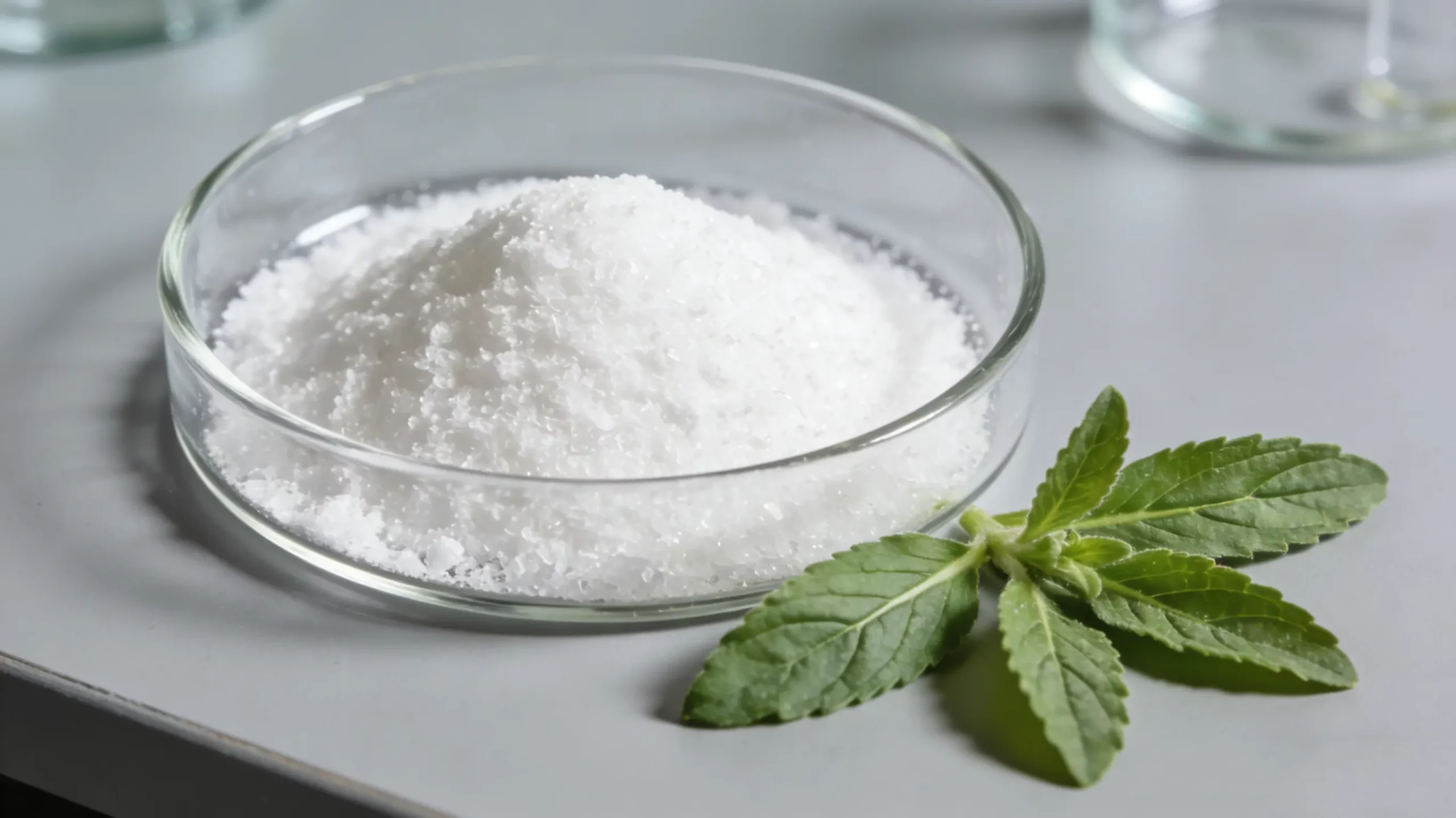
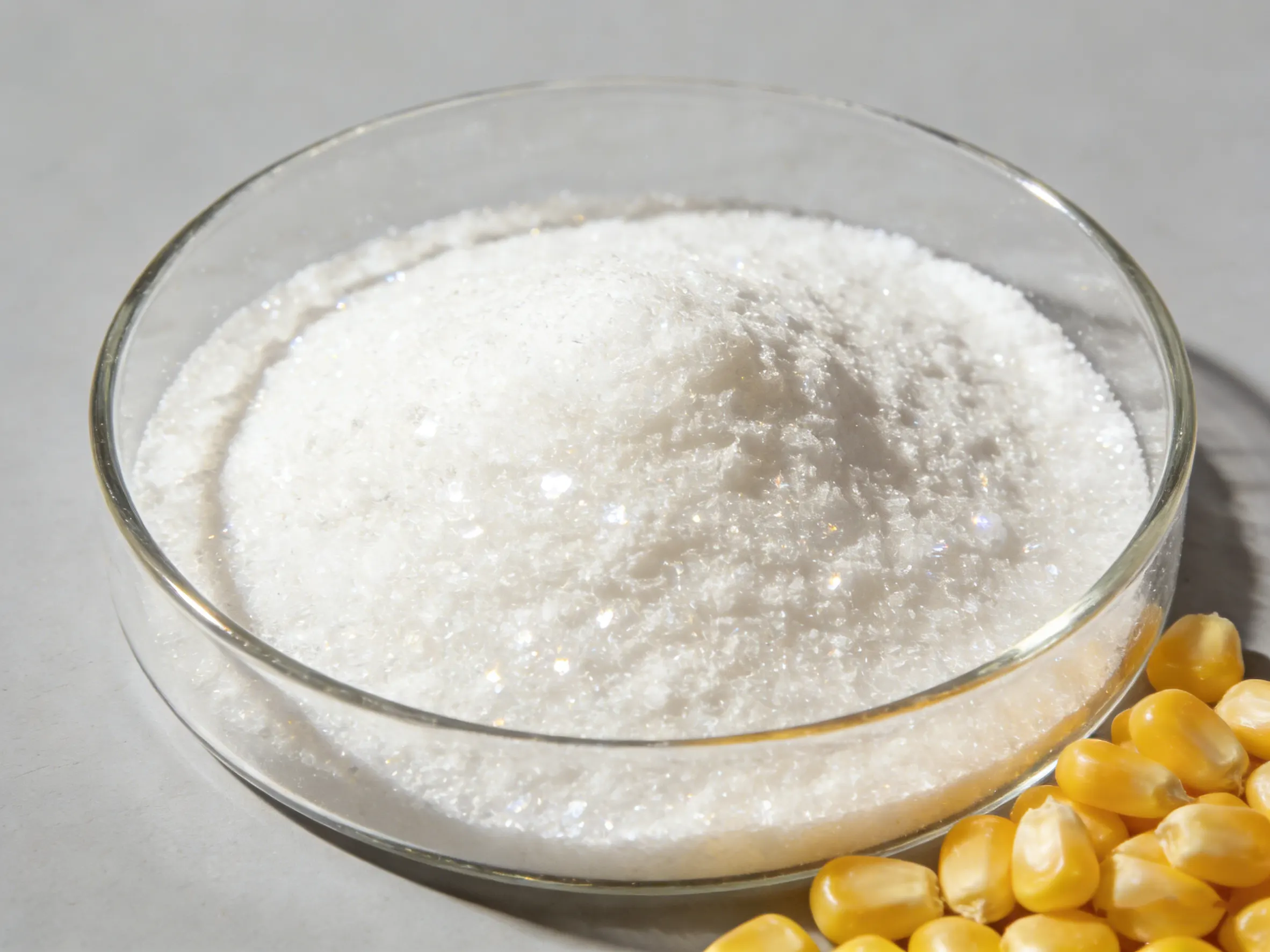
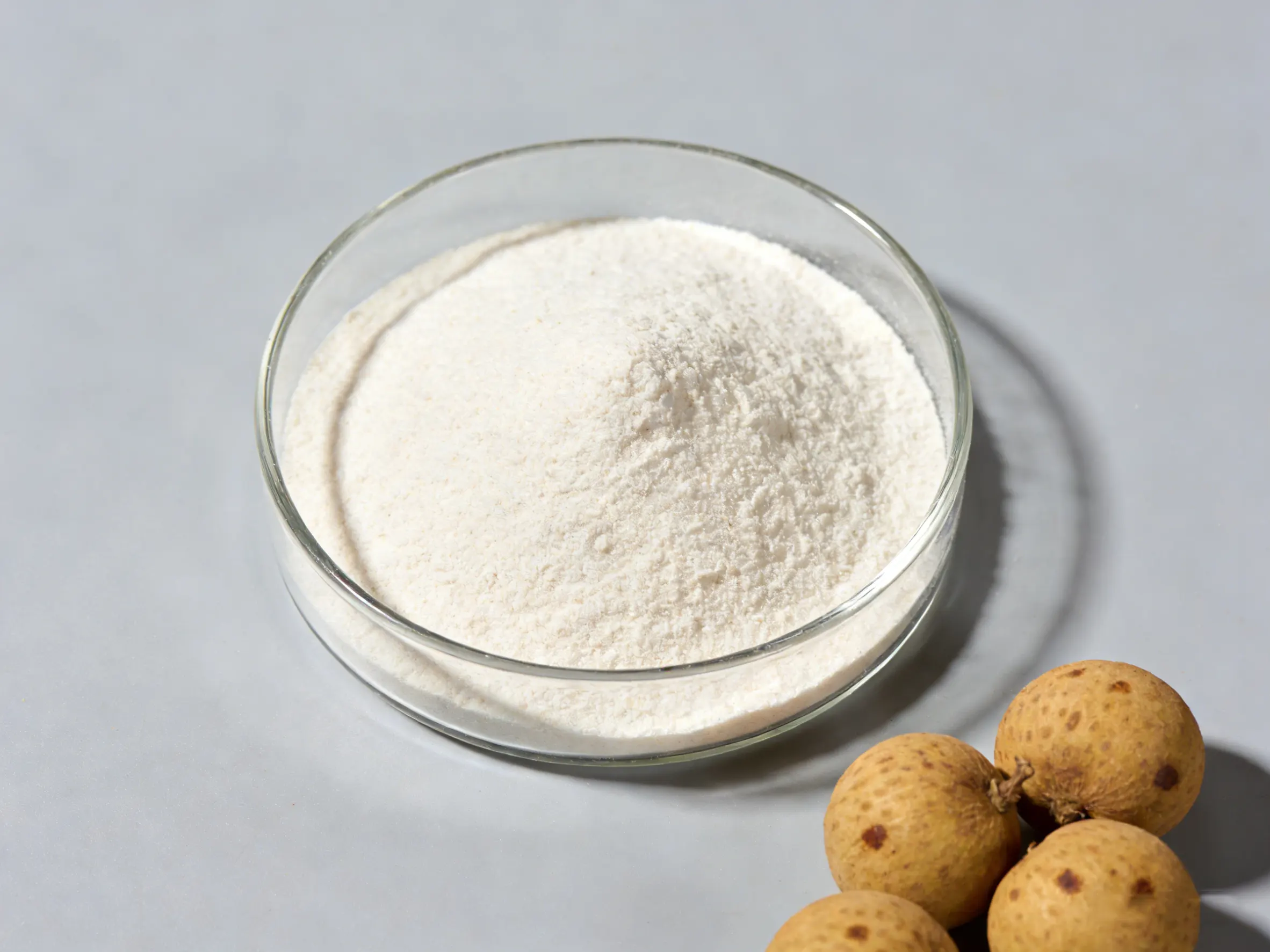
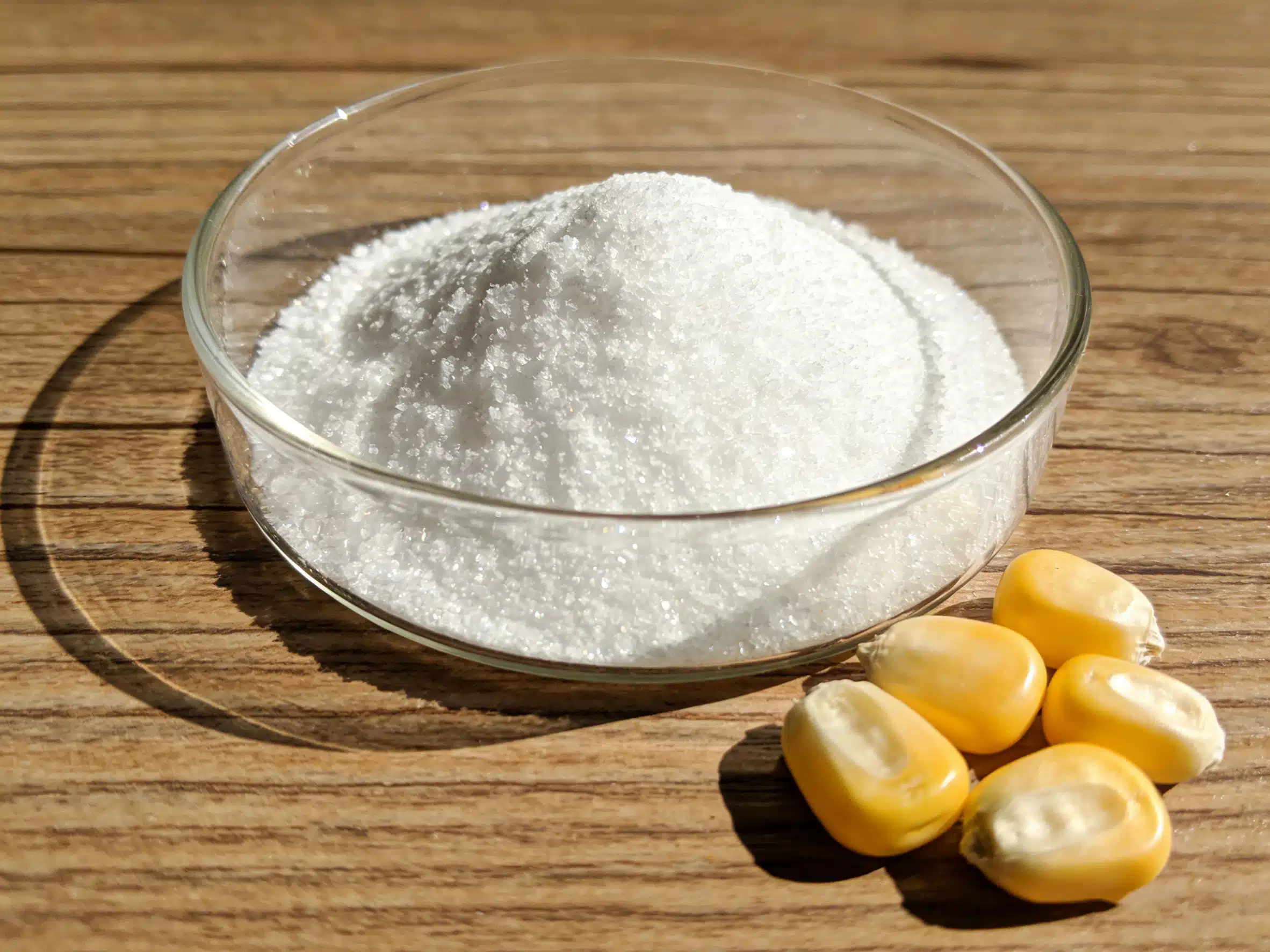
In most formulas sugar is not only a sweetener. It adds bulk, it carries texture and mouthfeel, and it browns. Replace it with a single high-intensity sweetener and you fix the sweetness while quietly breaking the other two. That is where reformulation projects usually stall, and it is a formulation question rather than a supply question.
We supply four sweeteners that cover different parts of it: stevia extract, monk fruit extract, erythritol and allulose. Here is how they divide the work, and how to choose between them.
A brief that says "cut sugar by 30%" tells a supplier almost nothing useful. What matters is which of sugar's three functions you are willing to lose, and which your product cannot do without. A soft drink can lose all three with a high-intensity sweetener and need no bulk at all. A chocolate bar cannot lose bulk or it will not mould, and a biscuit cannot lose browning or it will not look baked. Those two products cannot be solved with the same material, even if both carry a "reduced sugar" claim.
So the first useful question is not "how much sugar do you want to remove" but "which function of sugar does your product depend on most". That answer usually narrows the choice to one bulk sweetener and one high-intensity sweetener before any tasting happens.
| Sweetener | Sweetness vs sucrose | Adds bulk or body | Usual job in the formula |
|---|---|---|---|
| Stevia extract, steviol glycosides | approx. 200–300 times | No | Zero-calorie sweetness base, beverages |
| Monk fruit extract, mogroside V | approx. 150–250 times | No | Clean-label sweetness, used to soften a stevia finish |
| Erythritol | approx. 0.6–0.7 times | Yes | Bulk for chocolate and bakery, with a cooling effect |
| Allulose | approx. 0.7 times | Yes | Bulk plus browning where sugar was doing Maillard work |
Those are typical ranges rather than specifications. We standardise to the assay you need and send the COA, so your R&D can dose from real numbers instead of assumptions.
Stevia has a reputation for bitterness, and almost every case we see is solvable without changing the sweetener family. High-purity extracts are dominated by one glycoside, usually Reb A, which can read bitter or lingering at higher use levels. Material richer in Reb M or Reb D tastes rounder. Adjusting the ratio, reducing the dose and letting monk fruit carry part of the load normally resolves it. Where a customer has already concluded that "stevia does not work for us", the fix is usually in the blend rather than the ingredient.
The same applies to the cooling sensation many people notice with erythritol. It is a genuine property of the material, and it is an advantage in some products and a problem in others; the answer is to choose the bulk sweetener by the target mouthfeel rather than by habit.
Bulk sweeteners are not interchangeable on tolerance either. Erythritol is absorbed before it reaches the colon, so it is generally the best tolerated of the sugar alcohols and rarely causes the laxative effect that sorbitol and maltitol are known for, though it can still produce a cooling sensation at high levels. Allulose is handled differently again and is normally well tolerated in the amounts used in confectionery and beverages.
That matters commercially rather than only technically, because several destinations require a polyol statement once a product exceeds a defined threshold, and some retail buyers will refuse a recipe carrying it outright. Where the item is eaten in large portions — ice cream, chocolate, a full-size beverage — the tolerance ceiling can therefore cap the sweetness level long before the tasting session does. Settle that figure early, since it decides whether erythritol and allulose are usable at all.
If the item claims reduced calories, sugar alcohols or a low glycaemic response, say so at enquiry. Permitted wording and the thresholds behind it differ across destinations, and building the blend around them costs less than amending packaging later.
The practical step most reformulation projects skip is the sweetness equivalence calculation. If a syrup formula carries 10% sucrose and you want that sweetness from stevia at roughly 250 times the strength, the starting point is about 0.04% stevia, then adjusted up or down because high-intensity sweeteners rarely taste linear against sucrose across the whole curve. They tend to be relatively weaker at high sweetness targets and stronger at low ones, and the effect concentrates at the front of the sip rather than through the finish.
That non-linearity is why a blend usually beats a single material. A small proportion of monk fruit alongside stevia lengthens the sweetness so it reads closer to sucrose, while allulose or erythritol fills in the body that the high-intensity component cannot supply. Getting the sweetness curve right is a sensory exercise, and it is the part of the project where a supplier who can blend is worth more than one who can only ship drums.
Keep a record of the equivalence figures you settle on. When the buyer later asks for a 20% sweetness increase, or moves the product from a 500 ml to a 330 ml format, the calculation starts from a known reference instead of from scratch.
A sample proves what a material can do. A bulk order has to prove that the next twenty tonnes will do the same thing, and that is a different question. Three of them come up only once quantities get real: how far the assay is allowed to drift between lots, how the material is packed and moved, and which documents have to travel with it.
The headline assay usually stays inside a declared range — a steviol glycoside extract sold as 95% normally ships within a couple of points of that figure, and a 60% mogroside V extract behaves the same way. What moves more is the composition sitting inside that number. Two stevia lots at identical total glycoside content can taste different if the ratio of Reb A to Reb M has shifted, because those two glycosides carry bitterness and lingering sweetness differently. A specification that fixes only the total is satisfied by material your sensory panel may still reject.
That is why the glycoside profile belongs in the specification, not just the assay. The same reasoning applies to any extract defined by a marker compound: state which marker, at what level, and what the acceptable range is. And ask whether the COA is issued per lot or per production campaign. Only a per-lot certificate carrying a batch number and a test date lets you trace a complaint back to something specific.
High-intensity sweeteners and bulk sweeteners are bought on completely different rhythms, and treating them the same way at enquiry is a common source of delay.
| Product type | Typical inner pack | Typical outer pack | Ordering rhythm |
|---|---|---|---|
| Stevia extract, monk fruit extract (high intensity) | 1 kg foil bag, 5 kg bag | 25 kg fibre drum or carton | Kilogram scale, often against a specification agreed first |
| Erythritol, allulose (bulk sweeteners) | 25 kg PE liner | 25 kg woven or paper bag, palletised | Tonne scale, quoted per pallet or per container |
Because of that split, a single "what is your MOQ" question has two different answers. High-intensity material is normally available from a few kilograms so a formulation can be finalised, while bulk polyols are quoted by the pallet. If your project needs both, say so in the first message — the two lines move on separate lead times and are usually shipped differently.
Standard grades that are in stock typically ship inside one to two weeks from order confirmation. What stretches that is rarely the material itself: granulation or blending to an agreed ratio, third-party testing where a customer or destination requires it, and export documentation. Where a project is on a fixed launch date, the delay risk sits in the specification agreed at the start rather than in transport, so settle the specification before the PO rather than after.
These three words get used interchangeably in enquiries and they are not interchangeable. Getting them confused is one of the few mistakes in this category that reaches the finished label.
| Term | What it actually requires | How it is evidenced |
|---|---|---|
| Natural | No single legal definition across markets; in most destinations it is marketing language rather than a certification | Nothing to audit — do not rely on it as a compliance claim |
| Non-GMO | A supply chain run under identity preservation, or independent verification of the material | A supplier non-GMO statement supported by IP records, or third-party verification |
| Organic | Certified organic production and processing across the whole chain, from growing through to the exporting entity | A certificate issued by an accredited certification body, naming the product and the operator |
For sweeteners specifically, the picture differs by product. Stevia and monk fruit are agricultural crops, so certified organic material is a normal purchase. Erythritol and allulose are produced by fermentation and enzymatic conversion, so whether an organic version exists depends on the feedstock and on how the certifier reads the process. Ask for the certificate rather than a claim — an organic certificate for a fermented polyol either covers the product you are buying or it does not.
An organic certificate is only useful if it survives four checks. Does it name the product you are buying, or only the company's other lines? Does it name the operator you are actually trading with, or a related entity elsewhere? Is it still in force? And is the issuing body recognised in your destination market — the USDA National Organic Program for the United States, Regulation (EU) 2018/848 for the European Union? A certificate that fails any of these is a document, not a qualification.
The equivalent trap on the non-GMO side is a generic statement with no supply-chain backing. A written statement that the material is not genetically modified is worth less than an identity-preservation record showing where the crop came from, or verification carried out by an independent programme.
| Document | Issued by | What it establishes | Frequency |
|---|---|---|---|
| COA (Certificate of Analysis) | Manufacturer | Measured values for that specific batch | Every lot |
| Specification sheet / TDS | Manufacturer | The declared ranges the material is made to | At enquiry, on revision |
| Safety data sheet | Manufacturer | Handling, storage and transport information | First order |
| Allergen statement | Manufacturer | Allergen status of the material and the line | First order, then annually |
| Non-GMO statement | Manufacturer or verifier | Genetic status, with or without IP backing | On request |
| Organic certificate | Accredited certification body | Organic status of the named product and operator | Annually, for organic material |
| Halal / Kosher certificate | Recognised certifying body | Compliance for those markets | Annually, where required |
Collecting these at enquiry rather than at shipping saves a surprising amount of time, because a document that is missing at the packing stage tends to reappear as a delay at the port.
Both routes are legitimate, and the right one depends on where your project sits rather than on the size of your company.
A manufacturer is the better route while a formulation is still moving, because changes to specification, blending ratio and documentation have to be approved at source anyway. A distributor earns its place once the requirement is stable and predictable: local stock shortens lead time, and a single supplier can consolidate several ingredients onto one order and one set of paperwork. The trade-off is traceability. Every additional hand between the production line and your intake makes it harder to resolve a quality question, which matters most when the material carries a certification you have to stand behind.
A price well below the market for a defined specification usually means the specification is not what the price is quoting — either the assay is lower than stated or the material is a blend. A COA without a batch number or test date is a template rather than an analysis. A specification that describes the product only as a "natural sweetener" without naming the marker compound and its level cannot be inspected on arrival. And an organic price attached to a non-organic certificate is the clearest signal available that the certification claim is not being read carefully.
Tell us the product, the target sweetness and the market you sell in, and we will propose a starting blend and the documents your label needs. Request samples and a blending sheet
It usually comes down to glycoside composition and dosage. High-purity extracts are dominated by Reb A, which can read bitter or lingering at higher use levels, while material richer in Reb M or Reb D is rounder. Adjusting the blend ratio and the dosage normally resolves it without changing the sweetener family.
Yes, and it is a common pairing. Erythritol provides bulk and a clean sweetness while allulose contributes browning and a softer texture. The ratio depends on whether your product goes through an oven, and on the mouthfeel you are targeting, so it is worth fixing early in the project.
Both. We supply stevia, monk fruit, erythritol and allulose as single ingredients, and we blend and granulate to a ratio agreed with your R&D. Blending is usually what turns an acceptable formula into one that passes a sensory panel.
It depends on the market and on the specification of the material you buy, because the two descriptions reflect different levels of processing and purification. We confirm the correct declaration for your destination market and supply the supporting documentation before you finalise artwork.
Erythritol is the usual starting point because chocolate and compound coatings need bulk to mould and to carry the cocoa solids, and erythritol supplies that while keeping the calorie load low. Allulose is often added alongside it where browning and a softer texture are wanted. A high-intensity sweetener on its own would fix the sweetness but leave the product without the body it needs, which is why bulk comes first in this category.
It depends on the product family. Stevia and monk fruit extracts are high-intensity materials supplied from a few kilograms upward, so a formulation can be finalised without committing to a full drum. Erythritol and allulose are bulk materials normally quoted by the pallet. Tell us the product and the target quantity and we will confirm the MOQ, the packaging options and the lead time in one reply.
Yes, and we send the supporting documents rather than a summary. Non-GMO material comes with a statement and, where the supply chain is run under identity preservation, the records behind it. For organic material we provide the certificate issued by an accredited body, naming the product and the operator, so it can be checked against your destination market's requirements before you commit.
Direct supply suits projects where the specification is still being agreed, because changes have to be approved at source. A distributor suits stable, repeat requirements where local stock and consolidated shipments matter more than flexibility. The factor people underestimate is traceability: more hands between the production line and your intake makes a quality or certification question harder to resolve, so it is worth weighing that alongside the lead time.