
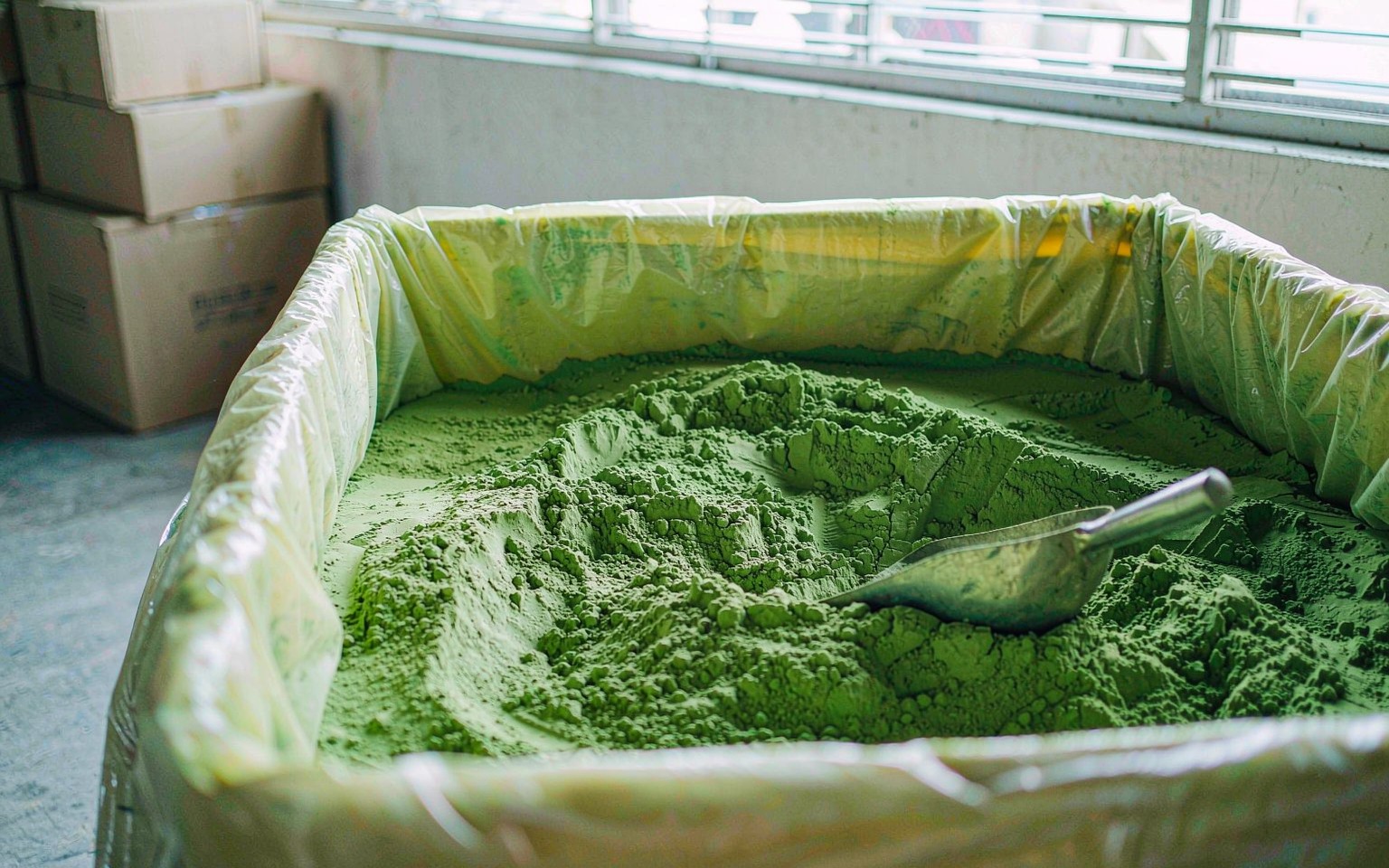
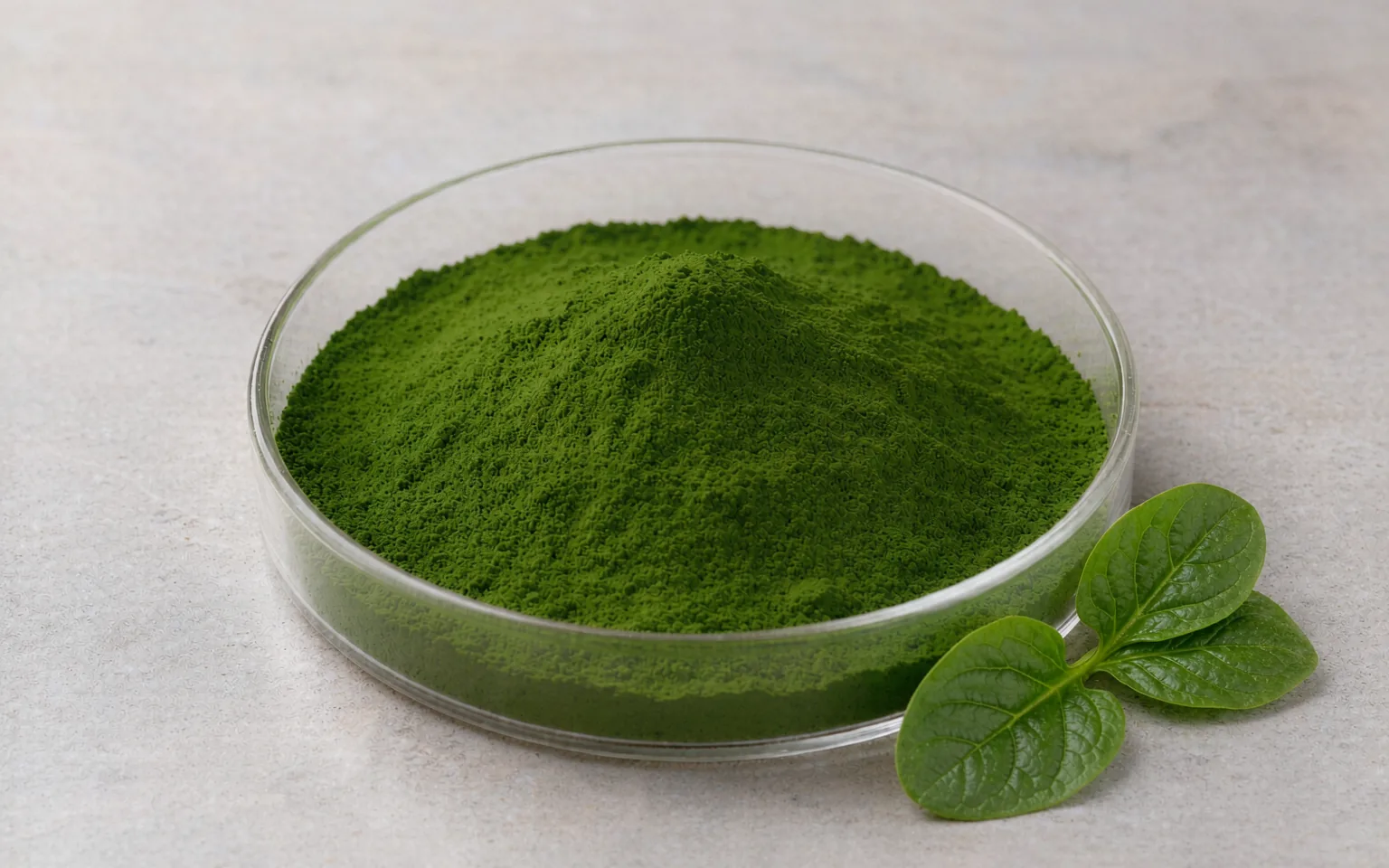
Two suppliers can both quote "spinach powder" and be selling products that behave nothing alike on your line. One is a dried and milled leaf; the other is a juice concentrate carried on maltodextrin. They differ in colour, in taste intensity, in microbial load, in cost per active unit and in what the label can legally say. Choosing between them is a specification decision, and it is the decision that most often goes unmade.
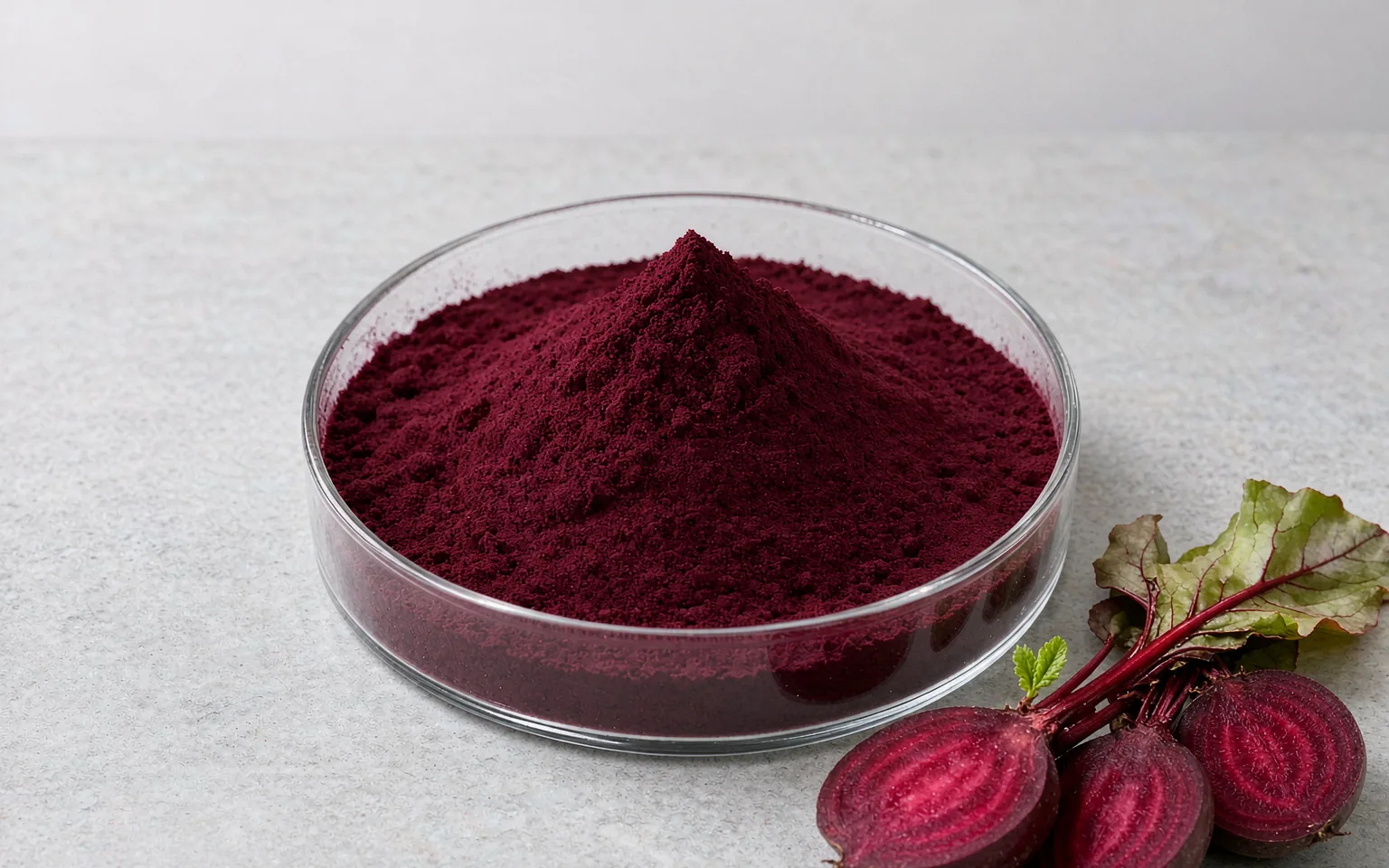
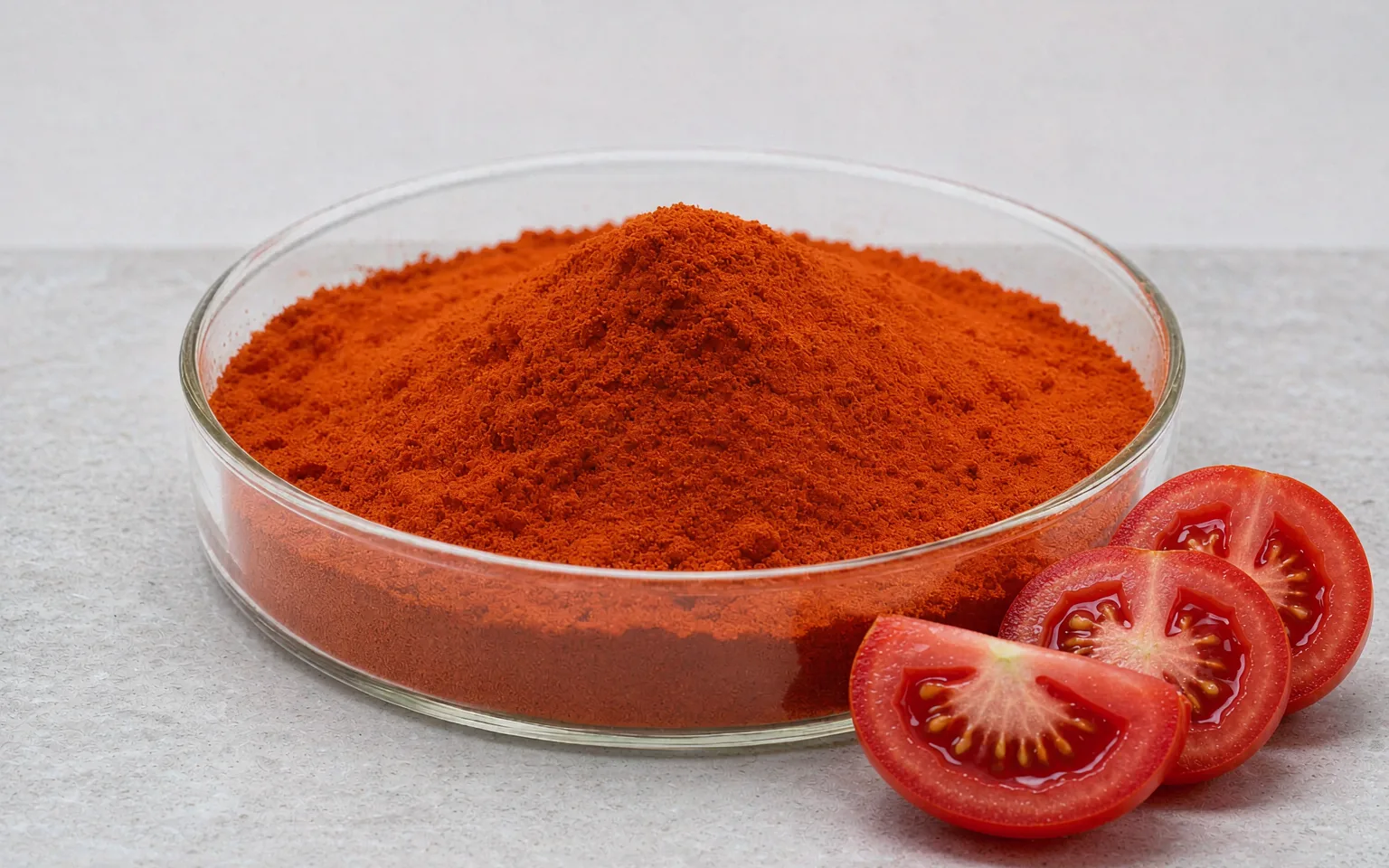
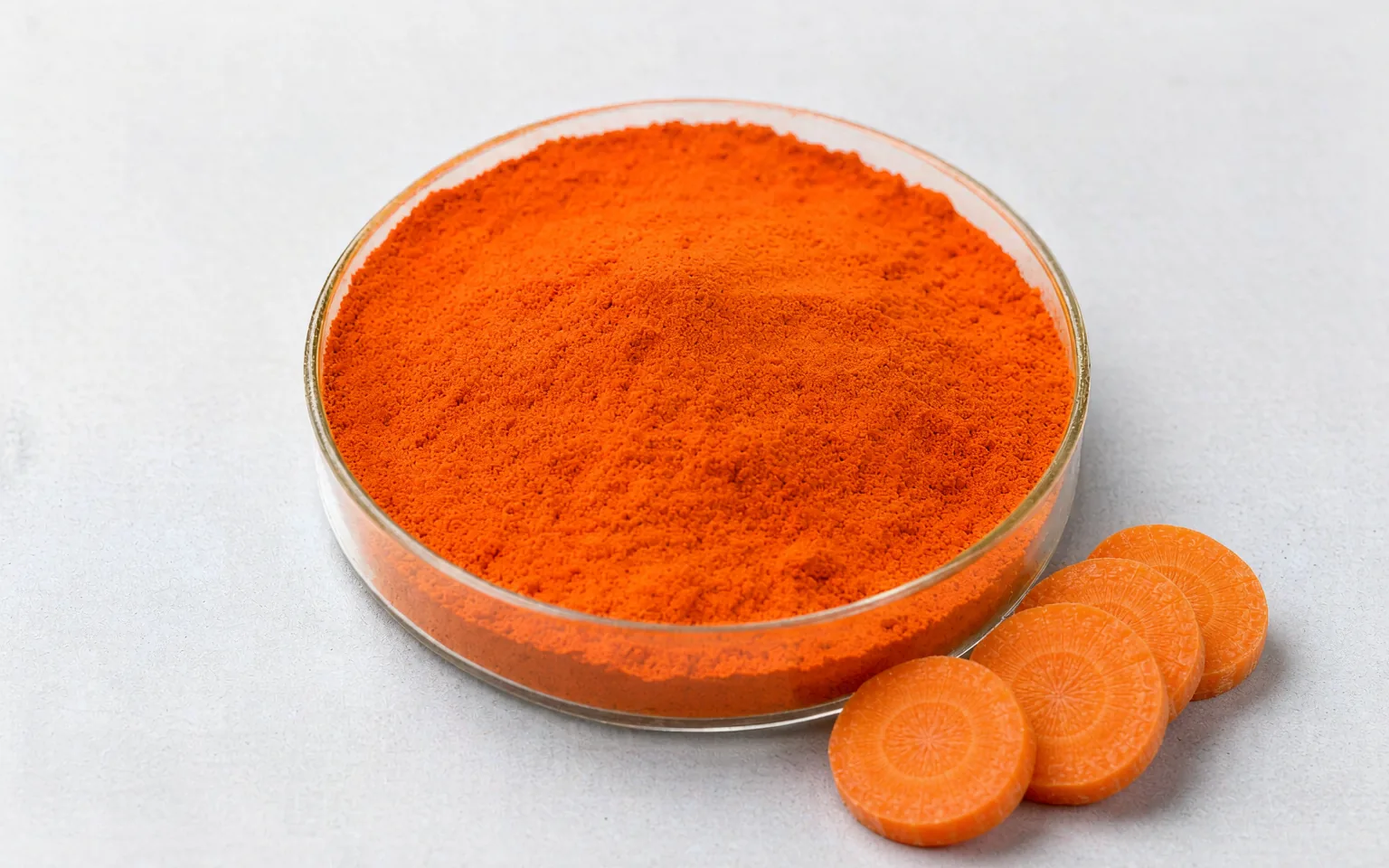
We supply spinach, carrot, tomato and beetroot powders. This page is about reading the specification properly, so the material you buy is the material your formula was built around.
A vegetable powder can be made by air drying, freeze drying, drum drying or spray drying, and the choice of process changes almost everything a formulator cares about. Air drying is economical and suits leaf and root materials where the colour is stable. Freeze drying preserves volatile aroma and colour better and costs more. Drum and spray drying are used for juice-based products, where the liquid extract is dried onto a carrier.
Because the process differs, the resulting powder differs in bulk density, particle size, solubility and heat history. A formulator who builds a recipe around an air-dried powder and then receives a spray-dried one will find the colour faint and the flavour thin, even though both were labelled spinach powder.
| Figure | What it tells you | Why it changes your formula |
|---|---|---|
| Drying process | Air, freeze, drum or spray dried | Sets colour intensity, aroma retention and solubility |
| Carrier | 100% pure, or dried on a carrier such as maltodextrin | A carrier dilutes the active material and must be declared on the label |
| Marker content | For example betalain or nitrate in beetroot, lycopene in tomato, carotene in carrot | This is the figure that lets you dose by function rather than by weight |
| Mesh or particle size | Coarseness of the milled powder | Affects dispersion, mouthfeel and how quickly it hydrates |
| Microbiological limits | Total plate count and related parameters | Decides whether the powder can go into a ready-to-eat application |
| Colour retention | How much colour remains after drying and storage | A pale powder means a higher dose, which means a higher cost per finished unit |
Dose by marker content rather than by weight wherever a marker exists. A beetroot powder quoted on betalain content will dose consistently, while one quoted only as "beetroot powder" can vary enough between batches to move the colour of a finished product.
The most common complaint is that the powder "did not look like the sample". The usual causes are these. Colour loss during storage, because the material was kept in warm or light conditions after delivery. Carrier dilution, because the buyer compared a pure powder against a carried one by weight. Particle size mismatch, because a coarse powder disperses slowly and leaves visible specks. Or microbial limits met by irradiation, which some markets will not accept and which the buyer only discovers at the documentation stage.
All four are avoidable with one conversation before the order, and all four are expensive to discover after the container has shipped.
A carried powder is usually cheaper by the kilogram and this is what makes the comparison misleading. If a spray-dried beetroot product carries half the betalain of a pure one, a formulator will need roughly twice the dose to reach the same colour, and the delivered cost per finished unit ends up higher than the cheaper-looking quote implied. The same logic applies to colour retention: a powder that has lost a third of its colour during drying has to be dosed up to compensate.
So when comparing two quotations for what looks like the same vegetable, ask for the marker content and the drying process on both, then compare cost per unit of marker rather than cost per tonne. That single change of unit usually reorders the shortlist, and it is the figure to quote back to purchasing when a buyer asks why the cheaper option was not selected.
These are natural materials and they keep degrading after they leave us. Colours in the carotenoid and betalain families are sensitive to light, heat and oxygen, so powders stored warm or in clear containers will fade even if the specification was met on delivery. Most customers get materially better results by keeping the material cool, dark and sealed, and by working through stock within the shelf life stated on the COA rather than holding it as a buffer against supply timing.
If a powder has to sit in a warehouse for a long period before use, tell us when quoting. It sometimes changes the recommendation, because a specification with higher initial colour strength may work out better than a cheaper one that has less margin to lose.
Tell us what the powder has to do — colour, flavour, nutrition or clean label — and whether the application is ready to eat. We will quote the specification that fits rather than the nearest vegetable name. Request samples and specifications
A 100% pure powder is made only from the vegetable, while a carried powder is a juice or extract dried onto a carrier such as maltodextrin. The carrier dilutes the active material and changes the flavour and colour strength, and it must be declared on the label. Pure powders dose higher per gram but deliver more of the vegetable, while carried powders are often easier to handle and cheaper per kilogram. Tell us your label rules and we will say which one fits.
Beetroot colour comes from betalains, which degrade with heat, light and prolonged storage. If the delivered material is paler than the sample it usually means the powder was stored warm or exposed to light, or that the batch was quoted on weight rather than on betalain content. Choosing a specification fixed to marker content rather than to weight is the reliable way to avoid this, because it makes colour strength part of the contract instead of a matter of appearance.
It depends on the item and on the crop, so it should be raised at enquiry rather than assumed. A naturally low microbial count is achievable for some vegetables when the raw material quality and the drying regime allow it, and where that is not possible we will say so clearly instead of shipping a material that fails at the documentation stage. Because requirements differ by market and by retailer, raise it before samples are sent so that the right material is quoted from the start.
It depends on the application. A finer powder disperses faster and gives a smoother mouthfeel, which suits beverages and sauces, while a coarser powder is often adequate and more economical in products where texture is not visible. The practical test is whether the powder has to disappear into the matrix or whether visible particles are acceptable, so tell us the application and we will recommend a mesh rather than leave it to guesswork.
A 100% pure powder with no added carrier is the usual choice for a clean-label brief, because there is nothing extra to declare. Organic status is a separate matter and depends on the individual item and the availability of certified raw material, which varies seasonally. Tell us the certification the buyer requires and we will confirm what is available and what documentation accompanies it.