
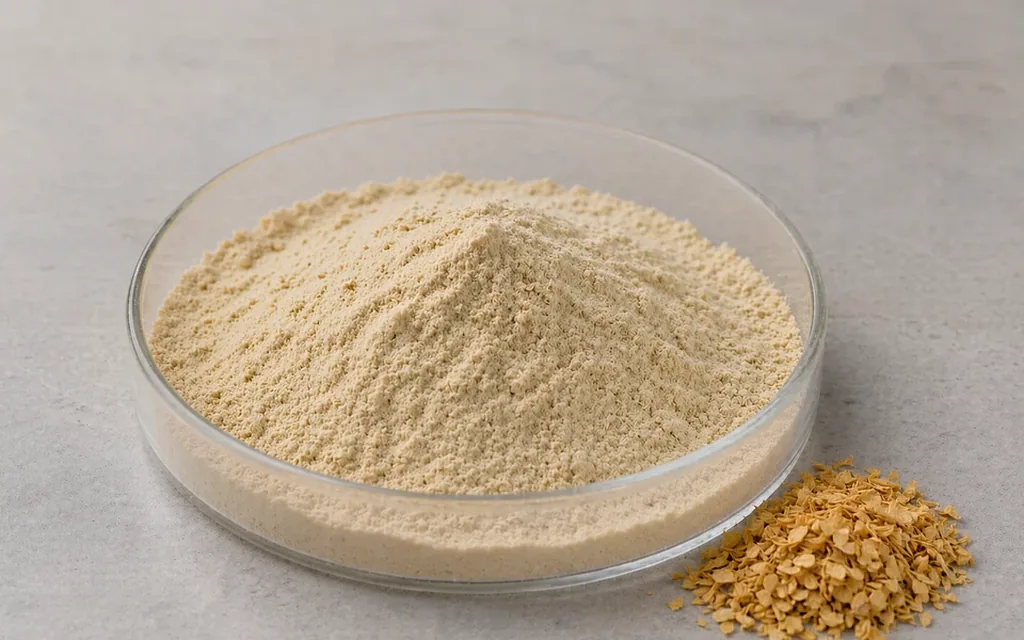
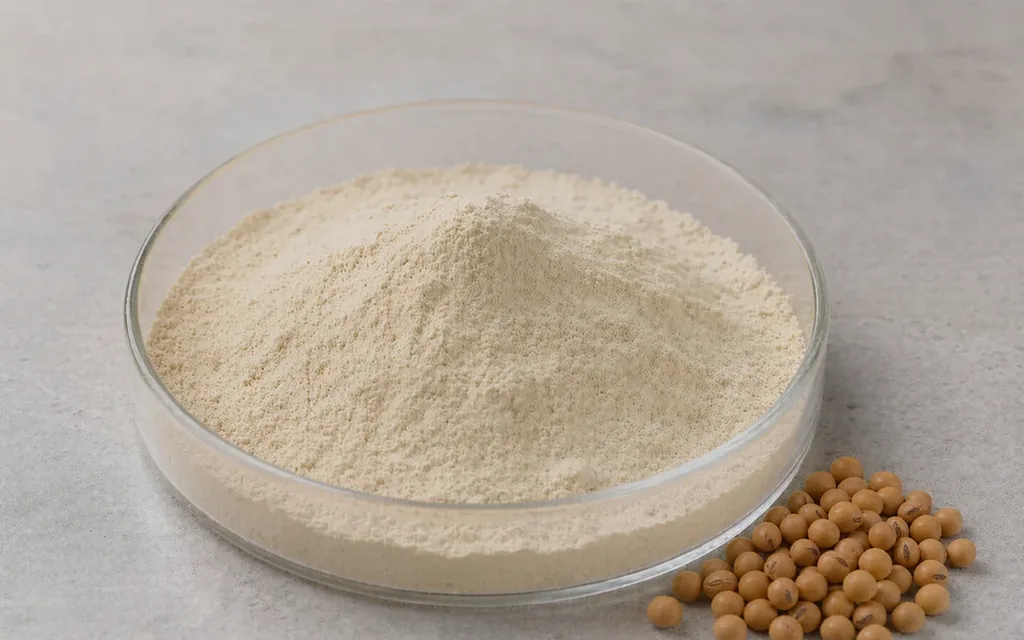
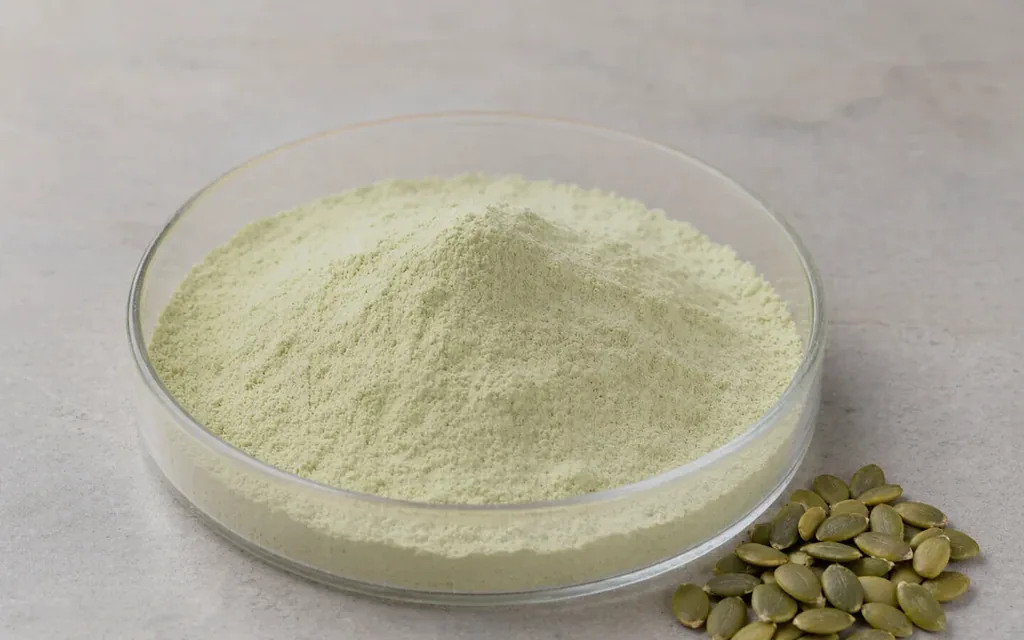
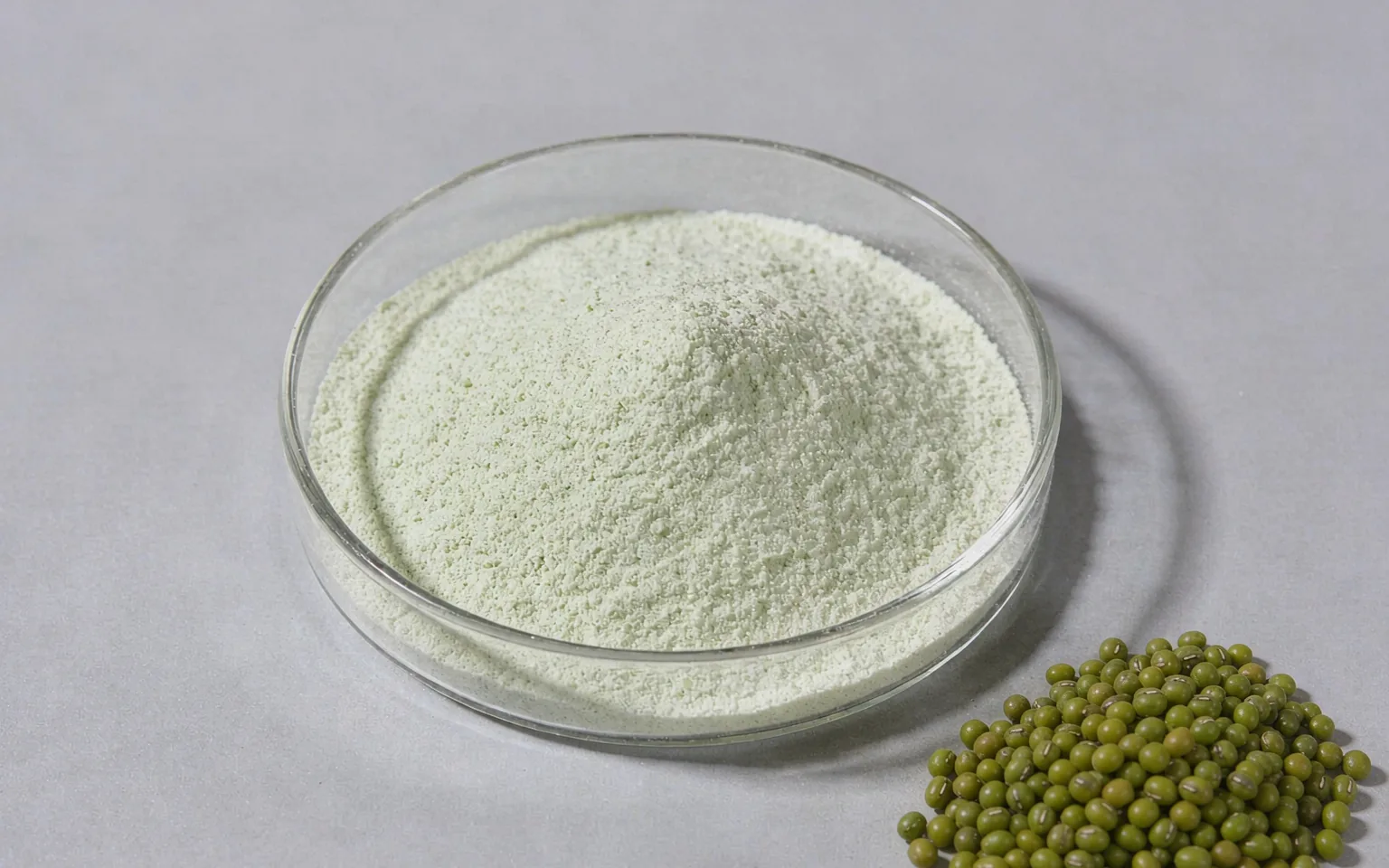
Buyers rarely arrive asking for "plant protein". They arrive with a constraint: the label has to be soy-free for one market, the drink has to stay clear at pH 3.8, the bar has to hold a texture after twelve months, or the protein claim has to be defended with a PDCAAS figure. Those constraints point to different proteins, and the four below cover most of the ground between them.
We supply pea, rice, soy and mung bean protein. This page is about narrowing that list to the one that fits your product, rather than presenting all four as interchangeable.
| Protein | Typical protein content | Allergen position | Chosen first when |
|---|---|---|---|
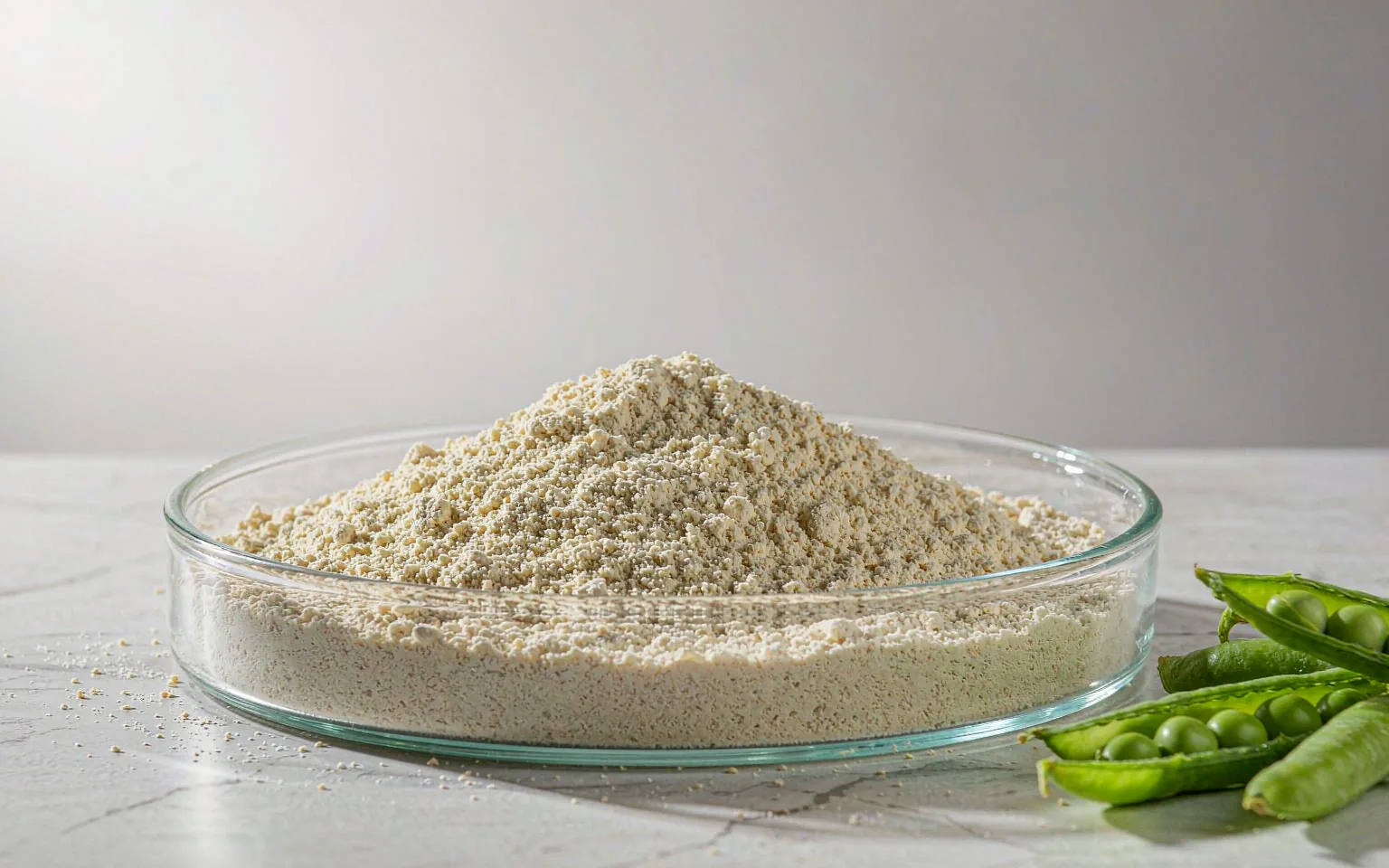
| Pea protein isolate | approx. 80–85% | Not a major allergen in the EU or US lists | The formula must be soy-free and dairy-free, and the label needs a familiar protein |
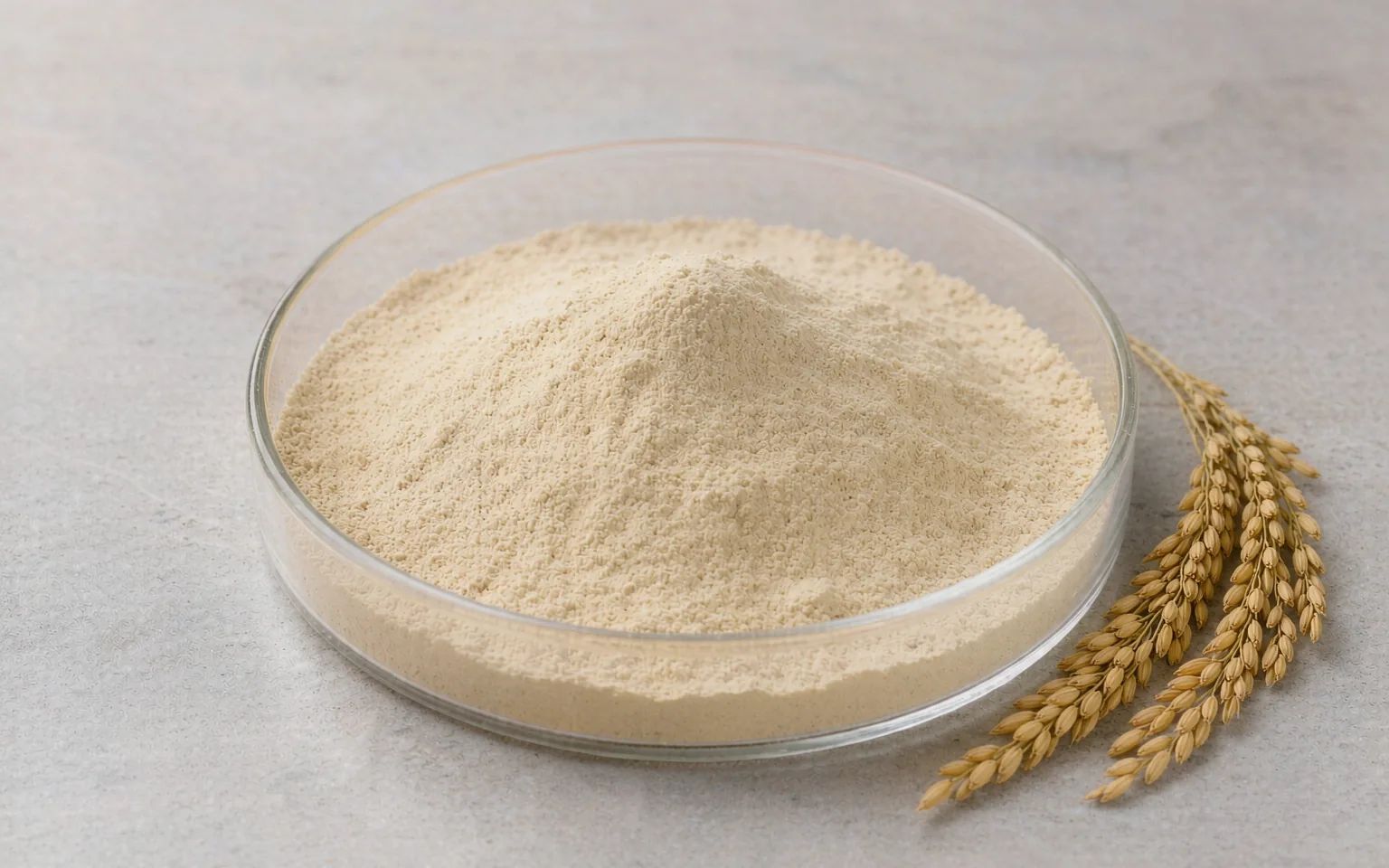
| Rice protein | approx. 80% and above | Not a major allergen; the hypoallergenic option | Allergen profile is the deciding factor, or a neutral taste and low viscosity is needed |
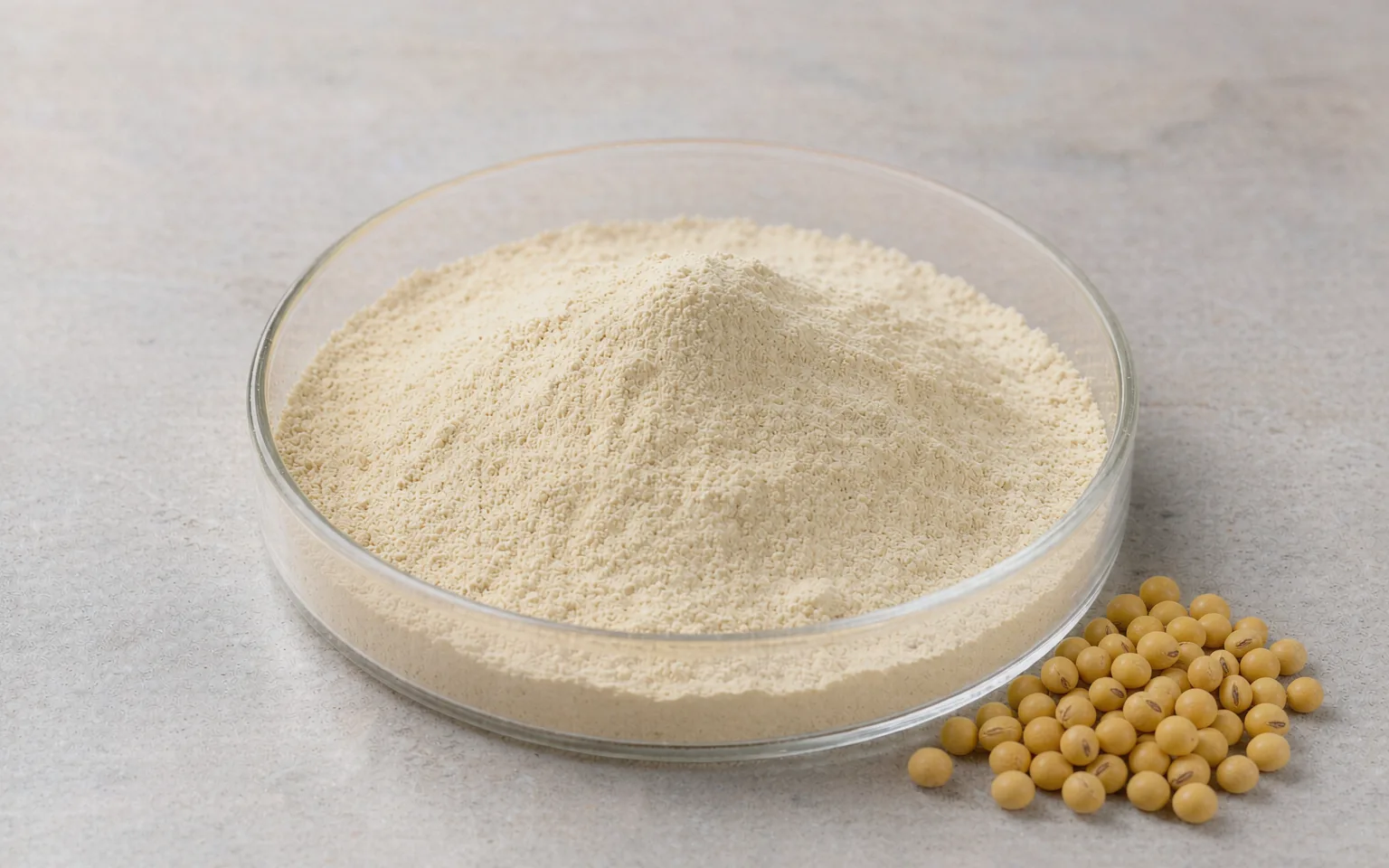
| Soy protein isolate | approx. 90% on a dry basis | A declared major allergen in both the EU and US | The highest protein density and a complete amino acid profile are worth the label cost |
| Mung bean protein | approx. 80–85% | Not a major allergen in the EU or US lists | A soy-free, pulse-based story is wanted without pea's flavour signature |
Those figures are typical commercial ranges rather than specifications. We standardise to the protein content agreed with your R&D and issue the COA against it, so the number on the certificate is the number you dose from.
Soy sits on the major allergen lists in both the EU and the US, which means a declaration on pack, an allergen control programme in the plant, and in some markets a conversation with the retailer before the product is even listed. Pea, rice and mung bean do not carry that obligation. When a brand is reformulating specifically to simplify its allergen statement, that single difference outweighs a ten-point gap in protein content.
Worth checking early, though: allergen rules and permitted claims differ by destination, and "hypoallergenic" is not a legally usable claim everywhere. We confirm what can actually be printed for your market before you commit to artwork.
No single plant protein matches whey on every axis. The two problems that come up most often are these.
Flavour is the other variable. Pulse proteins carry beany and earthy notes that become more obvious as the dosage rises, and masking them costs formulation work. Asking for a sensory sample before fixing the dosage is cheaper than discovering it on a pilot run.
Plant proteins are often described as incomplete, which sounds more serious than it is in practice. The issue is that individual plant proteins are low in one or two of the essential amino acids: pea protein is comparatively rich in lysine but lower in the sulfur-containing amino acids, while rice protein is richer in methionine. Combining them covers the gap, which is why pea and rice is such a common blend and why it is used to reach a protein quality figure that neither protein reaches alone.
For a claim such as "high in protein" or a PDCAAS statement on pack, the amino acid profile of the blend is what matters rather than the profile of any single ingredient. If your label carries such a claim, tell us the target figure and we will supply the supporting analysis rather than a generic specification sheet.
Send us the application, the protein claim and the allergen constraint. We will tell you which of the four proteins fits, and which blend of them fits better. Request samples and specifications
They solve different problems rather than ranking one above the other. Soy protein isolate reaches a higher protein density and offers a complete amino acid profile, but it must be declared as a major allergen in both the EU and the US. Pea protein isolate is slightly lower in protein content without carrying that declaration, which is why reformulation projects aimed at simplifying an allergen statement usually move from soy to pea. Send us the claim and the label rules for your market and we will model both options against them.
Protein isolates have an isoelectric point in the region of pH 4 to 5, and solubility falls sharply near it. A beverage formulated at pH 3.8 sits close enough to that region for some of the protein to come out of solution. The usual fixes are changing the acidulant and the target pH, adjusting the blend towards a more acid-tolerant protein such as rice, or adding a hydrocolloid to keep the suspension stable. We can test the route in your base rather than guessing.
Availability depends on the individual protein and the certification, so it is worth confirming at enquiry rather than assuming it applies across the range. Non-GMO and organic status changes the sourcing chain and the lead time, and organic in particular is subject to seasonal supply. Tell us the certification the buyer requires and we will state clearly what is available for that protein and what documentation accompanies it.
Yes, and it is a well-established approach. Pea protein is comparatively rich in lysine and lower in the sulfur-containing amino acids, while rice protein is richer in methionine, so the two complement each other. The ratio affects taste, texture and cost as well as the amino acid profile, so it is worth fixing early and confirming with a finished-product analysis rather than calculating it on paper alone.
Isolates typically sit in the 80 to 90 percent range on a dry basis, with soy at the higher end and pea, rice and mung bean generally lower within that band. What matters more than the headline figure is that the material is standardised to an agreed value and that the COA reports it, because a specification that drifts between batches will show up as inconsistency on your dosing line rather than as a problem on paper.