
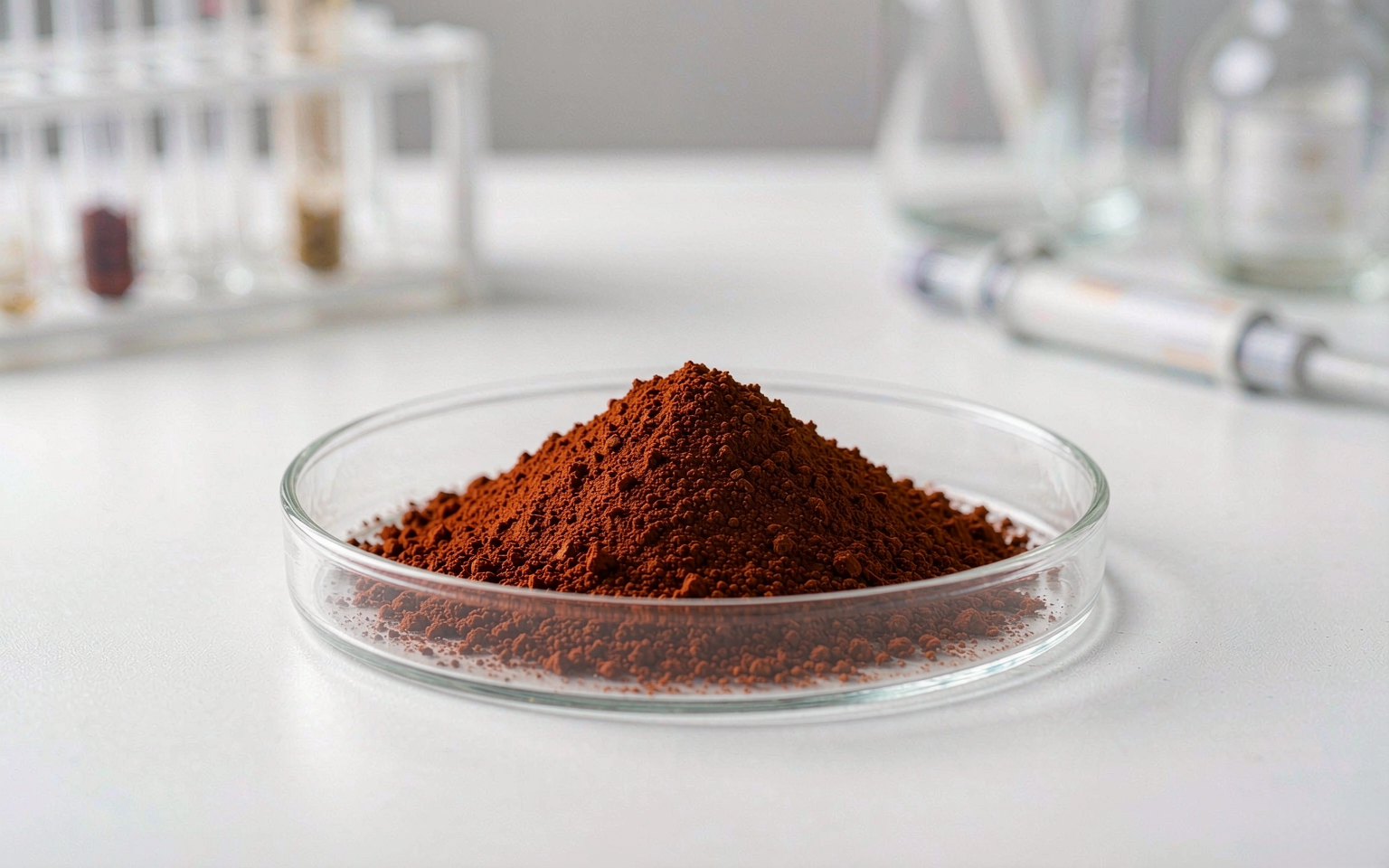
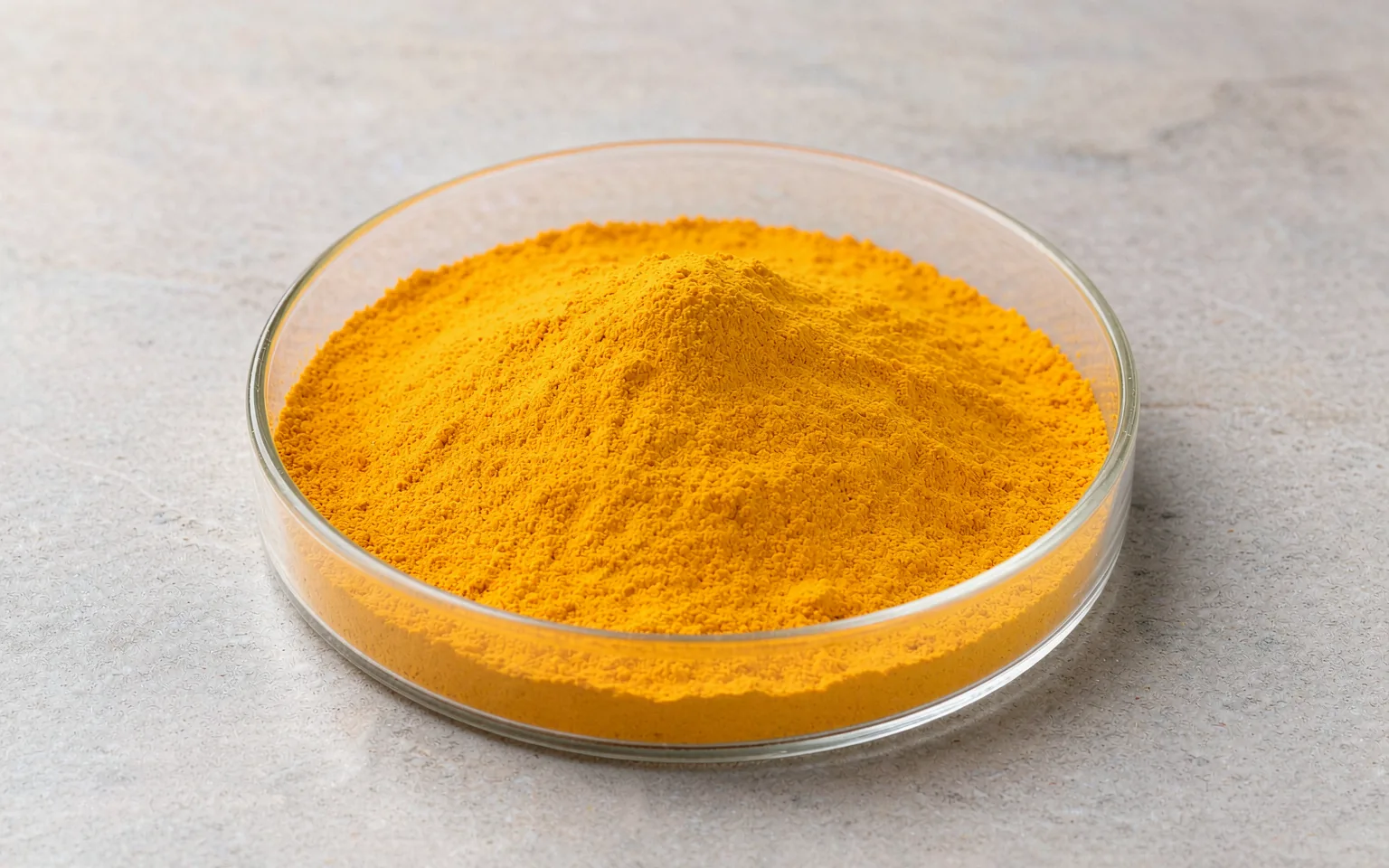
A botanical extract is not bought on a percentage alone. Two suppliers can both quote 3% and be selling different things, because the percentage only means something once you know which marker it refers to, how it was measured, and what the extraction solvent was. This page is the checklist we work through with buyers before a quotation is issued, and it applies to every extract on our list, not just the one currently in EU stock.
A standardised extract is defined against a marker compound, and every marker has at least one convention that can quietly change the number. Take a root extract standardised on glycosides: the assay may be reported as the sum of a family of related compounds, or as a single named one, and the two figures are not interchangeable. The method matters as well, since HPLC and UV spectrophotometry will not agree on the same lot.
So we ask three things before quoting: which compound defines the specification, which method the certificate will use, and whether any secondary marker matters to your incoming test. If your specification already names all three, the quotation is straightforward. If it names only a percentage, that is the first thing worth fixing, because the alternative is discovering the mismatch when the container arrives.
| Decision | What it changes | Worth asking when |
|---|---|---|
| Extraction solvent | Which compounds are carried through, colour, odour, and the residual solvent limits your COA has to meet | Your specification limits ethanol or requires a water-only extract |
| Marker convention | The assay number itself, and whether your incoming HPLC test will reproduce it | The specification states a percentage without naming the marker or method |
| Plant part | Marker content per kilo, and in some species whether the material is regulated at all | The price looks unusually low for the declared assay |
| Particle size and bulk density | Capsule fill weight consistency, tableting behaviour, and how the powder behaves in a blend | You run a capsule line or a high-speed blender |
| Export documentation | Whether the lot can legally leave the country of origin, and how long clearance takes | The species appears in a CITES appendix, or the material is wild-collected |
Some botanicals now carry an export control that no amount of production capacity can shorten. Rhodiola is the clearest current example: the whole genus entered CITES Appendix II in February 2023, bulk extract included, so a shipment from China needs an export permit and an EU import needs a permit from the destination Member State. That paperwork, not the extraction, sets the delivery date.
Our answer is to hold material in the EU. Species with a listing can be stocked in our Paris warehouse once imported, and a buyer taking delivery inside the EU then needs proof of legal origin rather than a new import permit. For rhodiola rosea extract we hold the 3% rosavins / 1% salidroside grade this way; the same route is available for other listed species on request.
Two origins, quoted on the same basis so the comparison is honest. From China, the price reflects production plus permit lead time. From the Paris warehouse, it reflects EU stock plus immediate release. Send the specification, the destination market and the volume you expect in twelve months, and the quotation will separate the two routes instead of hiding one inside an average.
Every lot ships with a batch certificate of analysis covering assay, identity, heavy metals, pesticide residues, microbiology and residual solvents, plus the technical data sheet and safety data sheet. Where a species is listed, the export permit travels with the goods and the import reference travels with EU stock.
Ask each supplier which compound defines the percentage, which analytical method the certificate uses, and whether the figure is a single marker or the sum of a family of related compounds. Two lots can both read 3% and still fail each other's incoming test. Once the convention is aligned, compare extraction solvent, plant part and particle size, because those change both the price and the behaviour on your line.
At minimum a batch certificate of analysis with assay, identity, heavy metals, pesticide residues, microbiology and residual solvents; a technical data sheet; and a safety data sheet. Where the species is CITES-listed, the export permit from the country of origin is required as well, and for material supplied from our Paris warehouse we provide the EU import reference and proof of legal origin instead of asking you to apply for a permit.
Yes. Material that is not held in Paris is produced to your specification and shipped from China, with the permit lead time included in the quoted delivery date rather than discovered afterwards. If the species is CITES-listed and you expect repeat volumes, we can discuss building EU stock once the first import has cleared.