Regulatory status by market
Erythritol is authorised in all six markets and is the simplest of the sweeteners to place, with one caveat that catches beverage formulators: the European maximum levels are tightest in drinks because of the laxative threshold for polyols, so a use level that works in a confectionery is not automatically available in a beverage.
United States — GRAS
Position
Erythritol is a GRAS food ingredient, with no food additive listing and no E number.
Permitted use
As a sweetener and bulking agent in foods generally.
Limits
As a polyol it must be declared in the Nutrition Facts panel, and the label has to carry the advisory statement for polyols where the level requires it.
European Union — E968
Position
Authorised food additive E968, erythritol, under Regulation (EC) 1333/2008 Annex II.
Permitted use
As a sweetener in the categories and at the maximum levels set in Annex II.
Limits
Beverages carry the tightest limits, reflecting the laxative threshold for polyols. Foods containing more than 10 per cent added polyols must also carry the laxative warning on the label.
United Kingdom — E968
Position
Retained Regulation 1333/2008; E968 remains on the FSA approved additives list.
Permitted use
The same permitted categories and maximum levels as the retained Annex II.
Limits
Shared number with the EU today, but the lists can diverge; check the retained list for a UK-only launch.
Japan — 指定添加物 エリスリトール
Position
Designated food additive (指定添加物) erythritol.
Permitted use
As a sweetener within the use standards for the additive.
Limits
The additive specification and the Japanese name are both mandatory on the label.
Indonesia, Malaysia, Vietnam and Thailand — INS 968
Position
INS 968 is carried on the national positive lists of these four markets.
Permitted use
As a sweetener in the categories each list permits, within its own maximum level.
Limits
Halal certification is a separate gate; since 18 October 2026 Indonesia requires it for additives and raw materials before clearance, with the certificate issued through BPJPH.
Korea — 에리스리톨 (INS 968)
Position
Listed in the Korean Food Additives Code as a sweetener, erythritol, INS 968.
Permitted use
As a sweetener within the Code’s use standards.
Limits
Use standards apply per food category, and Korean labelling requires the Korean name.
Frequently Asked Questions
What purity grade is supplied?
Our bulk erythritol is 99.5% minimum, food grade, meeting the usual FCC and EU E 968 specifications. Certificates for the current lot travel with every shipment and with samples.
Does erythritol cause digestive upset like other polyols?
It is the best-tolerated of the common polyols – roughly 90% is absorbed in the small intestine and excreted unchanged, so the laxation threshold sits higher than xylitol or sorbitol. Products at high inclusion still warrant a tolerance review, but erythritol is the usual choice where digestive comfort limits the formulation.
Why does erythritol produce a cooling effect?
It dissolves endothermically – it draws heat from the mouth as it dissolves, which reads as a clean cool sweetness. In mints and fruit chews that is wanted; in cocoa or coffee systems it can be masked by blending with other sweeteners or choosing finer particle sizes.
Is the “zero calorie” claim supportable?
Erythritol carries effectively 0 kcal/g, and US labelling assigns it 0 calories; EU labelling under E 968 treats it as 0 kcal/g as well. The claim depends on jurisdiction-specific wording, so we recommend confirming the exact statement with your labelling reviewer per market.
How is it blended with high-intensity sweeteners?
The classic pairing is erythritol with stevia or monk fruit: erythritol supplies the bulk, mouthfeel and sweetness curve, the high-intensity sweetener lifts total sweetness, and each covers the other’s weaknesses – erythritol’s cooling against the botanical aftertaste.
Erythritol: The Versatile Bulk Sweetener for Sugar-Free Innovation
Product Overview and Natural Origin
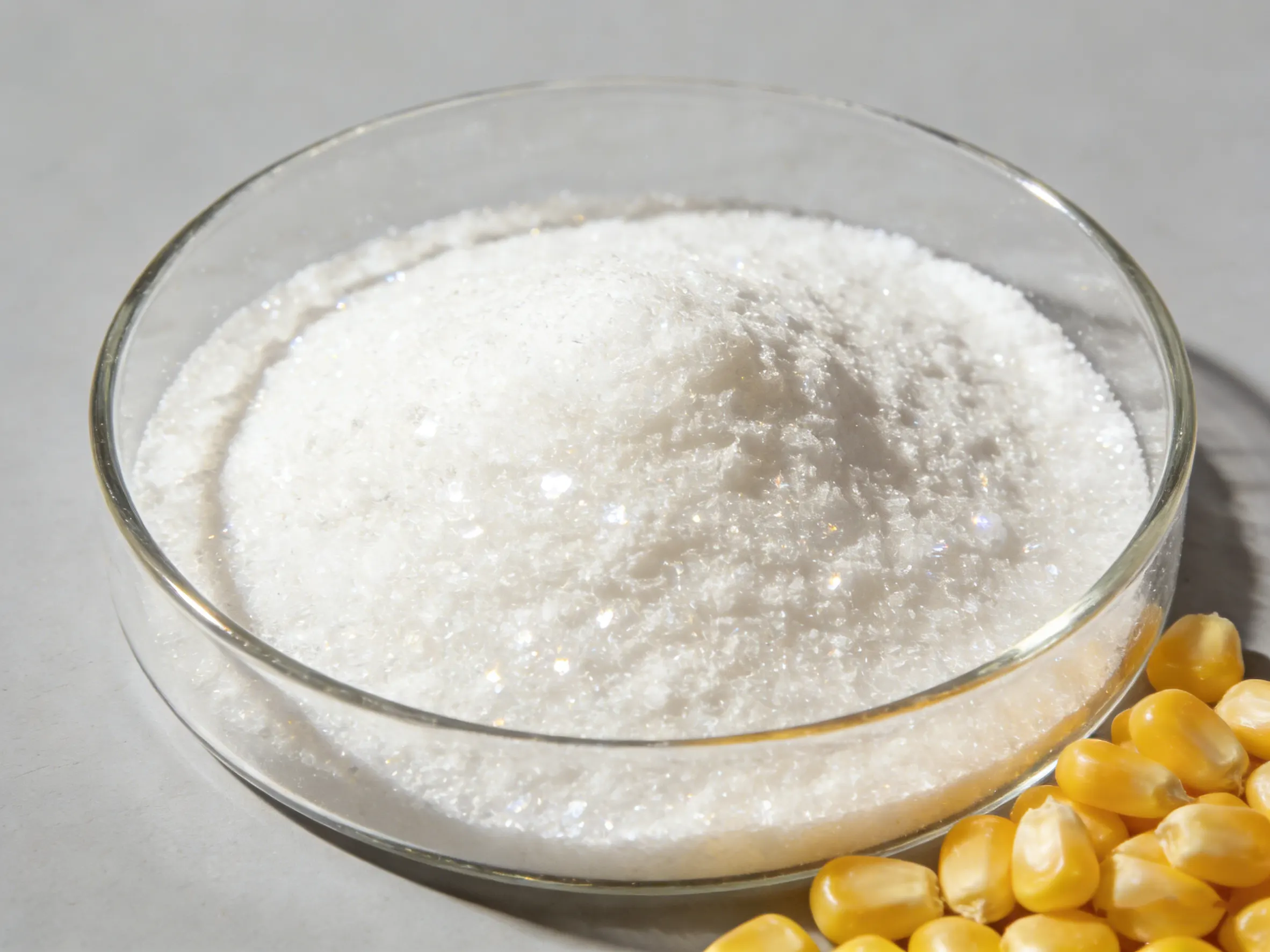
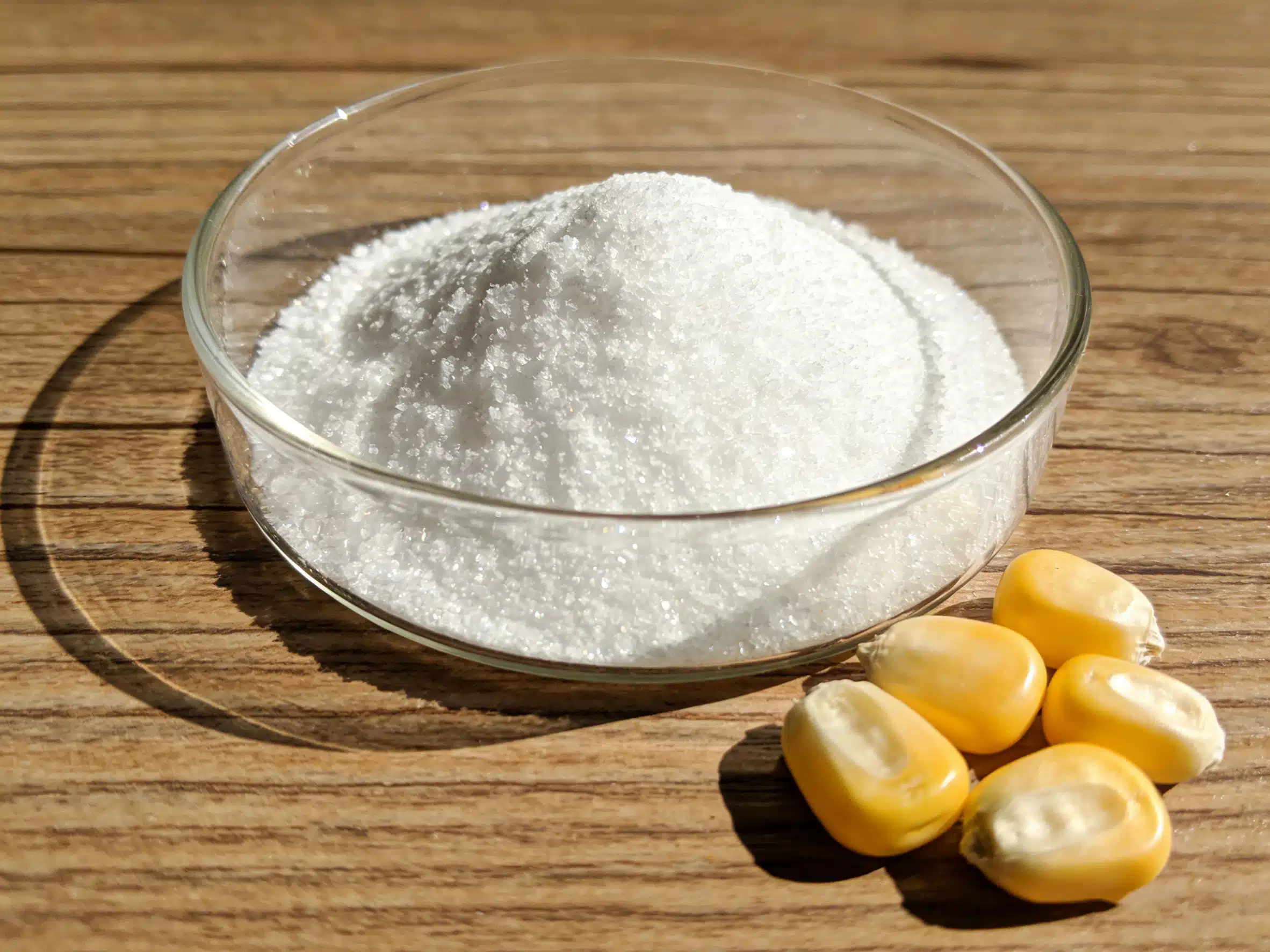
Erythritol has become a cornerstone of the modern food industry, providing a sophisticated solution for manufacturers aiming to reduce sugar without sacrificing texture. As a naturally occurring sugar alcohol, it is found in various fruits and fermented foods. Our commercial-grade supply is produced through a high-precision fermentation process using non-GMO corn, resulting in a 99.5% pure crystalline product that mimics the crystalline structure of sucrose.
Unlike high-intensity sweeteners that are used in minute quantities, this ingredient provides the essential physical volume and mouthfeel required in food science. With approximately 70% of the sweetness of table sugar and a clean, cooling finish, it serves as the perfect foundation for a wide array of health-conscious product lines.
The Metabolic Advantages of This Sugar Alcohol
The primary reason formulators prioritize this specific sugar alcohol over others like Malititol or Sorbitol is its superior digestive tolerance. Because of its small molecular weight, over 90% of the ingredient is absorbed in the small intestine and excreted unchanged, significantly reducing the gastrointestinal sensitivity often associated with other polyols.
Furthermore, it is a non-glycemic ingredient. It does not raise blood glucose or insulin levels, making it a critical zero calorie sweetener for the ketogenic and diabetic-friendly markets. This physiological profile allows brands to create products that support metabolic health while delivering a satisfying, sweet experience.
Technical Performance as a Bulk Sweetener
Heat Stability: It remains stable at temperatures up to 160°C, making it ideal for baking and pasteurization without browning or breaking down.
Non-Hygroscopic: It does not readily absorb moisture from the air, which helps maintain the crispness of biscuits and the stability of dry mixes.
Cooling Effect: It possesses a distinct negative heat of solution, which creates a refreshing “cooling sensation” in mints, gums, and chocolates.
Formulation Synergy as a Zero Calorie Sweetener
Round Out the Sweetness: It masks the botanical aftertastes of other natural sweeteners.
Improve Mouthfeel: It provides the “body” that high-intensity sweeteners lack.
Optimize Costs: Using it as a carrier in blends helps achieve a 1:1 sugar replacement ratio, simplifying the manufacturing process for tabletop sweeteners and baking mixes.
Quality Standards
18-60 Mesh (Granular): The standard for tabletop sweeteners and general baking.
100 Mesh (Fine Powder): Specifically designed for chocolate manufacturing and coatings where a smooth, non-gritty texture is paramount.
We hold comprehensive certifications, including ISO 22000, Halal, and Kosher. Our transparent supply chain ensures that you receive a consistent sugar alcohol that meets all international regulatory requirements for safety and purity.
Diverse Industrial Applications
Confectionery: The gold standard for sugar-free chocolates, hard candies, and chewing gum.
Bakery: Provides the crunch and volume in cookies and muffins without the caloric load.
Dairy: Enhances the texture of low-calorie ice creams and flavored yogurts.
Oral Care: Used in toothpastes and mouthwashes as a non-cariogenic agent that does not promote tooth decay.
FAQ
Q1: How does Erythritol differ from other sugar alcohol options? It has the highest digestive tolerance and the lowest caloric value (0.2 kcal/g) of all common polyols, making it the preferred choice for premium “Zero Sugar” products.
Q2: Is this bulk sweetener suitable for baking? Yes. It is highly heat-stable. However, since it does not caramelize like sugar, it is often blended with small amounts of Allulose if a browning effect is desired.
Q3: Can I claim “Natural” when using this zero calorie sweetener? Regulations vary by region, but since it is a fermentation-derived product found in nature, it is widely accepted as a natural-origin ingredient in most global markets.
Q4: Does it affect the shelf life of products? Due to its low water activity, it can actually help inhibit microbial growth, potentially extending the stability of certain dry-packaged goods.