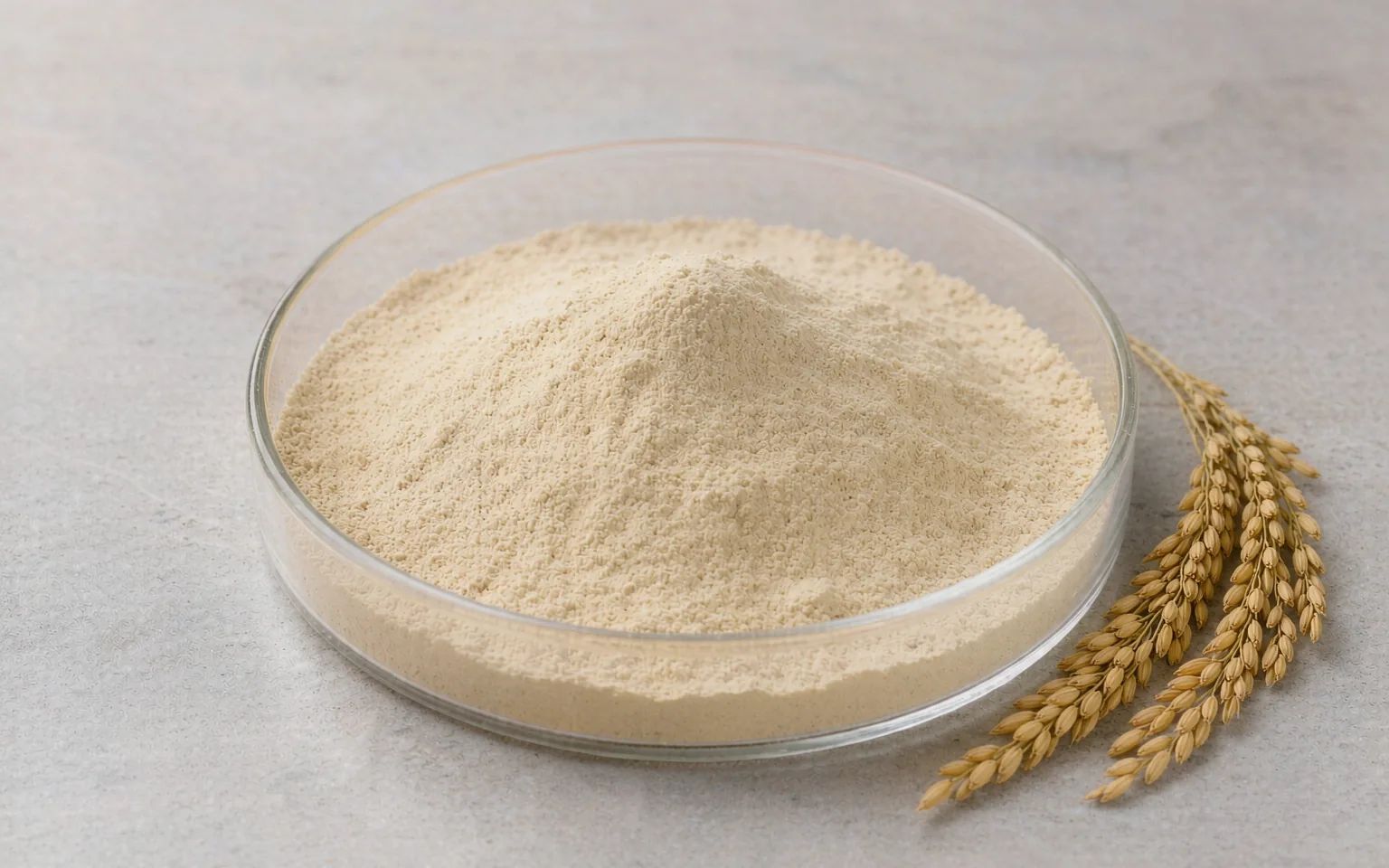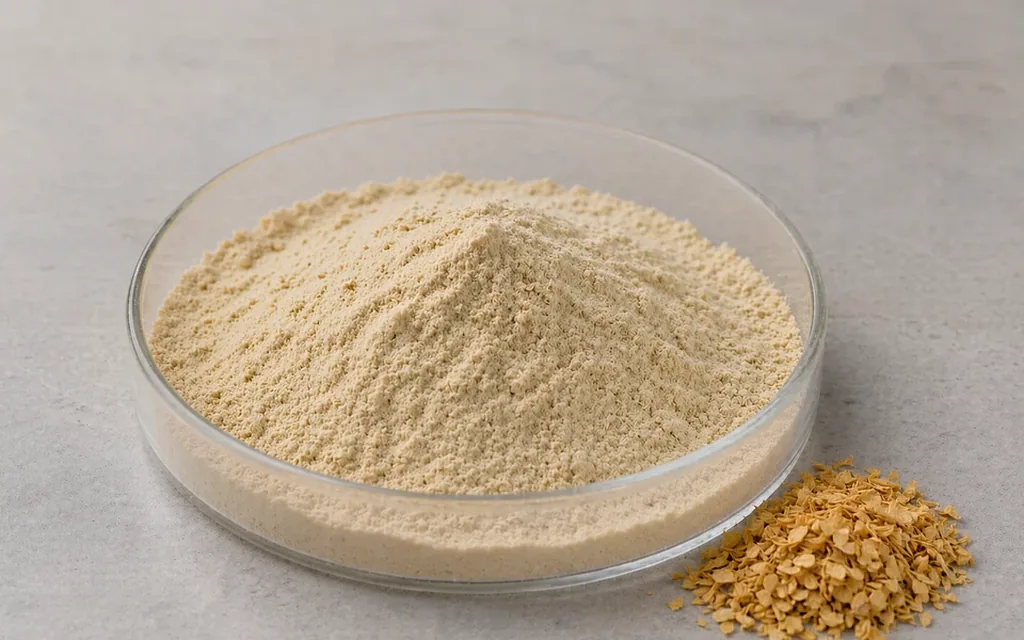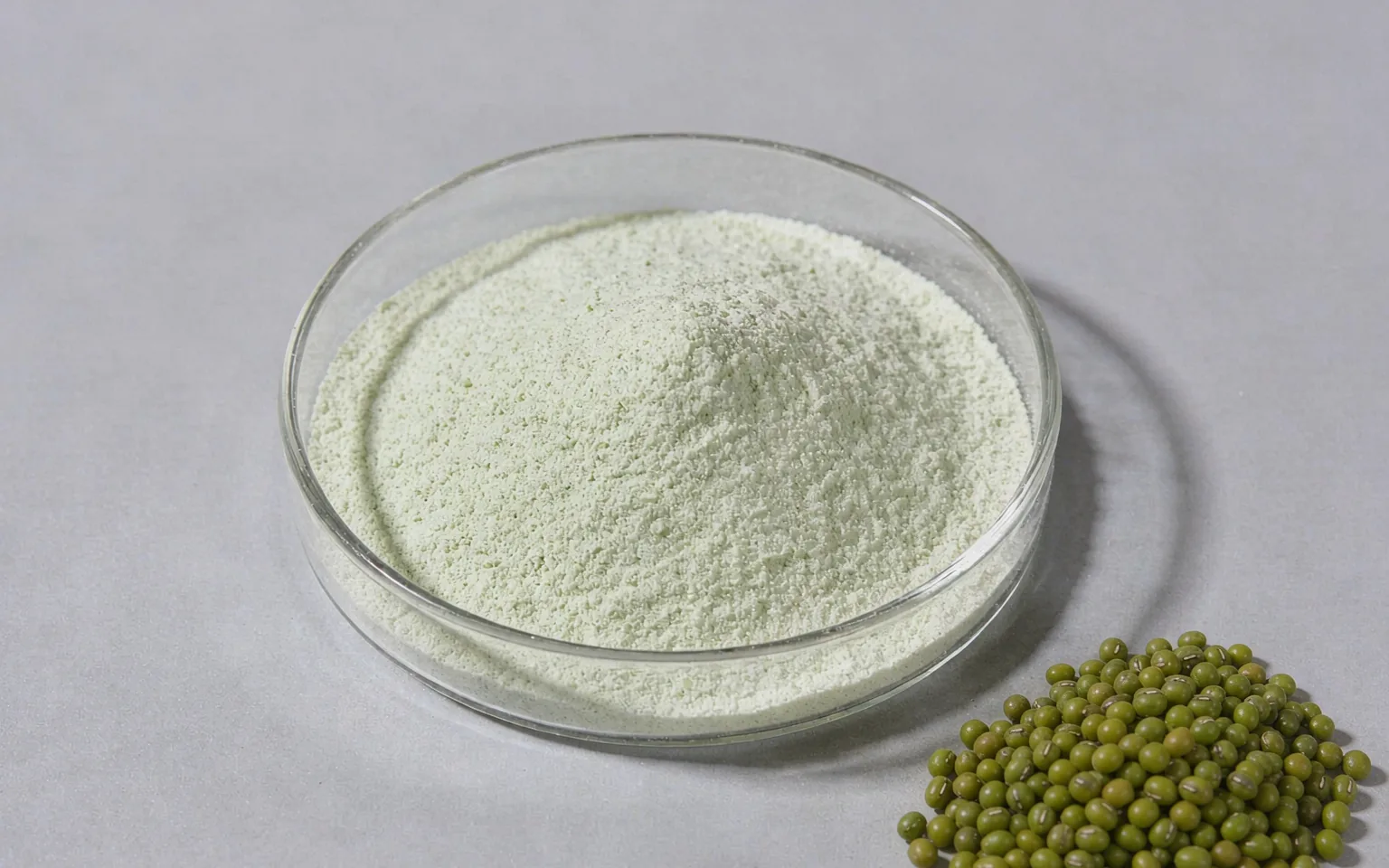
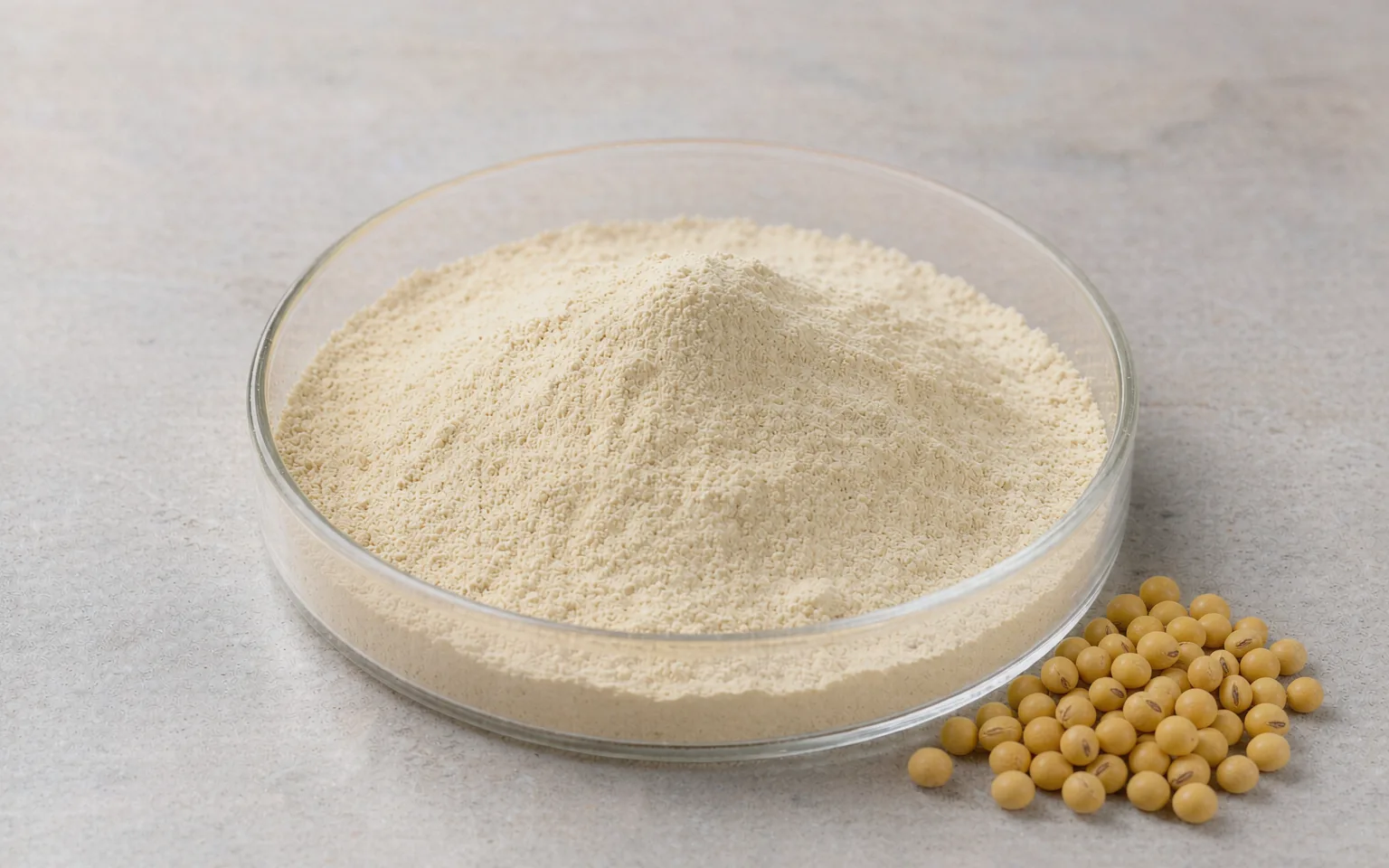
Soy protein isolate is the reference standard against which every other plant protein is measured, and not only because of its amino-acid profile. It is also the only widely available plant protein that behaves like a functional ingredient in its own right, gelling, emulsifying and binding water and fat in a way that texture-dependent products depend on.
We supply soy protein isolate in standard and alcohol-washed grades for food manufacturers, with the grade matched to whether the product is judged on taste or on structure.
Product Specifications
| Item | Specification |
|---|---|
| Product Name | Soy Protein Isolate (Glycine max) |
| Protein (dry basis, Kjeldahl) | 90% min |
| Appearance | Cream to off-white powder |
| Grades | Standard and alcohol-washed (low flavour carry-over) |
| Functional Properties | Gelation, emulsification, water and fat binding |
| Standard | Food grade, Non-GMO (IP certified lots available) |
| Allergen Status | Soy – mandatory declaration in most markets |
| Packaging | 20 kg / 25 kg kraft bag with food-grade inner liner |
| Shelf Life | 24 months (sealed, cool and dry storage) |
| MOQ | 25 kg for bulk; samples available on request |
Applications
- Meat and seafood analogues – where gelation and fibre formation set the final bite, not just the protein content
- Processed meat products – as a binder and yield improver in emulsified systems
- Beverages and nutritional powders – alcohol-washed grade where a clean flavour is critical
- Bakery and pasta – for protein fortification with improved water retention
Why soy still wins on functionality
Soy protein isolate reaches a protein digestibility-corrected amino acid score of 1.0, which is the maximum value the scale allows, and that is the number most buyers ask about first. The more consequential difference appears further down the process: isolate gels on heating, emulsifies fat and holds water, so it can carry the structure of a product rather than only adding protein to it. In meat analogues this is what separates a formulation that holds together after cooking from one that crumbles.
Grade selection is where most projects go wrong. Alcohol-washed isolate has most of the flavour-active compounds removed and is the right choice for beverages and dairy alternatives, but it costs more and its functional performance is not identical to the standard grade. Where structure is the priority, the standard grade usually performs better and the flavour is handled in the formula instead. Choosing between them on price alone tends to produce either an over-specified beverage or an under-structured analogue.
Soy also carries a mandatory allergen declaration in most markets, which is the one factor that can rule it out entirely regardless of performance. Where that declaration is not acceptable in the destination market, pea and mung bean are the usual substitutes, with a corresponding loss of gelling strength that has to be compensated for elsewhere.
Regulatory status by market
Soy protein isolate is unrestricted as a food ingredient in all six markets, and in all six the operative requirement is allergen labelling rather than authorisation. Soy is a declarable allergen in the EU, the UK, Japan, Korea and under the US major-allergen rules, so the declaration is the part of the specification that has to be right.
United States — GRAS, with a major-allergen declaration
European Union — not a novel food, Annex II allergen
United Kingdom — not a novel food, Annex II allergen
Japan — food material, designated allergen
Indonesia, Malaysia, Vietnam and Thailand — food ingredient
Korea — 식품원료, labelling target allergen
Frequently Asked Questions
Soy is the most functional of the plant proteins and also the one with the largest labelling consequence. The questions below are the ones buyers raise before specifying a grade; our note on soy-free labelling covers the substitution decision itself.
Soy is a regulated allergen. What does that mean for my label?
Soy must be declared in the ingredient statement under both the EU rules (Regulation 1169/2011 Annex II) and the US major-food-allergen list, in a form a consumer will recognise. Where the destination market will not accept that declaration at all, the grade is not a formulation problem but a disqualification, and pea or mung bean are the usual substitutes, with the loss of gelling strength that follows from that swap.
What does alcohol-washed isolate change?
Alcohol washing removes much of the flavour-active fraction, which gives a cleaner taste and a slightly different functional profile. It is the usual choice for beverages and dairy alternatives. A standard isolate gels and emulsifies more strongly and is preferred where structure carries the product. The two are not interchangeable on price alone, and swapping one for the other without a bench trial is a common reason a formula will not set.
How do I choose between isolate and concentrate?
Isolate is above 90 percent protein on a dry basis and has most of the carbohydrate fraction removed, including much of the oligosaccharides associated with flatulence. Concentrate sits around 65 to 70 percent and retains more of the fibre and native structure. For a beverage or a short label, isolate; for bakery, extruded snacks or cost-driven fortification, concentrate is often the better value.
Is your soy protein non-GMO?
Soy is the crop where a non-GMO declaration genuinely changes what you receive, unlike pea or rice. We can supply identity-preserved lots with a PCR test report, or standard non-GMO documentation where your market only requires the statement. Tell us which one your customer accepts, because the two are priced differently and the paperwork is not interchangeable.
What functional data can you send with a sample?
We quote the nitrogen solubility index and the dispersion behaviour across the pH range you will actually use, because those two figures predict beverage performance far better than the protein percentage. For meat and seafood analogues the relevant number is heat-set gel strength. Ask for figures generated at your own pH and ionic strength, since a value measured in a standard test medium tells you very little about your matrix.
Tell us whether the product is judged on structure or on flavour, and we will recommend the grade and send the specification with a sample. Request samples and documentation