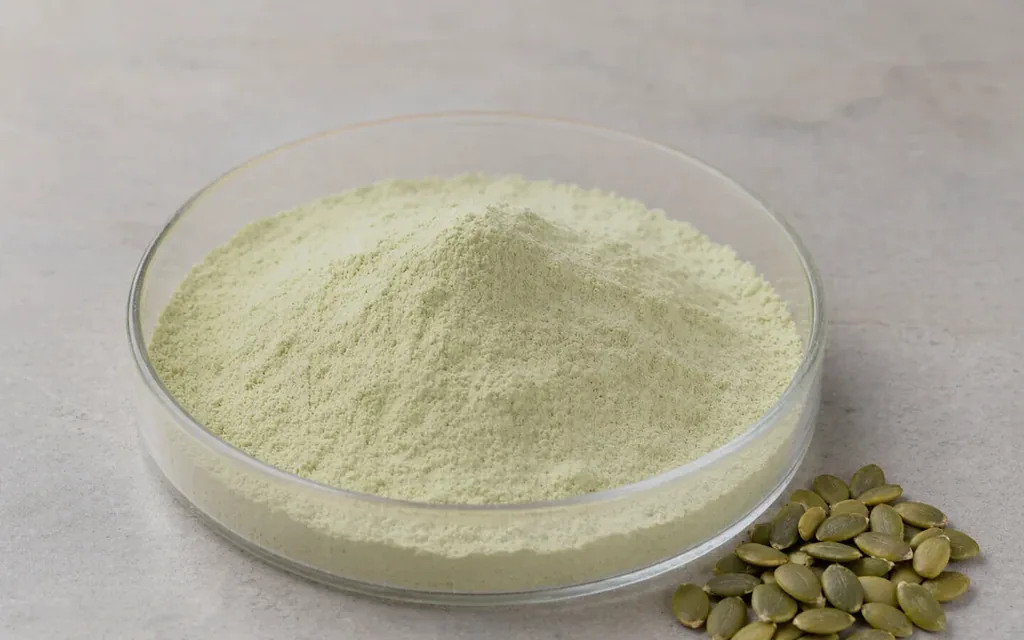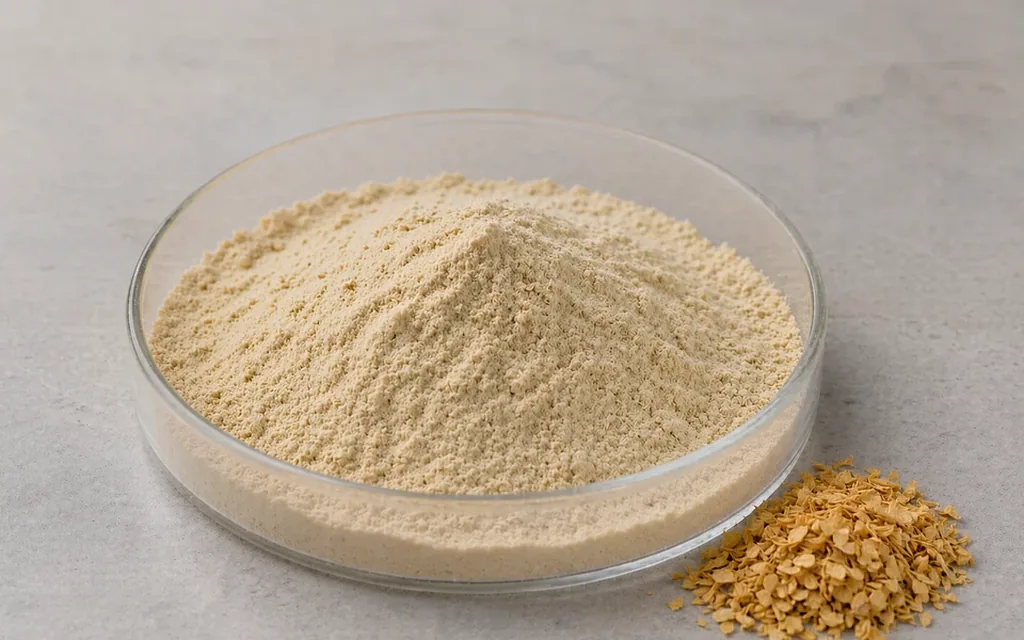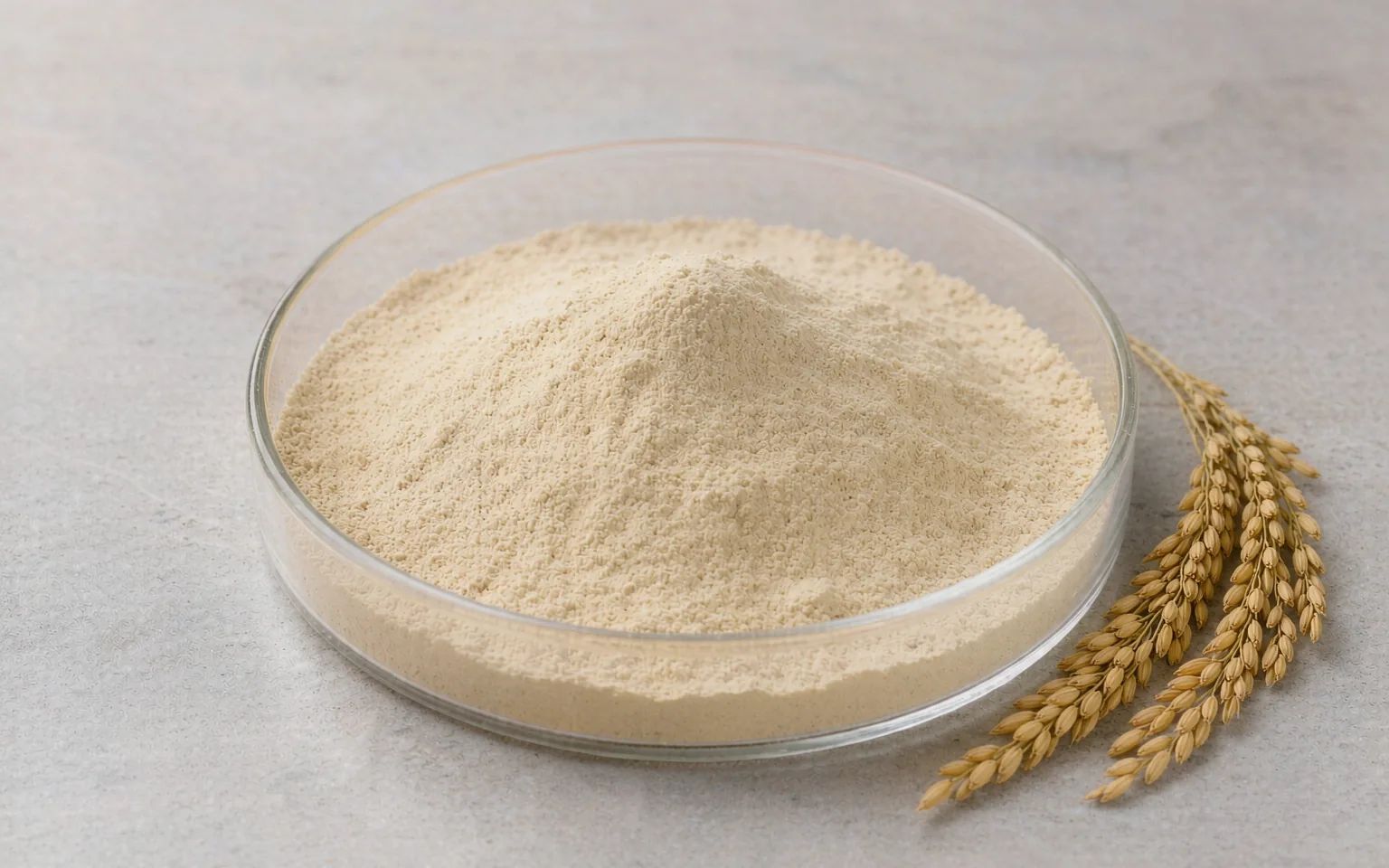
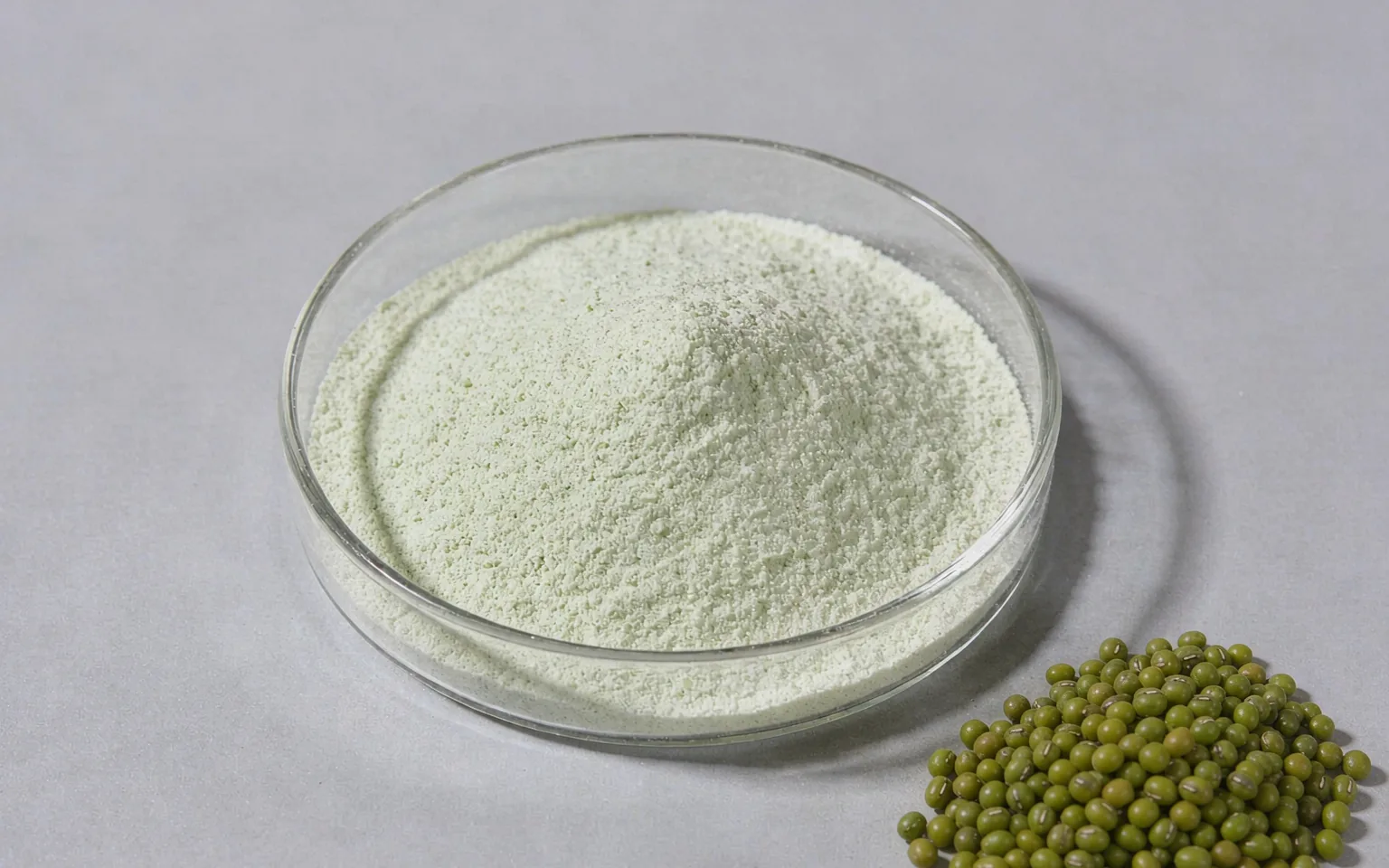
Mung bean protein is the newest of the four proteins we supply, and the reason formulators ask for it is usually specific: it gels on heating in a way that most plant proteins do not, which makes it one of the few credible routes to replacing egg in a structured product.
It also carries a milder flavour than pea, which is why it has moved quickly from a novelty ingredient into commercial plant-egg and noodle applications.
Product Specifications
| Item | Specification |
|---|---|
| Product Name | Mung Bean Protein (Vigna radiata) |
| Protein (dry basis, Kjeldahl) | 80% min (isolate grade) |
| Appearance | Light yellow to cream fine powder |
| Moisture | 8.0% max |
| Functional Behaviour | Heat-set gelation, film formation |
| Standard | Food grade, Non-GMO |
| Allergen Status | Not among the major eight allergens |
| Packaging | 20 kg / 25 kg kraft bag with food-grade inner liner |
| Shelf Life | 24 months (sealed, cool and dry storage) |
| MOQ | 25 kg for bulk; samples available on request |
Applications
- Plant-based egg replacement – where a heat-set gel has to stand in for the coagulation egg normally provides
- Noodles and pasta – added to improve texture and reduce breakage in high-protein formulations
- Plant-based dairy alternatives – a milder flavour base than pea for neutral-tasting products
- Meat analogues – as a binder in products where a firmer bite is the target
What makes mung bean different
Most plant proteins thicken when heated; relatively few set into a firm, sliceable gel. Mung bean protein does, and that single behaviour is the reason it appears in plant-egg products, because coagulating into a structure on heating is precisely the job the egg was doing. It also forms films, which is useful where a skin or a coating is part of the product rather than a defect.
Its flavour is the second reason it gets specified. Mung bean protein carries noticeably less of the beany and bitter character that pea brings, so a neutral profile can be reached with less masking, which in turn shortens the ingredient statement. For a product where the marketing position rests on a short label, that can matter more than a percentage point of protein.
The trade-off is supply. Mung bean protein is produced at smaller volumes than pea or soy, so availability and price move more, and lead times deserve to be confirmed before it is written into a launch formula. If a project needs guaranteed continuity at large volume, it is worth designing in a fallback from the start rather than after the first production run.
Regulatory status by market
Mung bean is a traditional food across Asia, but an isolate of it is a newer article, and the two are not always treated the same way. The United States position rests on GRAS notices for the isolate; the European conclusion is not settled for the isolated form, so it is not stated here.
United States — GRAS
Japan — food material
Indonesia, Malaysia, Vietnam and Thailand — food ingredient
Korea — 식품원료
Frequently Asked Questions
Mung bean protein is specified for behaviour rather than for a headline number. The questions below are the ones that usually decide whether it fits a launch formula; for the protein behaviour it is often chosen to avoid, see protein settling in acidic beverages.
How is mung bean protein different from pea protein?
Both are legume isolates at a comparable protein level, but mung bean is lighter in colour, carries much less of the beany and bitter character that pea brings, and gels on heating where pea mainly thickens. Those two behaviours, rather than the protein figure, normally decide between them: mung bean where the product is judged on taste and structure, pea where cost per kilogram of protein is the driver.
Is mung bean protein a declared allergen?
Mung bean is a legume, but it is not on the EU allergen list or the US major-allergen list, so the protein itself does not trigger a declaration. We still supply an allergen statement and the cross-contact declaration for the production line, because that is the evidence your customer questionnaire will ask for.
What should we know about its gelling behaviour?
Mung bean protein forms a heat-set gel at lower solids than pea, which is what allows it to stand in for egg in products that rely on coagulation rather than thickening. Gel strength depends strongly on pH and on the salt present, so a figure on a data sheet is a starting point only. We can supply gelation data at two or three pH values to shorten your bench work.
Does it contain the oligosaccharides that cause bloating?
The isolate route removes most of the raffinose-family sugars along with the fibre, but it does not remove all of them. If the product is aimed at consumers who are sensitive, ask for the carbohydrate breakdown rather than assuming an isolate is free of them at that level. A lower-carbohydrate grade can be quoted where the specification calls for it.
What should we expect on availability and lead time?
Mung bean protein is produced at far smaller volumes than pea or soy, so price and availability move more, and a launch formula sourced from a single origin carries real exposure. We would recommend confirming lead time in writing for the volumes you expect, and designing in a second source or a pea-based fallback before the first production run rather than after it.
Tell us what the protein has to replace in your formula and we will confirm the grade, the gelation data and the samples you need. Request samples and technical data