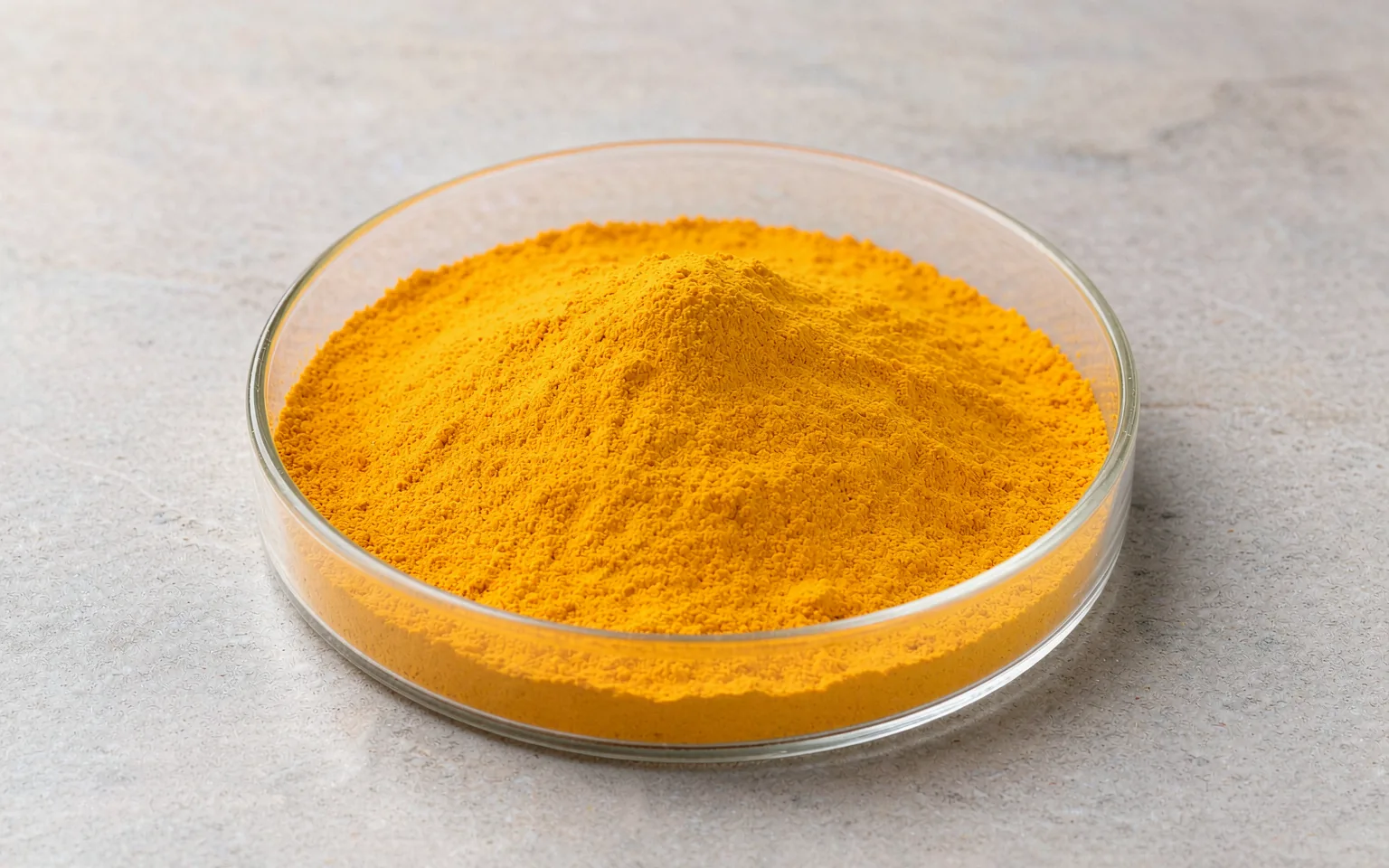
Grape seed extract is one of the few botanical ingredients where the same lot can be quoted at three different purities without anyone lying. Proanthocyanidins are measured by the acid-butanol colour reaction, total polyphenols by Folin-Ciocalteu, and identity by HPLC — three different assays on one drum. If a quotation says “95%” and nothing else, the first question worth asking is which of the three the number refers to.
We manufacture grape seed extract from Vitis vinifera seed at an approximately 50:1 extract ratio, extracted with water and ethanol and milled to 80 mesh. The grade we hold is 95% proanthocyanidins by UV with 70% total polyphenols, which is the pairing most supplement specifications are actually written against once you read past the headline figure.
Product Specifications
| Item | Specification |
|---|---|
| Product Name | Grape Seed Extract |
| Botanical Name | Vitis vinifera L. (dry seed) |
| Extract Ratio | Approx. 50:1 |
| Proanthocyanidins | 95.0% min, UV (acid-butanol) |
| Total Polyphenols | 70.0% min, UV (Folin-Ciocalteu) |
| Identification | Positive by HPLC |
| Appearance | Red brown powder |
| Odour and Taste | Characteristic; astringent and bitter |
| Extract Solvent | Water and ethanol |
| Loss on Drying | 5.0% max |
| Sulphated Ash | 5.0% max |
| Bulk Density | 0.30–0.60 g/ml |
| Particle Size | 95% min through 80 mesh |
| Heavy Metals | Pb 0.5, As 0.5, Cd 0.1, Hg 0.1 mg/kg max, ICP-MS |
| Residual Solvents | USP <467> |
| Pesticides | USP <561> |
| Microbiology | TPC 1,000 cfu/g max, yeasts and moulds 100 cfu/g max, E. coli, Salmonella, S. aureus and P. aeruginosa negative |
| Irradiation | Irradiation free |
| Packaging | 25 kg net, paper drum with two food-grade inner liners |
| Shelf Life | 36 months, sealed, away from moisture and light |
| MOQ | 25 kg (one drum); samples available |
Which of the Three Numbers Is Your Specification Written On
The acid-butanol assay reacts with the flavan-3-ol polymers that make up proanthocyanidins and reads them as a colour intensity, so it reports the fraction the method was calibrated for rather than a molecule-by-molecule total. Folin-Ciocalteu is not specific to proanthocyanidins at all — it reacts with any phenolic — which is why a 95% proanthocyanidin extract routinely shows polyphenols in the low seventies and both figures can be correct for the same powder. HPLC identification then confirms the profile rather than quantifying it.
In practice a buyer writing a specification on “grape seed extract 95%” usually means the UV proanthocyanidin figure, and the polyphenol number is the cross-check that the material has not been diluted with a cheaper tannin source. Our certificate reports both, with the assay method named for each, so the two figures can be compared line by line against the specification you were given.
The Astringency Problem in Beverage Applications
Proanthocyanidins bind salivary proteins — that binding is the astringency, and the same reaction happens with the proteins in a beverage base. In a clear drink, the complexes eventually grow past their solubility limit and drop out as haze, usually after pasteurisation rather than before, which is why a bench sample can look fine and a filled bottle does not. The risk rises with polymer size and with protein content in the base, so a dairy or plant-protein matrix is far less forgiving than a sugar-only one.
For clear systems the practical route is to keep the dose low, clarify early in development, and run a hold test at the intended process temperature rather than at ambient. For opaque or emulsified systems the haze has nowhere to show, so the constraint moves to taste instead: at higher doses the bitterness becomes the limiting factor before the analytical specification does.
Where the 95% Grade Actually Gets Used
- Two-piece hard capsules and pressed tablets dosed in the few-hundred-milligram range, where the proanthocyanidin figure is the basis the trade quotes on
- Clarified functional drinks and shots, but only after a hold test on the finished base at process temperature
- Polyphenol blend powders sold alongside resveratrol, quercetin or green tea fractions
- Skin care serums and creams where the tannin fraction is wanted for its astringent and antioxidant behaviour
Why Buyers Source Grape Seed Extract From Green Spring
- We manufacture the water-ethanol extract in our own plant and mill to 80 mesh, so the extract ratio and the mesh are process settings we control rather than descriptions from a trading sheet
- Each lot ships with a certificate naming the assay method beside each figure, so proanthocyanidins and polyphenols can be reconciled against your specification
- Heavy metals by ICP-MS and full USP <467> / <561> coverage, with raw data available on request before you commit
- 25 kg drums with a 36-month shelf life, and sample quantities against a target specification rather than a generic stock sample
Frequently Asked Questions
Is 95% proanthocyanidins the same as 95% OPC?
In trade use the two are written interchangeably, but OPC strictly means the oligomeric fraction — the shorter chains — while the acid-butanol assay reports all reactive proanthocyanidins including the larger polymers. An “OPC 95%” claim that is backed only by the acid-butanol figure is therefore not a measurement of oligomers alone. If your specification sets a separate oligomer limit, send it and we will confirm what the current lot can demonstrate, and by which method.
What extract ratio should the specification state?
Ours is approximately 50:1 on dried seed, which is a process descriptor rather than a potency guarantee — the potency guarantee is the proanthocyanidin figure. Buyers who write “50:1” into a specification often later discover that ratio alone does not pin down the actives, so we report both and let the ratio serve as a consistency indicator across lots.
Can you supply a water-only extract or a different purity?
The standard grade is water-ethanol at 95% proanthocyanidins. Water-only extraction and lower or higher purities are quotable on request; lead time and the assay route are confirmed before we commit, because changing the solvent changes the polyphenol-to-proanthocyanidin relationship on the certificate.
What documentation comes with a shipment?
A batch certificate of analysis covering assay, heavy metals by ICP-MS, residual solvents, pesticides, microbiology and irradiation status, plus the material safety data sheet and a technical data sheet. Certificates for previous lots can be sent ahead of an order so you can see lot-to-lot variation before the first purchase.
Send your specification and the assay method it names, and we will confirm the current lot against it and quote with a sample. Request a quotation and a sample.