Milk thistle extract has a reputation for being a straightforward commodity, and it is — right up to the point where two suppliers quote “80% silymarin” and the certificates turn out to be measuring different things. Silymarin is a family of four flavonolignans, and the UV assay that the trade uses reads the family as a group against a reference standard. An HPLC assay reads individual silibinin. The two numbers do not line up, and a buyer comparing quotations across suppliers without knowing which method was used is comparing nothing.
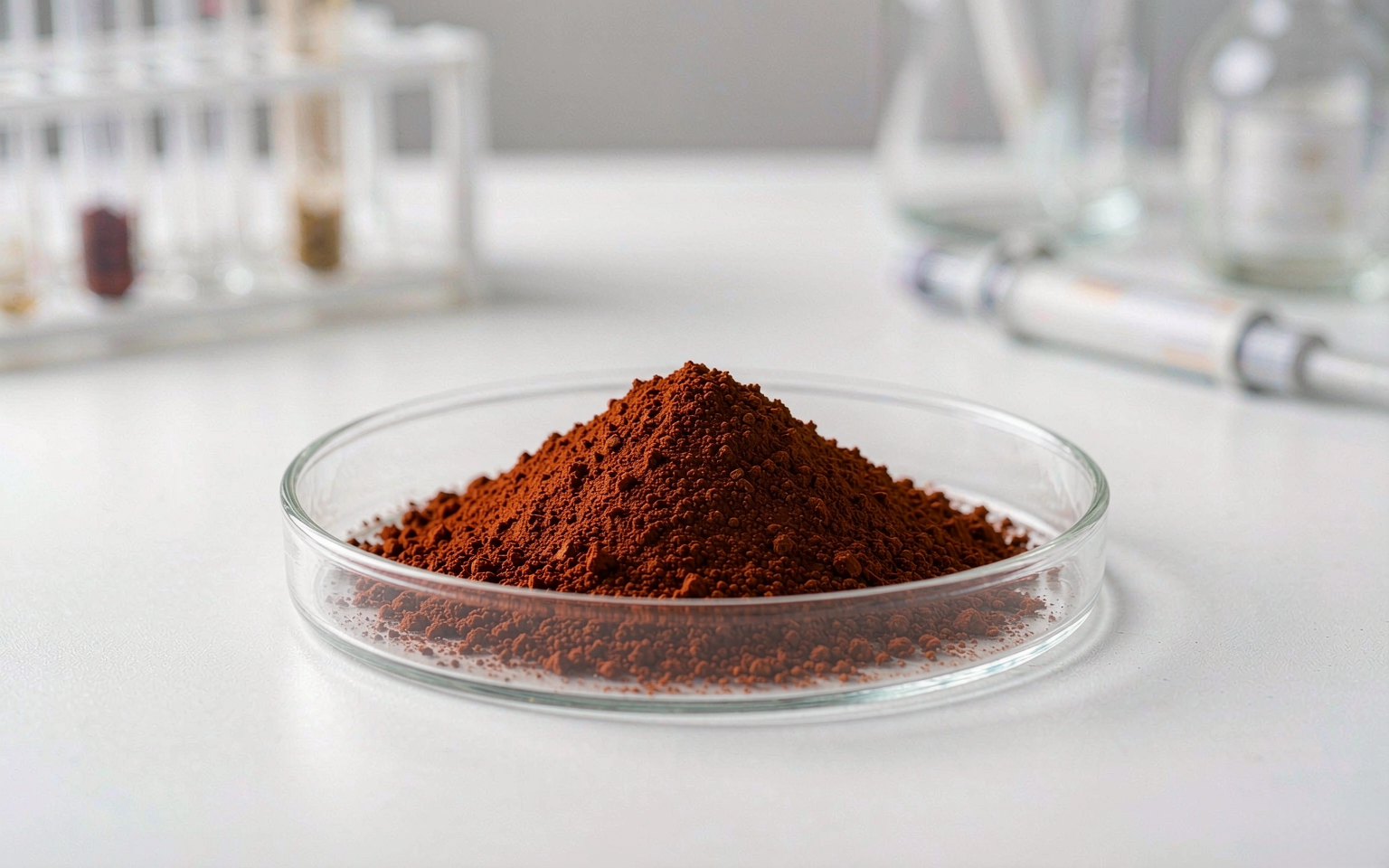
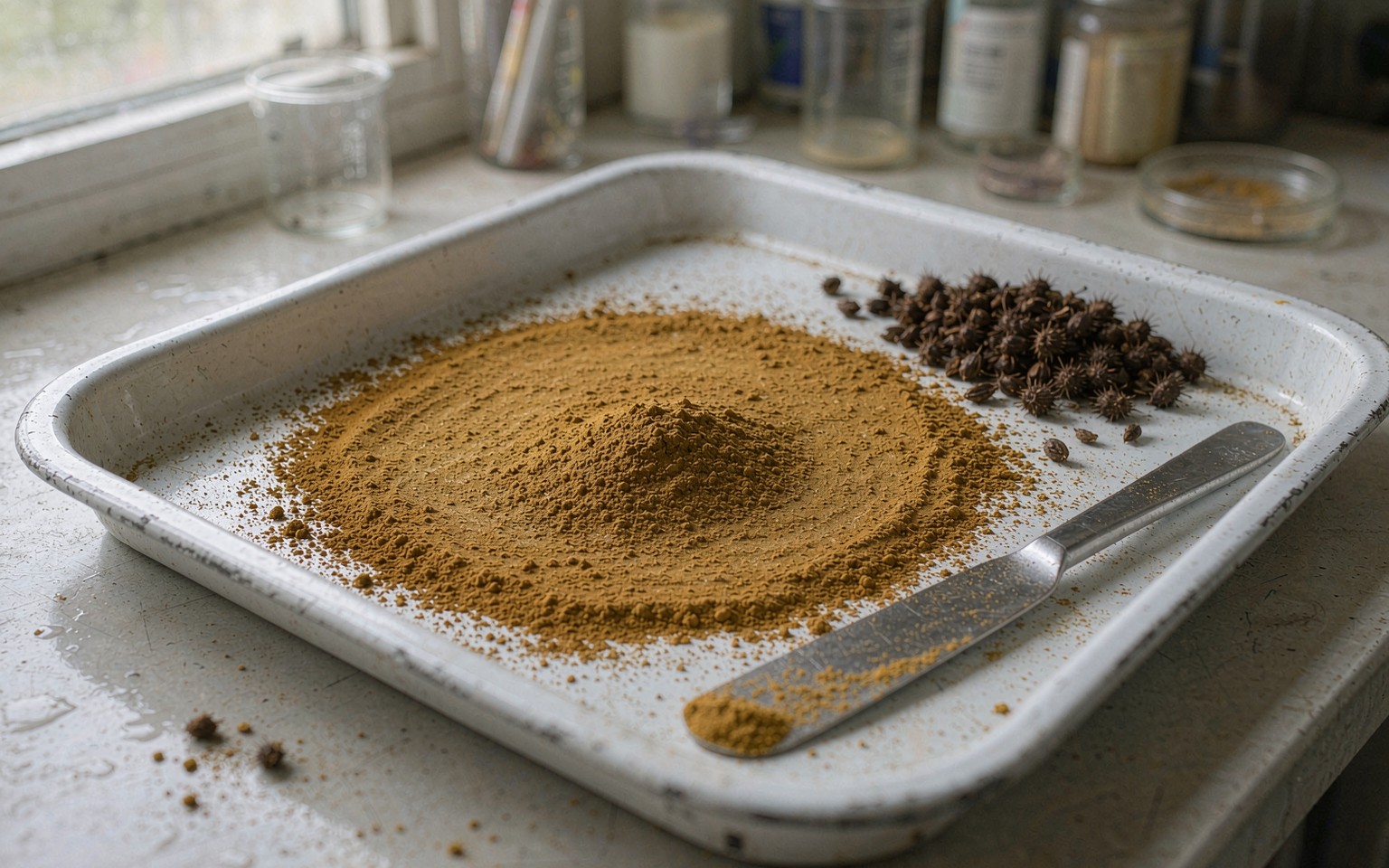
We manufacture the extract from Silybum marianum seed, milled to 80 mesh, with silymarin standardised to 80% minimum by UV against an in-house standard. It is a yellowish brown amorphous powder, practically insoluble in water and soluble in methanol and acetone — a solubility profile that shapes which applications are realistic far more than most product sheets admit.
Product Specifications
| Item | Specification |
|---|---|
| Product Name | Milk Thistle Extract (Silymarin) |
| Botanical Name | Silybum marianum (L.) Gaertn. (seed) |
| Silymarin | 80.0% min, UV against in-house standard |
| Identification | TLC and HPLC |
| Appearance | Amorphous powder, yellow to yellowish brown |
| Odour | Slight, specific |
| Solubility | Practically insoluble in water; soluble in methanol and acetone |
| Total Ash | 0.45% max |
| Loss on Drying | 5.0% max (2 h at 105 °C) |
| Particle Size | 90% min through 80 mesh |
| Heavy Metals | 20 ppm max total; Pb 0.5, Cd 1.5, Hg 0.1, As 3.0 mg/kg max, ICP-MS |
| Residual Solvents | n-Hexane 290 ppm max; methanol 3,000; acetone 5,000; ethyl acetate 5,000; ethanol 5,000 mg/kg max |
| Pesticides | USP <561> |
| Microbiology | TPC 1,000 cfu/g max, moulds and yeasts 100 cfu/g max, E. coli, Salmonella and S. aureus absent |
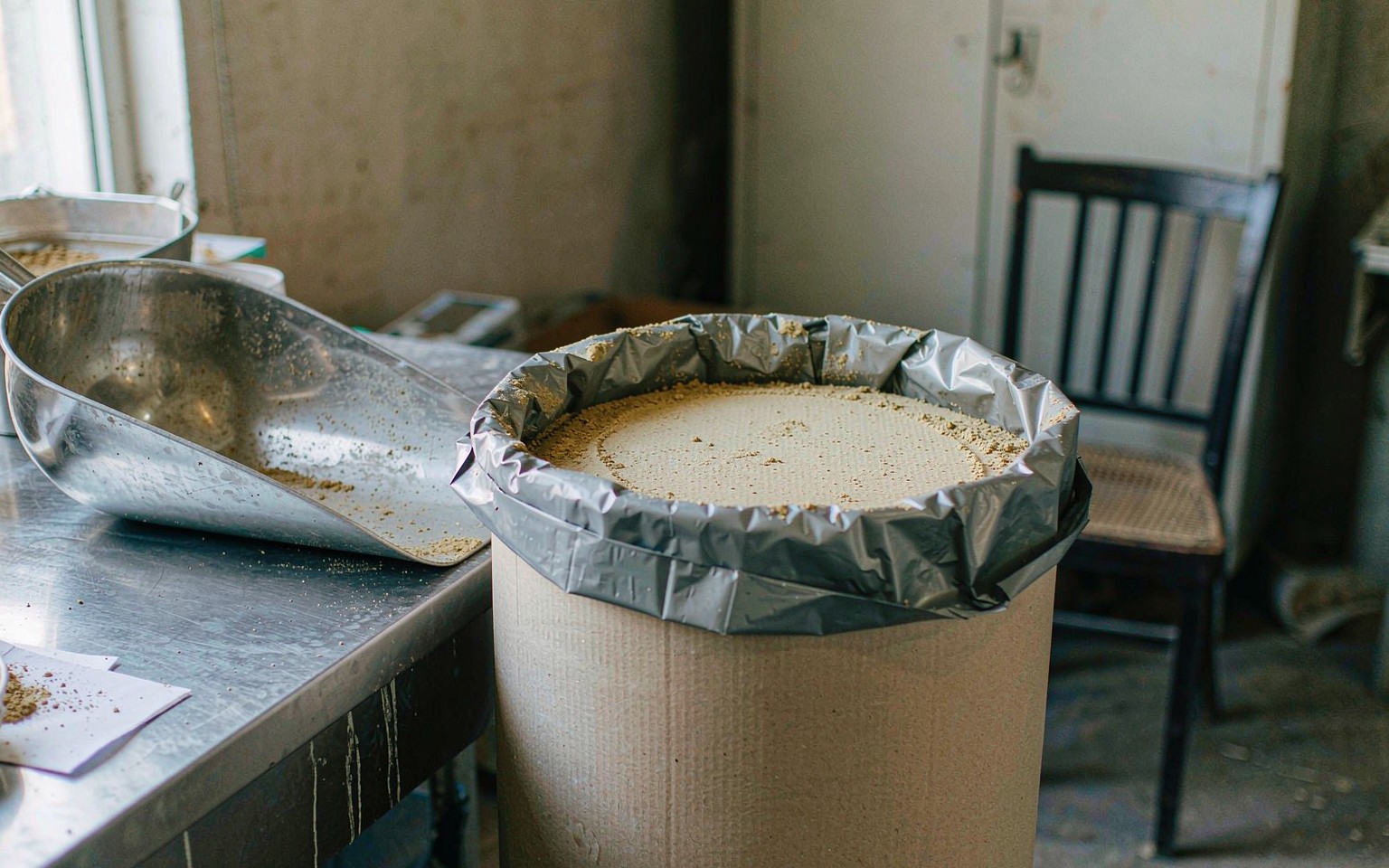
| Packaging | 25 kg net cardboard drum |
| Storage | Tight, light-resistant, dry; avoid direct sunlight |
| Shelf Life | 36 months |
| MOQ | 25 kg (one drum); samples available |
Silymarin by UV and Silibinin by HPLC Are Not Interchangeable
The UV method quantifies the total flavonolignan complex — silibinin, silychristin, silydianin and the rest — against a reference of defined composition. The HPLC method usually reports silibinin alone, and silibinin typically sits somewhere near half of the total complex depending on the raw seed and the extraction. So an extract that reads 80% by UV may read around 40–50% as silibinin, and both certificates are honest.
This matters at the point of purchase, not in the laboratory. If your finished-product label declares a silymarin quantity, the UV figure is normally the one that supports it, and that is the number we standardise against. If your specification or your customer has written silibinin by HPLC, tell us before the order so we can quote against the right assay rather than have the discrepancy surface at goods-in inspection.
Water Insolubility Decides the Application Before Anything Else
Practically insoluble in water means this ingredient does not go into a clear beverage without help. In a capsule or a tablet it is unproblematic — dry blend, compress, done. In a sachet or a ready-to-mix powder it disperses rather than dissolves, which is acceptable if the finished product is meant to be cloudy and unacceptable if it is not. In a liquid, the formulation work sits with you: suspension, emulsification or a phospholipid complex, each of which changes the cost per dose substantially.
The residual solvent profile is worth reading as a fingerprint of the extraction route rather than as a compliance footnote. Hexane, acetone, ethyl acetate and ethanol appearing together points to a solvent sequence rather than a single-solvent process, and the limits on the certificate tell you what the process is expected to leave behind. Buyers moving to a cleaner-label position should ask for the actual figures, not just conformance, because conformance has a wide band.
Formats This Powder Fits
- Two-piece capsules and direct-compression tablets at the 150 to 300 mg range, the format that dominates this category
- Dry sachet blends where a cloudy dispersion is acceptable and no dissolution step is needed
- Phytosome intermediates, where the extract is complexed with phospholipid before further processing
- Multi-botanical herbal blends sitting next to artichoke, dandelion or turmeric fractions
Why Buyers Source Milk Thistle Extract From Green Spring
- The certificate states that silymarin is measured by UV against an in-house standard, so there is no ambiguity about which assay the 80% refers to
- Full residual solvent panel including n-hexane, with the individual limits and figures rather than a single conformance line
- Heavy metals by ICP-MS against a tight cadmium limit of 1.5 mg/kg, which is where this raw material most often fails
- 25 kg cardboard drums and 36-month shelf life, with samples released against your target specification
Frequently Asked Questions
What does 80% silymarin by UV actually mean?
It means the total flavonolignan complex, measured photometrically against a reference standard of defined composition, is 80% or more of the extract by weight. It is not a silibinin figure. If your specification is written on silibinin by HPLC, the number will be materially lower for the same powder and we will quote against that basis instead.
Can I get an HPLC silibinin specification?
Yes, on request. Tell us the target at the enquiry stage rather than at goods-in, because it may change which lot we release and it changes the certificate. We would rather adjust the quotation than have a container held up over an assay definition.
Is it suitable for a clear beverage?
Not without formulation work. The extract is practically insoluble in water, so a clear drink needs a solubilised or emulsified intermediate. In capsules, tablets and cloudy powder mixes the insolubility is not a problem at all.
How is it packed and how long does it keep?
25 kg net in a cardboard drum, stored tight, light-resistant and dry away from direct sunlight, with a 36-month shelf life in the unopened drum. Smaller sample quantities ship in sealed foil pouches.
Send the assay definition and the target market, and we will confirm the current lot and quote with a sample. Request a quotation and a sample.