Most beta carotene on the market is a powder, which is why the first thing worth saying about this one is that it is not. This is a 30% suspension — a viscous, orange-red liquid — and it behaves like a liquid throughout: it is pumped rather than scooped, it settles rather than cakes, and it needs to be brought back into suspension before a batch is drawn. Buyers who assume powder and plan a dry-blend step find out quickly that the process does not fit.
For liquid fills, emulsions and anything where a powder would have to be dissolved first, the suspension removes a manufacturing step. We supply it at 30% with both a total carotenoid figure by UV and a beta carotene figure by HPLC on the same certificate, because the two are measured differently and the difference matters when a specification names only one of them.
Product Specifications
| Item | Specification |
|---|---|
| Product Name | Beta Carotene 30% |
| Description | Viscous, orange-red liquid suspension |
| Total Carotenoid | 30.0% min, UV |
| Beta Carotene | 30.0% min, HPLC |
| Identification | Maximum absorption 453–457 nm, UV; retention time by HPLC conforms to reference |
| Absorbance at 340 nm | 0.080 max |
| Loss on Drying | 0.5% max |
| Ash Content | 0.5% max |
| Heavy Metals | 10 ppm max total; As 1.0, Pb 3.0, Cd 1.0, Hg 0.1 ppm max |
| Microbiology | TPC 1,000 cfu/g max; yeasts and moulds 100 cfu/g max; E. coli negative/10 g; Salmonella negative/25 g |
| Packaging | Drum or carton, packed to order |
| Storage | Cool and dry, do not freeze, away from strong light and heat |
| Shelf Life | 24 months when properly stored |
| MOQ | One drum or carton; samples available |
Viscosity, Pumping and Transfer Loss
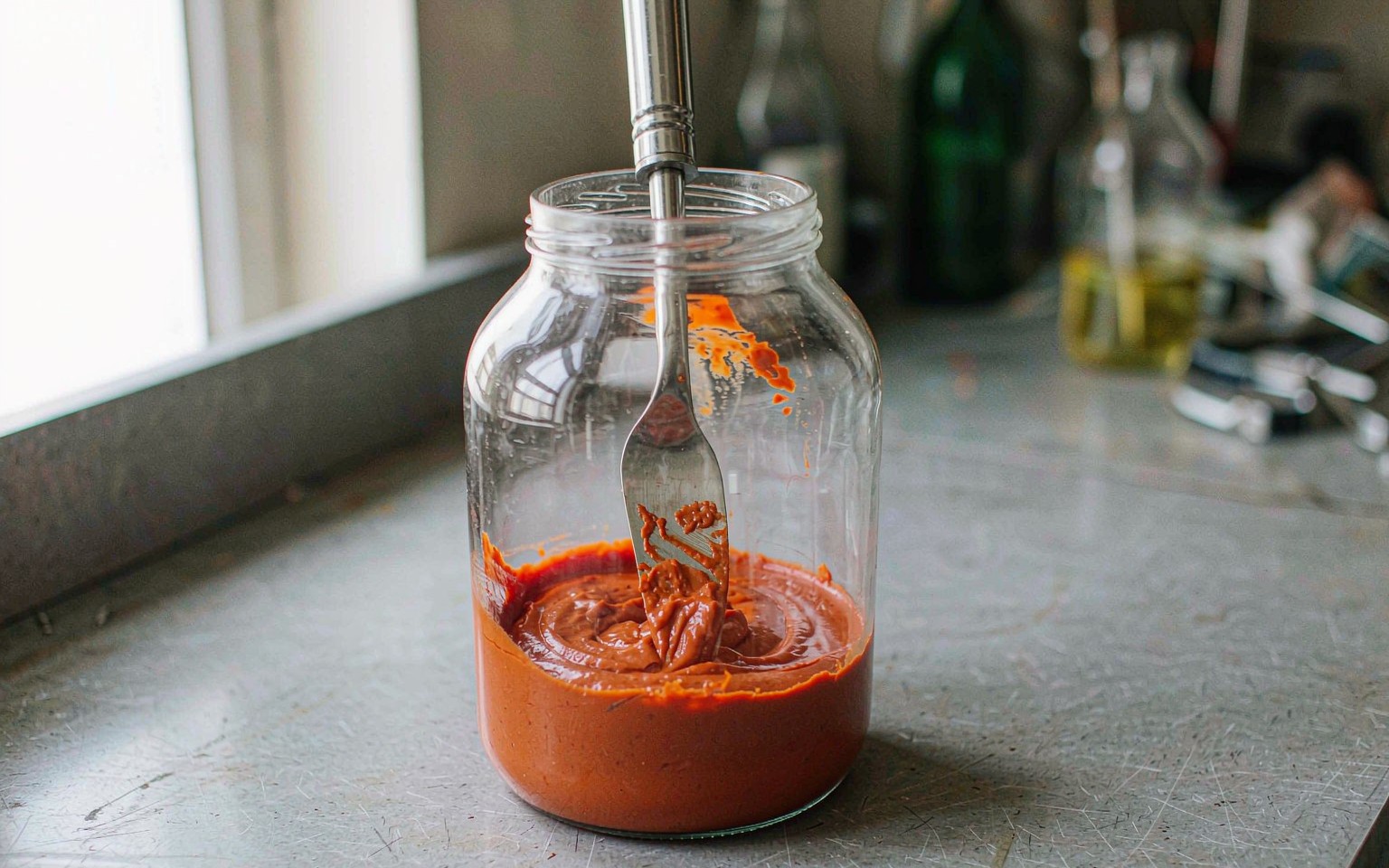
A 30% suspension is thick enough that half a drum can stay behind on the walls, and that residue is fully priced. Gear or progressive-cavity pumps handle it; a small centrifugal unit will cavitate and leave the heel untouched. Where the plant runs cool, raising the container to room temperature before pumping brings the viscosity down enough for complete transfer, and the batch sheet should record the weight drawn against the weight invoiced rather than assuming the two match.
Because the material is a liquid, errors arrive quietly. A drum drawn from the top without homogenising gives a lean first portion and a rich last one, and both portions pass their own checks while the finished batch is a shade off. Reconciling weight drawn against the certificate strength is the only routine check that catches it, and it costs nothing but a scale.
What the 340 nm Reading Tells You
Absorbance at 340 nm sits on the certificate at a 0.080 ceiling and has nothing to do with strength. It moves when the material has been kept warm or exposed, so it is the earliest visible sign of how a drum has been treated between filling and delivery — information a liquid product otherwise hides completely, since there is no cake and no tint shift to give the game away.
Two containers at the same declared percentage can therefore differ in remaining useful life. When comparing offers, ask for the 340 nm result alongside the assay and prefer the lower one; it usually costs nothing and it tells you which supplier has been storing the goods properly.
Applications
- Margarine, spreads and fat-based dairy alternatives, where colour is required through the fat phase
- Dressing, sauce and creamer emulsions that need a yellow-orange carried in oil
- Bakery and confectionery where a liquid colour meters more accurately than a powder against a short batch
- Cheese analogues and filled dairy, where a pumpable colour fits an inline dosing point
Why Buyers Source Beta Carotene From Green Spring
- Both the UV carotenoid total and the HPLC beta carotene figure are on the certificate, so the gap between them can be checked rather than assumed
- The 340 nm absorbance is reported, which gives an early read on how the lot has been stored
- Liquid packing in drums or cartons to order, so a pilot run does not have to buy a full drum
- We also manufacture carrot powder, so a buyer working with provitamin A positioning can source both the raw-material route and the standardised colour

Frequently Asked Questions
Is this a powder or a liquid?
A liquid. It is a viscous, orange-red 30% suspension, supplied in drums or cartons. If your process is built around a dry powder, this grade will not drop into it without changing the handling step, so tell us the process at enquiry and we will point you to the right format.
Why do the UV and HPLC figures differ slightly?
The UV reading covers total carotenoid and the HPLC reading covers beta carotene alone. A small gap is normal and expected; a large gap means other carotenoids are present in quantity. Both figures are on the certificate so the relationship can be judged rather than taken on trust.
How should it be stored and dosed?
Cool and dry, not frozen, away from strong light and heat, with the container closed between draws. Homogenise the whole container before use, because the suspension settles and a top draw is leaner than the bulk.
What is the regulatory position for colour use?
Beta carotene is a listed colour additive in the United States under 21 CFR 73.95 and authorised in the EU as E160a, with permitted uses and levels set by food category. The listing reflects the colour use; it is not a health claim, and high-dose beta carotene has its own cautions in certain populations that finished-product labelling may need to reflect. Confirm permitted use for your market and category.
Send the process, the phase you are dosing into and the target shade, and we will confirm grade and quote with a sample. Request a quotation and a sample.