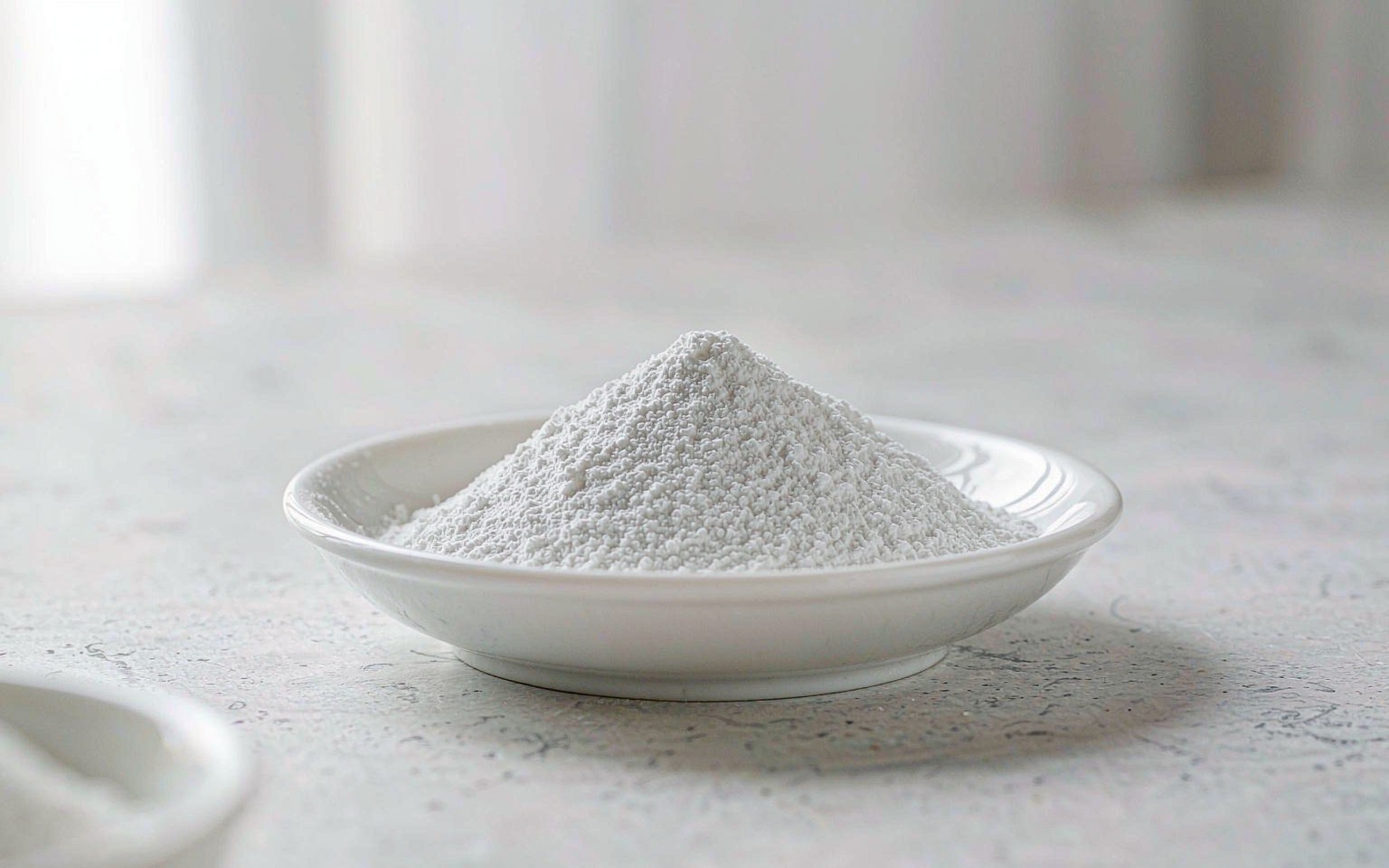
Sodium hyaluronate is the sodium salt of hyaluronic acid, a linear polysaccharide built from repeating disaccharide units of glucuronic acid and N-acetylglucosamine. In cosmetics it is bought for one property above all others: it holds water. A single gram binds many times its own weight, which is why a fraction of a percent changes the feel of a serum more than most other ingredients at ten times the dose.
What changes between grades is not the chemistry but the chain length. Molecular weight sets viscosity, film formation and how far the material can travel into the stratum corneum — and those three properties pull in different directions, which is why the market has settled into molecular weight brackets rather than a single specification.
Product Specifications
| Item | Specification |
|---|---|
| Product name | Sodium hyaluronate (hyaluronic acid, sodium salt) |
| INCI name | Sodium Hyaluronate |
| CAS number | 9067-32-7 |
| Appearance | White powder |
| Assay | Available on request — declared per lot on the COA |
| Molecular weight | Seven brackets from above 1.8 million Da down to below 10,000 Da — see the table below |
| Loss on drying | Available on request — declared per lot on the COA |
| Heavy metals | Available on request — tested per lot against the destination limit |
| Packaging | 1 kg and 5 kg aluminium foil bags inside a fibre drum; bulk drums on request |
| Storage | Sealed, dry, away from light; the powder is hygroscopic once opened |
| Shelf life | 24 months in the unopened original packaging |
| Certificates | Available on request |
Molecular Weight Brackets
The bracket decides the behaviour, and the number on the COA should match the bracket you ordered rather than sitting anywhere inside a wide range.
| Molecular weight | Behaviour and typical use |
|---|---|
| >1.8 million Da | Highest viscosity, film-forming; used in dermal fillers and high-viscosity serums |
| 1.8 to 1.5 million Da | High molecular weight; strong films and cushioning for topical gels |
| 1.5 to 0.8 million Da | Standard cosmetic grade; lubricity and moisture retention in creams and lotions |
| 1.5 to 0.8 million Da | Same bracket, narrow fraction supplied for viscosity-controlled systems |
| 0.6 to 0.2 million Da | Medium molecular weight; faster absorption, used in essences and serums |
| 0.2 million to 10,000 Da | Low molecular weight; deeper penetration claims in skincare |
| <10,000 Da | Oligomeric fraction; used where penetration matters more than viscosity |
Why Molecular Weight Is the Whole Specification
High molecular weight material forms a film on the surface: it cushions, it holds water in the upper layers and it gives a serum its body. Low molecular weight material penetrates further and leaves less residue, but it also provides less of the film that consumers read as hydration. That is why a formulator rarely chooses one bracket — a typical serum pairs a high molecular weight grade for feel with a low molecular weight grade for the penetration claim, and the ratio between them is the real formulation decision.
Viscosity is the practical consequence. At the same percentage, a 1.5 million Da grade can be several times more viscous than a 0.3 million Da grade, so swapping brackets without adjusting the dose turns a serum into a gel. If you are reformulating, ask for the viscosity of a 1% solution at the bracket you are considering, not just the molecular weight.

Applications
Serums and essences use the medium and low brackets for a light, fast-absorbing feel. Creams and lotions use the high brackets for cushioning and film formation. Cleansers and masks use low brackets where a tight after-feel would be a defect. In all of them the powder is dispersed in the aqueous phase at cool-down, allowed to hydrate fully before the thickener is added, and preserved as a nutrient-rich system.
Documentation and Quality Control
Each lot ships with a certificate of analysis covering assay, molecular weight, loss on drying, heavy metals and the microbial profile, together with the technical data sheet and safety data sheet. The molecular weight is measured per lot and stated on the COA, because the bracket is the specification your customer will check. Non-GMO and allergen declarations are issued with the quotation.
Frequently Asked Questions
Which molecular weight should I choose?
It depends on the claim. High brackets for cushioning, film and viscosity; low brackets for absorption and a light after-feel. Most finished products use two brackets rather than one.
Is the molecular weight measured on every lot?
Yes, and it appears on the certificate of analysis with the assay, so the bracket can be verified on arrival rather than assumed from the product name.
What is the difference between hyaluronic acid and sodium hyaluronate?
Sodium hyaluronate is the salt form, and it is the form supplied for cosmetic use because it is more soluble and more stable in formulation than the free acid.
Tell us the bracket, the viscosity target and the application, and we will quote against stock with the COA for the lot we intend to ship.