
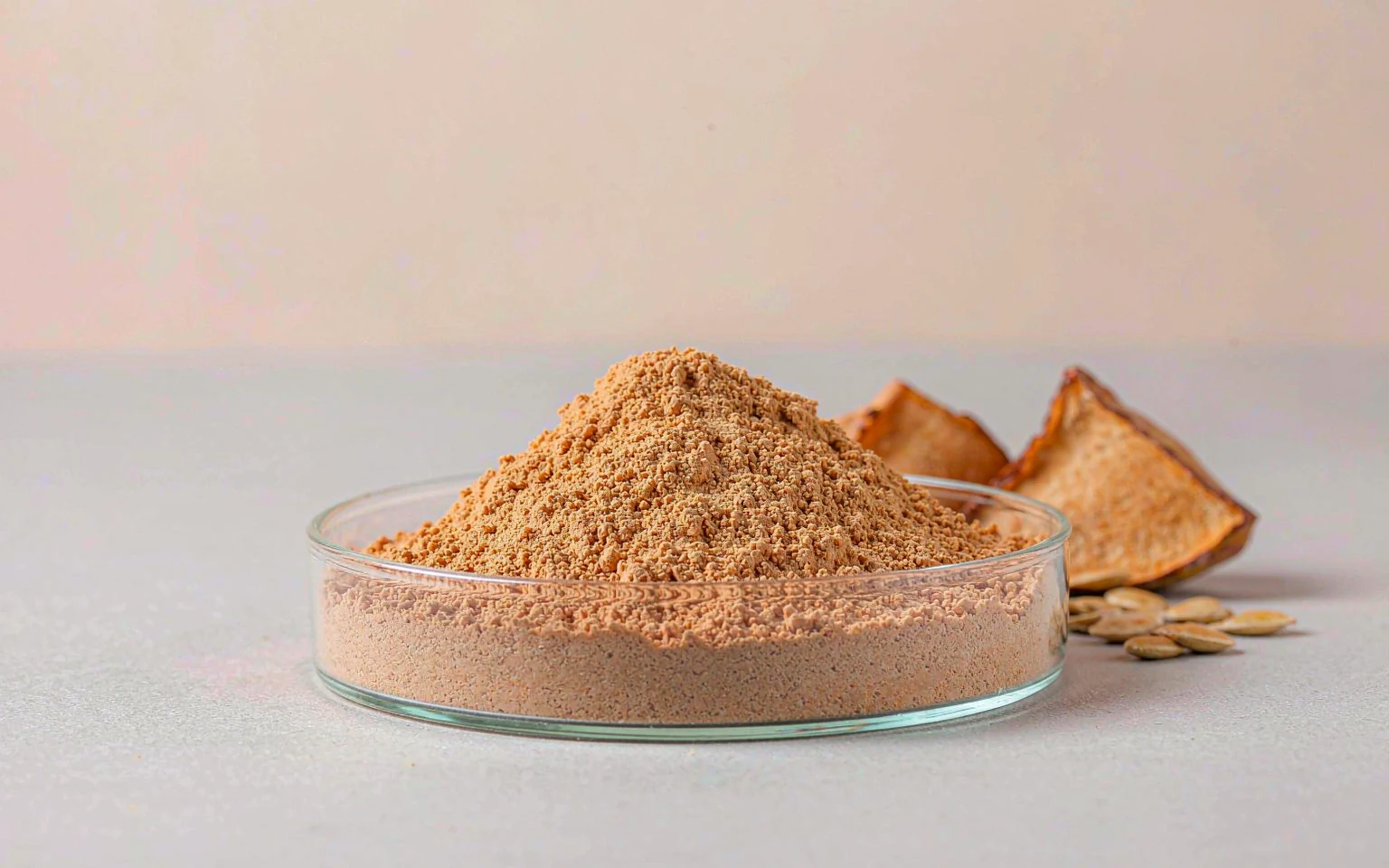
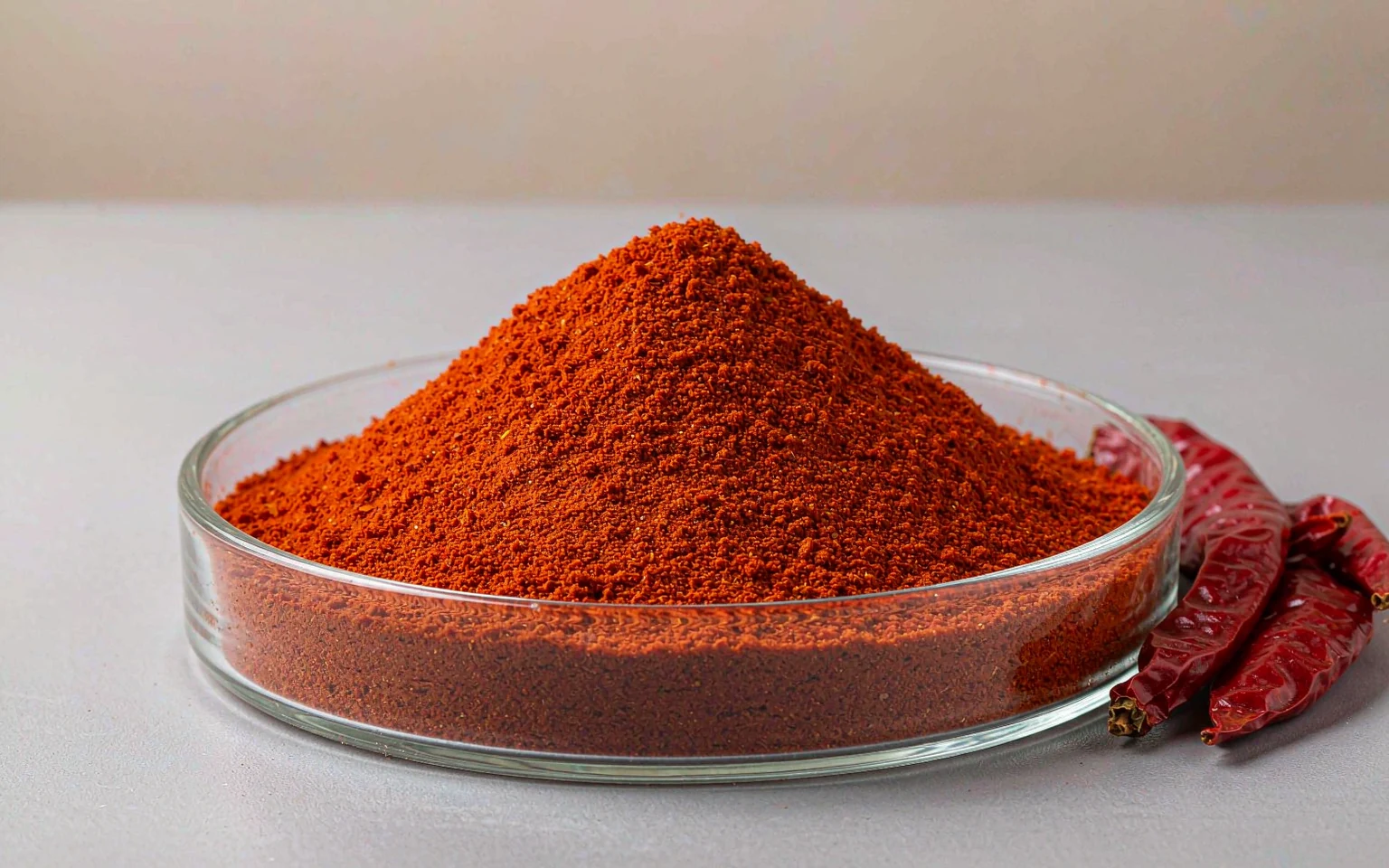
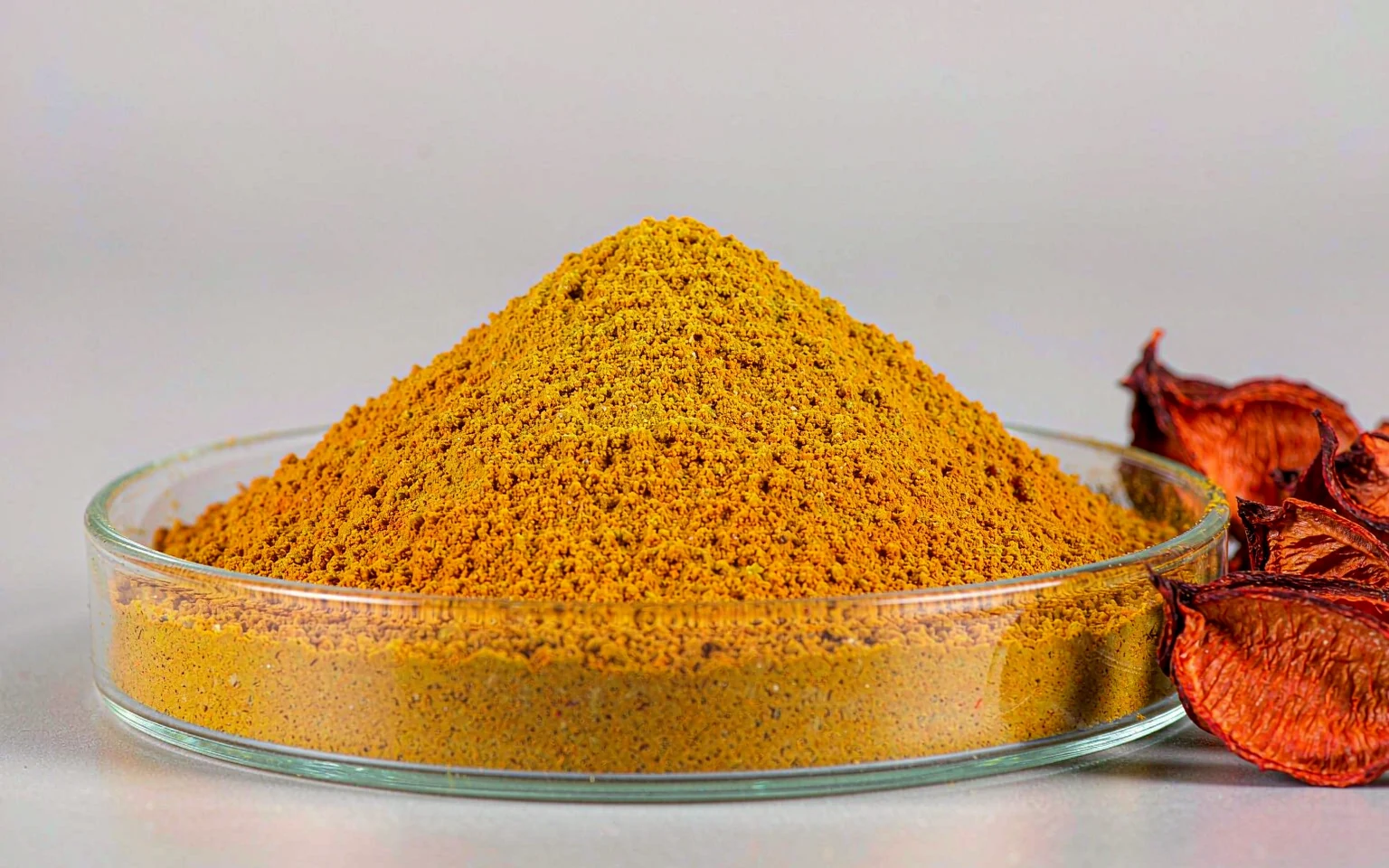
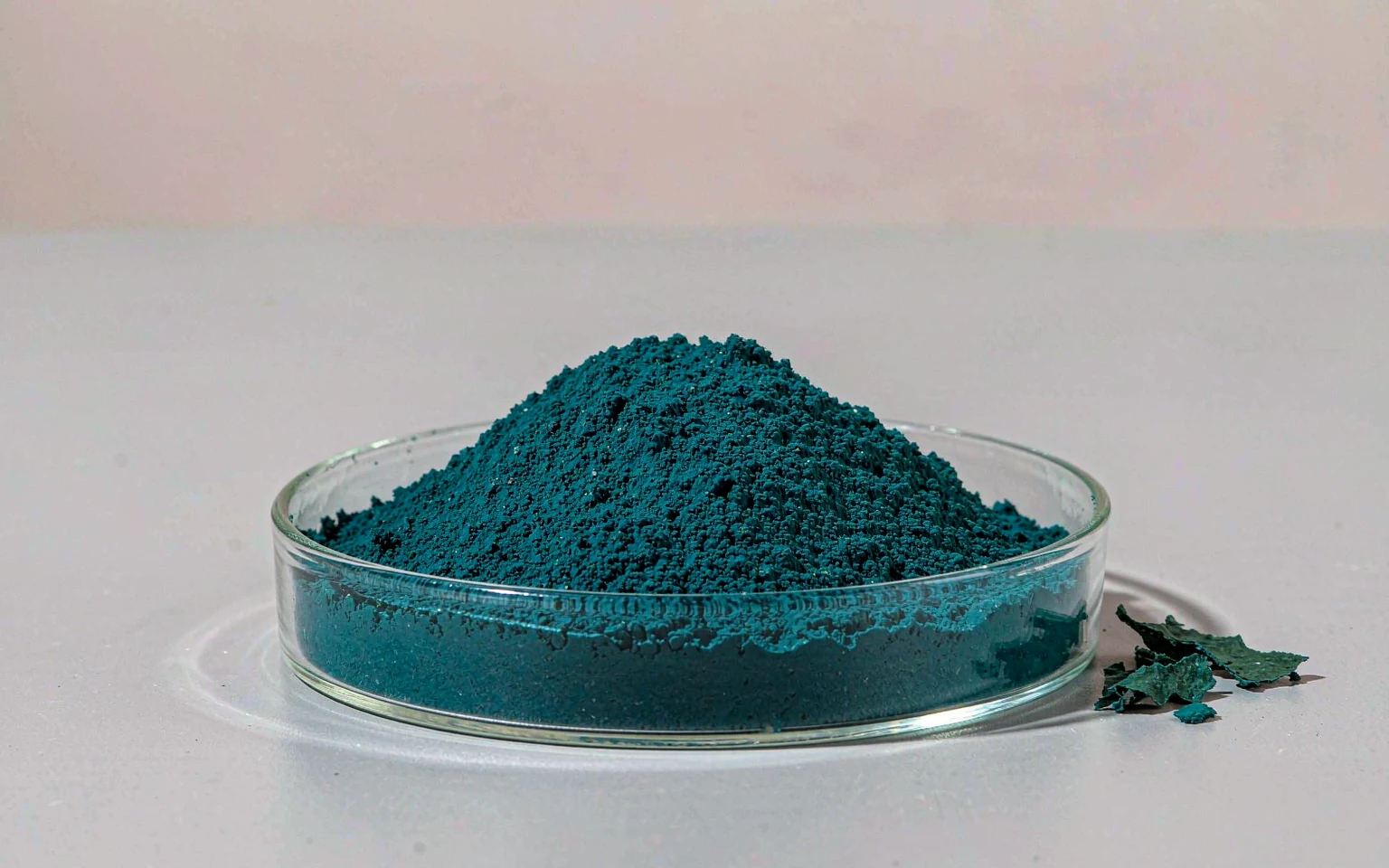
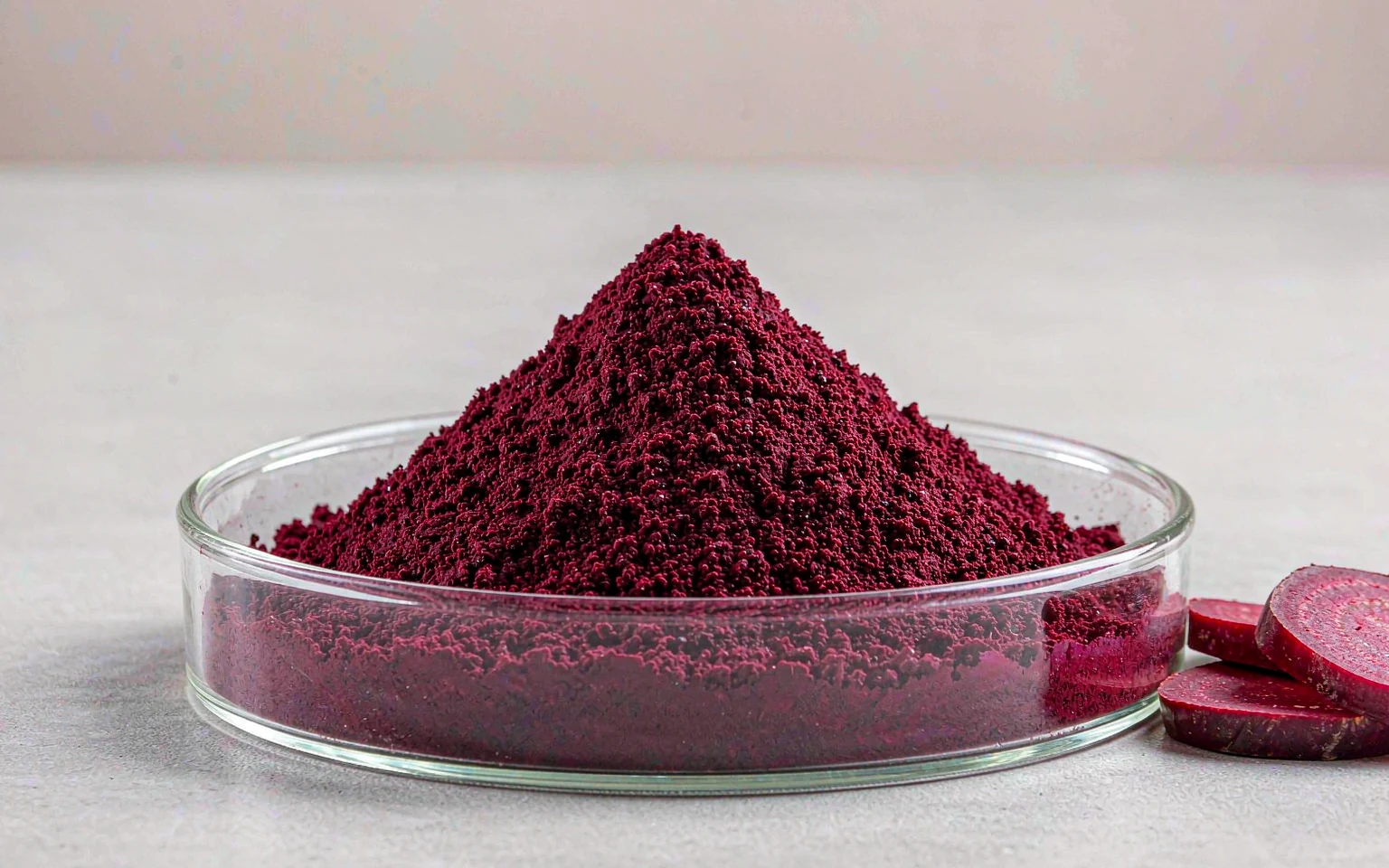
In the European Union, a concentrate made from beetroot can reach a food manufacturer under two completely different legal identities. Sold as a colour additive, it is E 162, and the label must say so. Sold as a colouring food, it is declared simply as beetroot juice concentrate — an ingredient, not an additive, with no E number anywhere on the pack. The United States does not recognise the second category at all: the same concentrate is regulated there as a colour additive derived from beet juice. This range exists because that distinction is worth understanding before a formulation is locked, and because it changes what is legally possible on the label in each market.
Three conditions have to hold at the same time. Miss any one of them and the material falls back into the additive category, whatever the marketing material says.
The source has to be a food in its own right. Fruit, vegetables, edible plants, algae — materials with a history of being eaten, not isolated compounds with a technical function.
The process has to be ordinary food processing. Pressing, filtering, concentrating, drying. What is excluded is selective extraction or purification aimed at the pigment itself — the step that turns a food into an additive.
The enrichment has to stay within what that process can reasonably reach. A concentrate is still a concentrate, not a purified colourant wearing a food label. The industry measures this with an enrichment factor (FN value) under the NATCOL code of practice; the number describes how far the pigment has been concentrated relative to the raw material.
All three conditions concern how the material was made. None of them can be established from a specification sheet alone — which is why the process documentation matters as much as the COA.
The FN value is the practical test a buyer can apply. It compares pigment concentration in the finished material against the same pigment in the raw food, and the number tells you how far the concentration has been pushed. A moderate factor is consistent with a juice concentrate; a very high one suggests the material has more in common with an extract than with a food. Suppliers who work on this basis will state the factor and the process behind it. A supplier who cannot describe the process in concrete steps — what was pressed, what was filtered, what was concentrated, and whether any selective purification took place — has not established the route, regardless of what the product page says.
The same six raw materials produce different declarations depending on the market. This table is the practical reference: it is what your label will actually say.
| Raw material | EU declaration as colouring food | US declaration | US basis |
|---|---|---|---|
| Black carrot | black carrot juice concentrate | black carrot juice (for color) | Vegetable juice colour, 21 CFR 73.260 |
| Beetroot | beetroot juice concentrate | beet juice (for color) | Vegetable juice colour, 21 CFR 73.260 |
| Spirulina | spirulina concentrate | spirulina extract (for color) | 21 CFR 73.530 |
| Pumpkin | pumpkin juice concentrate | pumpkin juice (for color) | Vegetable juice colour, 21 CFR 73.260 |
| Paprika | paprika powder | paprika oleoresin is a listed colour additive; powder sold as a spice follows a separate route | Confirm the applicable entry for your grade |
| Safflower | safflower concentrate | Not authorised as a colour additive | — |
Two conventions are worth pinning down before anyone writes a label. Choose one style and use it consistently across the whole document set: either the raw-material name alone (beetroot juice concentrate) or the qualified form (colouring food (beetroot concentrate)). Mixing them in the same technical file creates questions in a customer's regulatory review that are avoidable.
The US column is not a formality. A concentrate that carries an ingredient declaration in Rotterdam is still a colour additive in Chicago, and the FDA entry has to be the correct one for the source material. Paprika illustrates the trap: paprika oleoresin and paprika powder are not the same regulatory object, and a specification written for one does not automatically cover the other.
When the ingredient list is the product. A short declaration is the whole point for brands whose positioning rests on recognisable ingredients. A concentrate delivers colour and a food name in the same line.
When the dosage is generous anyway. Systems that need a large amount of colour — high-dose confectionery, some bakery, products where the colour level is set by the raw material rather than by a target shade — do not benefit from the concentration that an additive provides, and the concentrate brings flavour and body along with the hue.
When the EU is the primary market and the formulation is being set now. Choosing the ingredient route at the specification stage costs nothing. Reformatting a label later, after artwork and claims have been approved, does.
This section exists because the honest boundary is more useful than a longer list of advantages.
Colour value is lower. A concentrate carries the water, sugars and solids of its source. Where a standardised additive delivers a defined colour value per kilogram, a concentrate delivers a range — and that range costs more per unit of colour, often substantially.
Batch variation is wider. Raw material varies by season and origin. An additive is standardised to a number; a concentrate is characteristic of its crop. Formulators who need a fixed shade every run will feel this.
Stability is not always equivalent. Heat, pH and light behave differently for a whole-food matrix than for a purified pigment. Several of these materials are more sensitive than their additive counterparts, and a few are less predictable in combination with other ingredients.
It does not remove regulation. Colouring foods sit under general food law — safety, labelling truthfulness, traceability — and the US still treats them as colour additives. The route changes the declaration, not the obligation.
Where a formula needs a precise, repeatable shade at the lowest cost per unit of colour, a standardised colour additive remains the correct choice. Both routes are legitimate; they solve different problems.
There is also a switching cost that rarely appears in a comparison table. Moving a product from an additive to a concentrate usually means re-running the colour trial, adjusting the dose, checking whether the added sugars and solids change the flavour profile or the water activity, and re-checking the label against each destination market's rules. That work is real, it takes weeks, and it is worth doing only if the declaration on the pack is genuinely part of the product's proposition. For a product where the ingredient list is not a selling point, the additive route is simpler and cheaper.
The cost structures are not comparable line for line. An additive is priced against a defined colour value: you know how much colour a kilogram delivers, so cost per unit of colour is a straightforward calculation. A concentrate is priced against its source material and its solids content, and its colour value varies with the crop — so the same kilogram may deliver noticeably more or less colour from one season to the next.
That has a practical consequence for procurement. With a concentrate, the specification that matters is not only the colour value but the batch record: which crop, which season, which process run. Buyers who treat a concentrate like an additive — a fixed price against a fixed colour value — tend to be disappointed at the second order. The more workable arrangement is an agreed range for colour value, with the actual figure stated per batch on the certificate, and a price that reflects the delivered range rather than an assumed constant.
We supply concentrates from six materials on this basis, in liquid and spray-dried form, with batch documentation. Each grade has its own page covering specifications, applications and the technical constraint that matters most for that pigment.
Status differs by market and by regulatory identity, and the applicable route has to be confirmed for each destination before a formulation is finalised. If you are weighing the two routes for a specific product, send us the application and the target market and we will set out what each option requires.
No. A natural colour additive and a colouring food can come from the same raw material, but they are different regulatory objects. The additive is a purified, standardised pigment assessed as a food additive and declared with an E number in the EU. The colouring food is the food itself, processed by ordinary means and declared by its ingredient name. The distinction is about how the material was made and what it legally is, not about how natural it sounds.
No. Colouring foods sit under general food law. Safety, traceability, labelling truthfulness and the prohibition on misleading claims all apply. What changes is the legal category: the material is declared as an ingredient rather than authorised as an additive. The absence of an E number means the additive authorisation process did not apply — not that no rules apply.
No, and this is the most common practical error. A concentrate carries water, sugars and solids, so its colour value per kilogram is lower than a standardised additive. Using the additive dose with a concentrate usually under-colours; matching the additive's colour intensity usually means a much larger weight of concentrate, which affects flavour, solids content and cost. Dose has to be established on the concentrate itself.
Ask for the process description in writing, then check the destination market's rules against the material as described. In the EU the test is the ingredient route under Regulation (EC) 1333/2008; in the US the same material is a colour additive and the applicable FDA entry depends on the source material. Status should be confirmed per market and per grade before a formulation is finalised — we set out what applies for a specific destination on request.