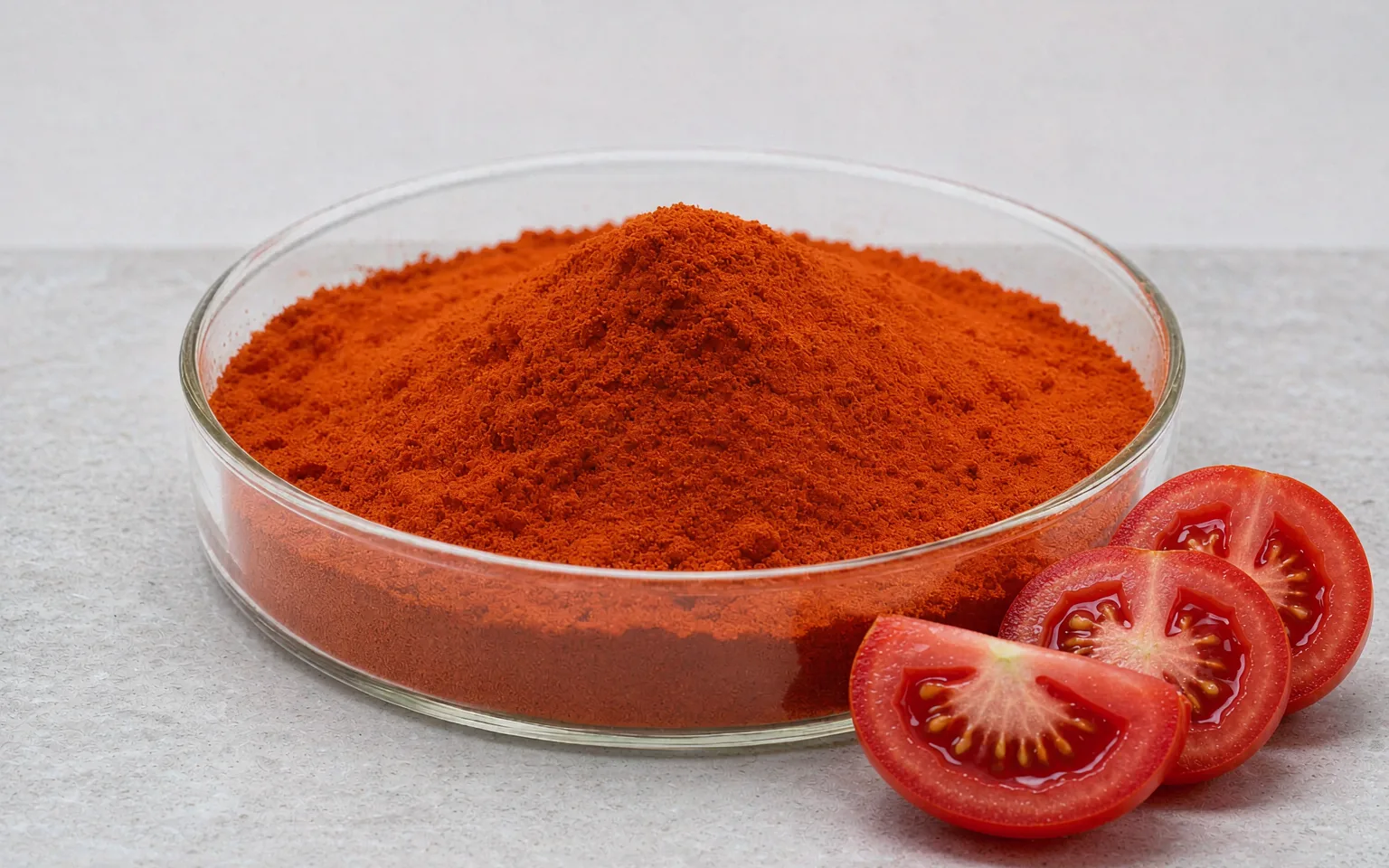
Tomato powder is normally specified for its lycopene figure, but the figure alone does not predict how the powder behaves once it reaches your line. Lycopene is fat-soluble, so what it does in an oil-based system is completely different from what it does in a water-based one, and the powder also carries its own acidity and its own rehydration behaviour into the formula.
Each lot ships with the lycopene figure measured and a moisture specification tight enough to keep the material free-flowing from bag to doser.
Product Specifications
| Item | Specification |
|---|---|
| Product Name | Tomato Powder (Solanum lycopersicum) |
| Appearance | Red to red-orange fine powder |
| Lycopene Content | Quoted against your target figure |
| Moisture | 6.0% max |
| Mesh | 80 mesh typical |
| Standard | Food grade; organic lots quoted when required |
| Packaging | 20 kg / 25 kg kraft bag with food-grade inner liner |
| Shelf Life | 18 months sealed, protected from light and humidity |
| MOQ | 25 kg for bulk; samples available on request |
Applications
- Sauces, condiments and ready meals – tomato solids, colour and acidity without drums of paste or frozen blocks
- Dry seasoning systems – a defined red for snack coatings that must survive extrusion and shelf storage
- Oil-based dressings and fillings – the systems where fat-soluble lycopene is at its most available
- Supplement blends – where the lycopene figure itself is the commercial reason for the purchase
Three formulation facts worth fixing early
Lycopene needs fat to be useful. It is fat-soluble, so its availability in the finished product depends on the presence of a lipid phase. The same dosage delivers far more effective colour and carotenoid content into an oil-based dressing or filling than into an aqueous drink, and a recipe that works in one will not transfer directly to the other. If your product is water-based, treat that as a design decision to take early rather than a dosing problem to solve later.
The acidity is part of the ingredient. Tomato powder contributes acid along with colour and flavour, so adding it shifts the pH of the system. In a dry seasoning this barely matters; in a beverage or a sauce it can move a pH-sensitive ingredient that is already in the formula, natural colors included. Where tomato powder sits alongside other colouring components, measure the pH effect instead of estimating it.
Rehydration is part of the purchase decision. Mixed with warm water at roughly one part powder to two or three parts water, the powder comes back to a paste consistency close to tomato concentrate, which is why some kitchens and mid-size lines hold tomato base as a dry ingredient instead of frozen paste. Cold water disperses more slowly and can leave grains if the liquid is not blended, so the hydration method should match the equipment on the line. Tell us how the powder will be incorporated and we will confirm the mesh and process grade that fits.
Tell us the lycopene level you need and whether the powder has to disperse cold or rehydrate hot, and we will confirm the grade and documentation. Request a lycopene-grade sample
Regulatory status by market
Tomato powder and tomato colour are not the same product, and the distinction is the whole of the regulatory position: the dried fruit is a food, while a lycopene extract is a colour additive with its own listing in the United States. A specification that describes one with the other’s citation will not survive a label review.
United States — food ingredient, not 73.585
European Union — traditional food
United Kingdom — traditional food
Japan — food material
Indonesia, Malaysia, Vietnam and Thailand — food ingredient
Korea — 식품원료
Frequently Asked Questions
What lycopene figure can I expect on the certificate?
Lycopene content varies with the fruit and the concentration step, so we quote the analysed value per batch and can supply lots matched to a target figure for applications where the label claim depends on it. For seasoning work, the analysed figure is usually sufficient.
Is there a flavour difference between tomato powder grades?
Yes. Powder made from hot-break concentrate carries a cooked, heavier tomato note; cold-break based powder keeps more of the fresh, slightly acidic character. For sauce blocks and seasonings the cooked note is usually wanted; for fresh-tasting applications, ask for the cold-break based grade.
The powder cakes in storage – is that normal?
Tomato powder is hygroscopic: it will pick up moisture and cake if exposed. Our spec sets moisture at 6.0% max and packaging uses a food-grade liner; on your side, sealed containers and low-humidity storage keep it free-flowing. Caking from a sealed, correct-moisture drum is a complaint we take seriously and rarely see.
What microbiology applies to tomato powder?
Tomato is a low-pH material, which helps, but we still specify the standard micro panel per batch. Current lot certificates travel with the shipment and samples.
Can it replace tomato paste in a recipe block?
Partly – rehydrated tomato powder at roughly 1:4 gives a workable paste for dry-mix and seasoning applications. For fresh-market texture and colour in wet sauces, paste or concentrate still outperforms, and most formulators use the powder as the dry base plus paste for body.