Spinach powder is bought for two different reasons and the buying decision changes depending on which one applies. If it is being used as a green colour, the drying method decides whether the colour survives. If it is being used as a nutritional ingredient, the microbial specification becomes the first question rather than the last.
We supply spinach powder in air-dried and freeze-dried grades so the choice can be made against the application rather than against whichever grade is in stock.
Product Specifications
| Item | Specification |
|---|---|
| Product Name | Spinach Powder (Spinacia oleracea) |
| Grades | Hot-air dried and freeze-dried |
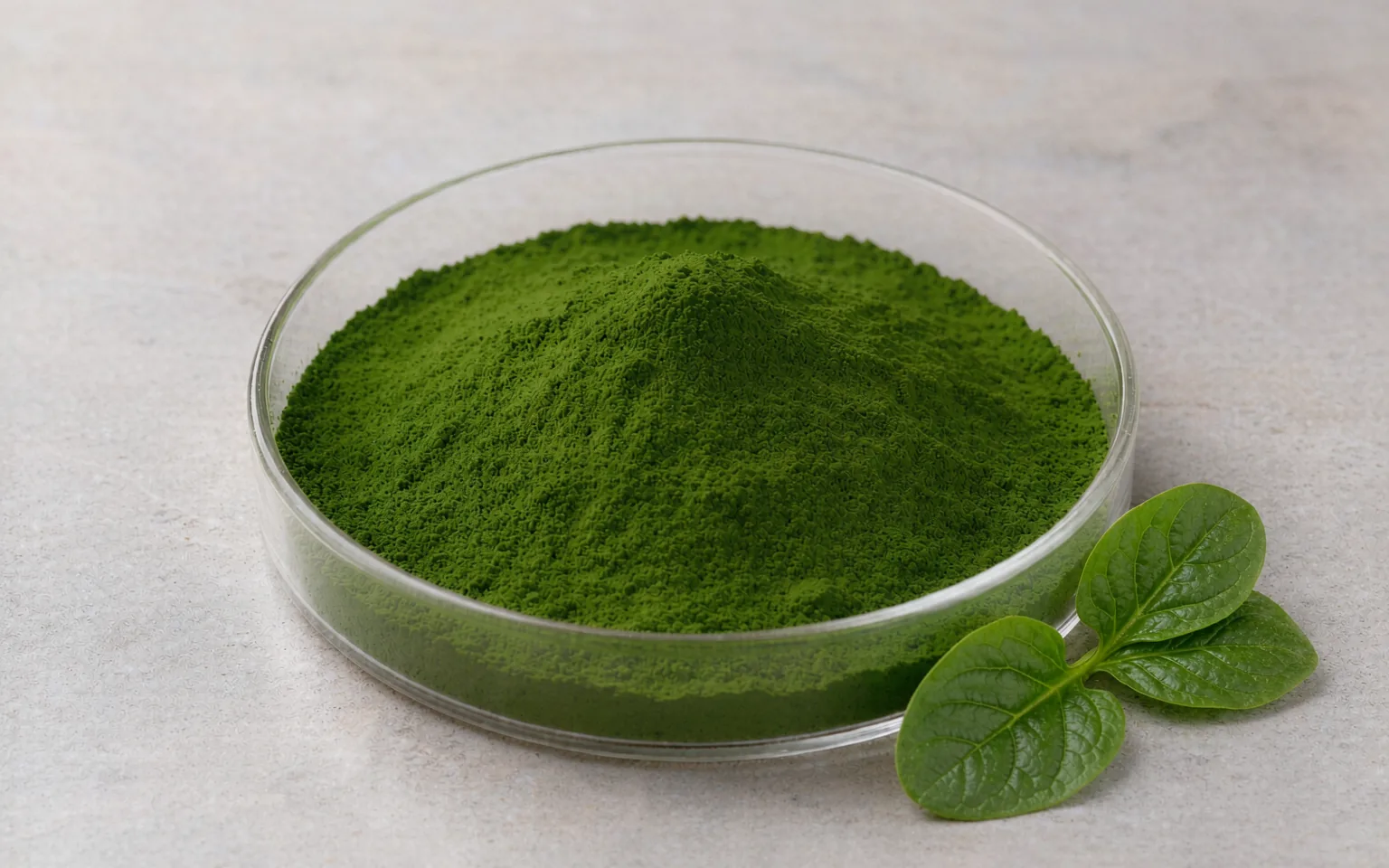
| Appearance | Dark green to olive green fine powder |
| Moisture | 8.0% max |
| Mesh | 80 mesh typical, finer on request |
| Microbiological | Total plate count, coliforms and Salmonella specified per batch |
| Standard | Food grade; organic certified lots available on request |
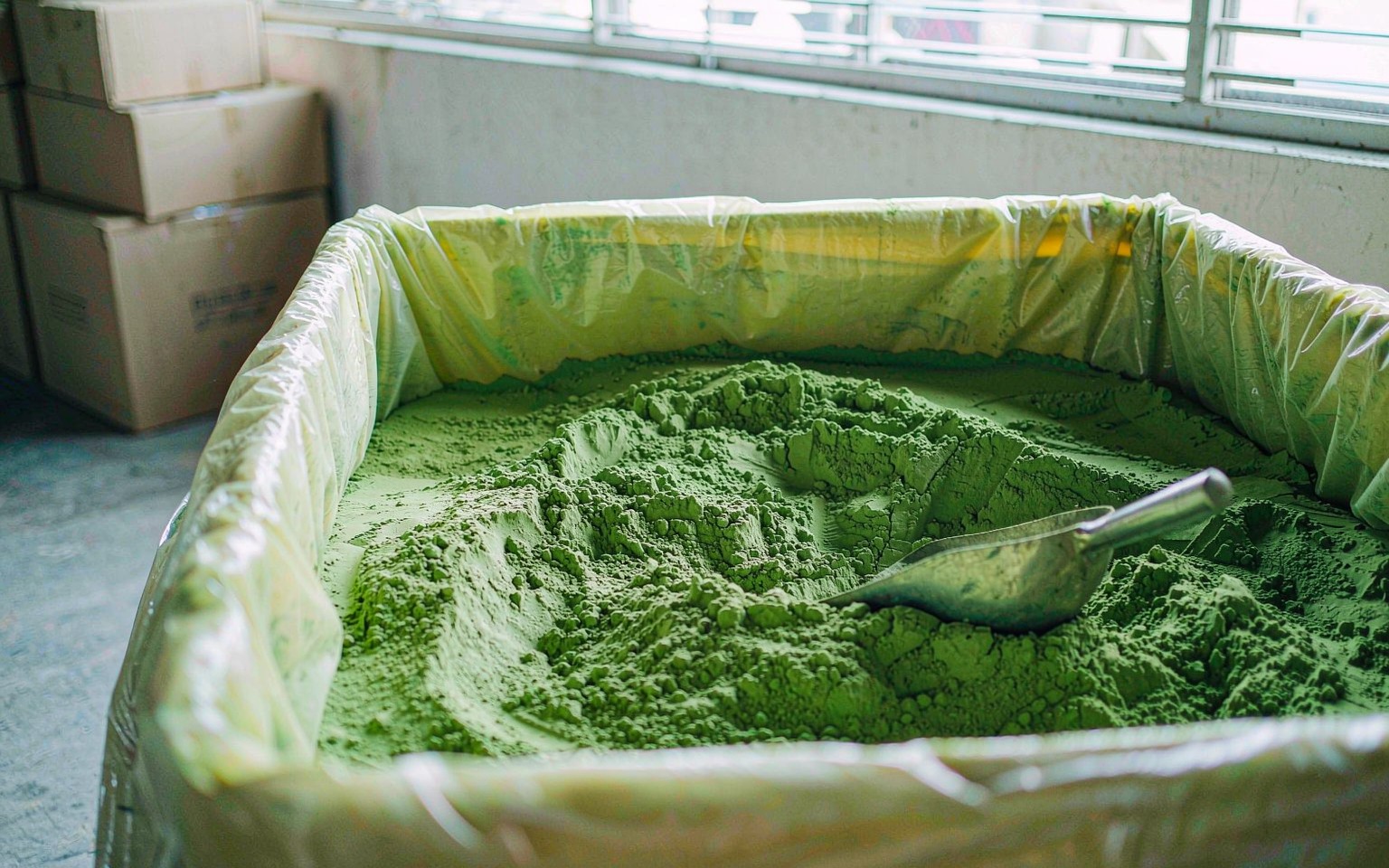
| Packaging | 20 kg / 25 kg kraft bag with food-grade inner liner |
| Shelf Life | 18 months sealed; colour degradation accelerates once opened |
| MOQ | 25 kg for bulk; samples available on request |
Applications
- Bakery and pasta – savoury green colour, where the oven is the main threat to the shade
- Nutritional blends and green powders – where the microbial specification and the vitamin retention matter most
- Soups, sauces and seasonings – where the powder contributes flavour as well as colour
- Pet food and speciality nutrition – dehydrated leafy material with a consistent specification
Two technical points that decide the grade
Colour has a shelf life of its own. Chlorophyll in a dried leaf powder is degraded by heat, light and oxygen, and the drying step is where the loss usually happens. Air-dried material is more economical and holds a darker, more olive tone, while freeze-dried material retains a brighter green and generally a higher level of heat-sensitive micronutrients. Products that are baked will lose part of the colour regardless of which grade is used, so the powder should be dosed higher rather than chosen purely on dry appearance.
Microbiology is not optional in leafy powders. Leaf material carries a naturally higher microbial load than seed-derived powders, and because it is normally used in low-acid products there is no acid barrier to help. A specification without defined limits for total plate count, coliforms and Salmonella is not a specification. Batch testing is reported on the COA rather than covered by a general food-grade statement.
For nutritional positioning, the same drying choice controls how much of the heat-sensitive vitamin content survives, so it is worth deciding early whether the ingredient is being bought for its colour or for its nutrient contribution. The two goals pull towards different grades.
Tell us whether the target is colour or nutrient contribution, and the microbial limits your market requires, and we will send the matching grade. Request samples and COA
Regulatory status by market
Spinach powder is a dried vegetable, and in all six markets below it is regulated as a food rather than as a colour additive. That single point decides how it has to be declared: as an ingredient with its vegetable name, not as an additive with a number, even when the reason it is in the formula is colour.
United States — food ingredient
European Union — traditional food
United Kingdom — traditional food
Japan — food material
Indonesia, Malaysia, Vietnam and Thailand — food ingredient
Korea — 식품원료
Frequently Asked Questions
What is the difference between air-dried and freeze-dried spinach powder?
Freeze-drying preserves more of the chlorophyll green and the fresh spinach aroma, and it hydrates back almost like the leaf; hot-air drying costs less and flows better but trades away some colour and volatiles. We supply both and quote them separately, because the price gap is real.
What microbiological specification should I expect for a leaf powder?
Leaf material carries a higher microbial load than fruit powders by nature, so our spec fixes total plate count, coliforms and Salmonella per batch rather than as “typical” figures. Current lot certificates are available with samples, and heat-treated lots can be quoted for applications that cannot carry a controlled process themselves.
Why did the green colour turn olive in my finished product?
Chlorophyll degrades to pheophytin under heat and acid – the same reaction that turns blanched spinach dull in the pan. If the application is acidic or baked, colour drift is chemistry rather than a quality failure; freeze-dried grade and oxygen-barrier packaging slow it down but do not stop it.
What mesh size is standard, and can it be adjusted?
80 mesh is our standard powder; finer grinds are available on request for seasonings where mouthfeel is critical, and coarser flake cuts for applications that want visible leaf character. Whatever grade is quoted is what the COA describes.
Is organic spinach powder available?
Yes, organic-certified lots are available on request and quoted separately from conventional. Availability follows the harvest window, so for large volumes it is worth planning ahead of the season rather than spot-buying.