Moringa leaf powder is a dried agricultural product, not an extract, and that changes what a buyer should be checking. Nobody is standardising it to a marker; the specification is a set of ceilings and absences, and the quality conversation is about how the leaf was dried, how it was milled and what the microbiology looks like. A dark green powder and a dull olive powder can both pass the same written specification.
We mill Moringa oleifera leaf to a green powder at 95% through 80 mesh, with moisture under 12%, ash under 5% and a full panel covering heavy metals, microbiology and the usual declarations — non-GMO, gluten-free, BSE-free, non-irradiated and free of declared allergens. The data sheet below is the one the certificate is written against.
Product Specifications
| Item | Specification |
|---|---|
| Product Name | Moringa Leaf Powder |
| Botanical Name | Moringa oleifera Lam. (leaf) |
| Appearance | Green powder |
| Odour and Taste | Characteristic |
| Identification | TLC |
| Moisture | 12% max |
| Ash | 5% max |
| Particle Size | 95% pass through 80 mesh |
| Heavy Metals | 10 ppm max total; Pb 2.0, Cd 1.0, Hg 0.1, As 1.0 ppm max, AAS |
| Microbiology | Aerobic bacteria 1,000 cfu/g max; yeasts and moulds 100 cfu/g max; Salmonella negative/25 g; E. coli negative; S. aureus negative |
| Declarations | Non-GMO; gluten free; BSE/TSE free; non-irradiated; no declared allergens |
| Preservatives | None added |
| Packaging | 25 kg net, food-grade bag |
| Storage | Sealed container, away from moisture and direct sunlight |
| Shelf Life | 24 months |
| MOQ | 25 kg; samples available |
Colour Is the Fastest Read on Drying Practice
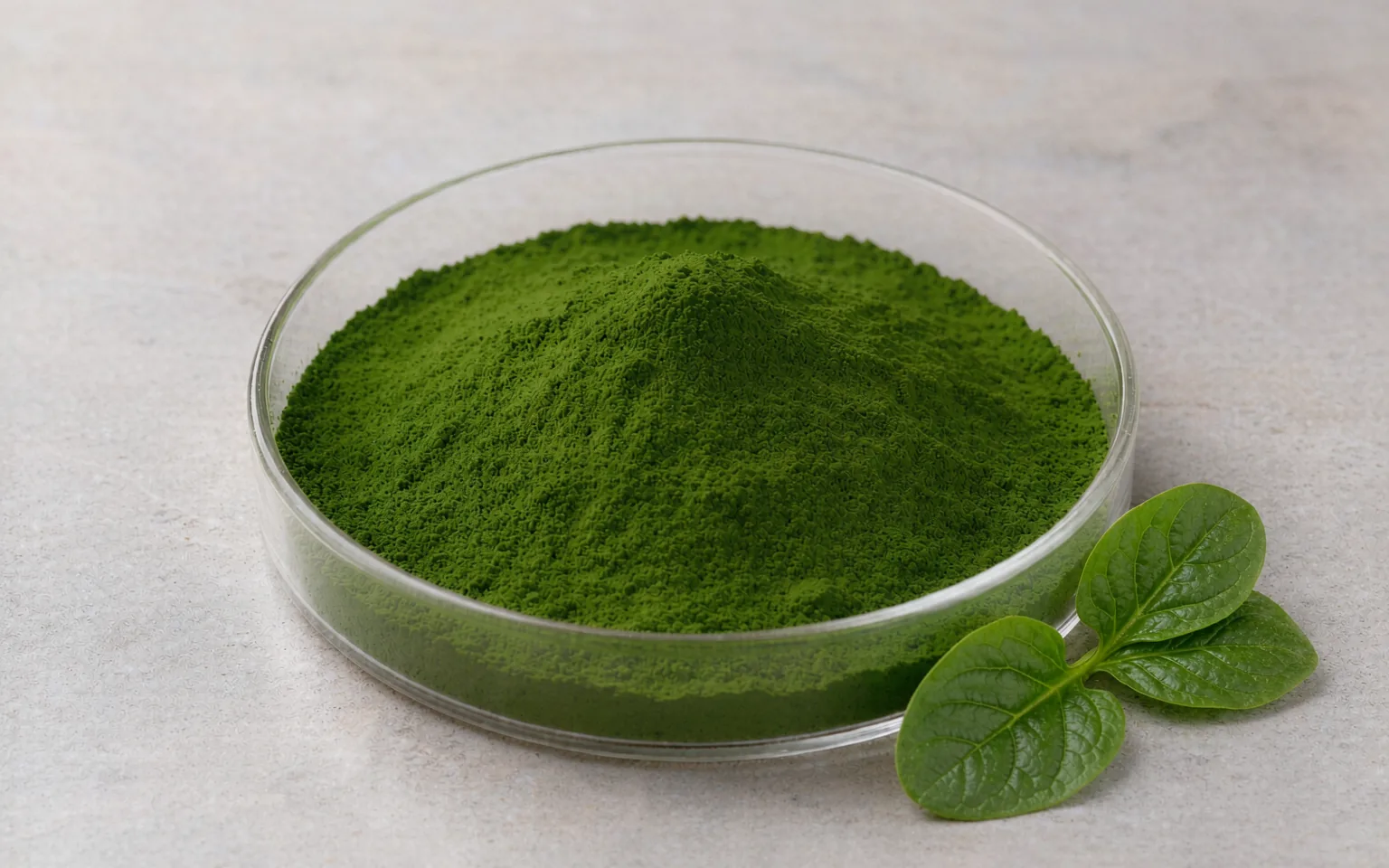
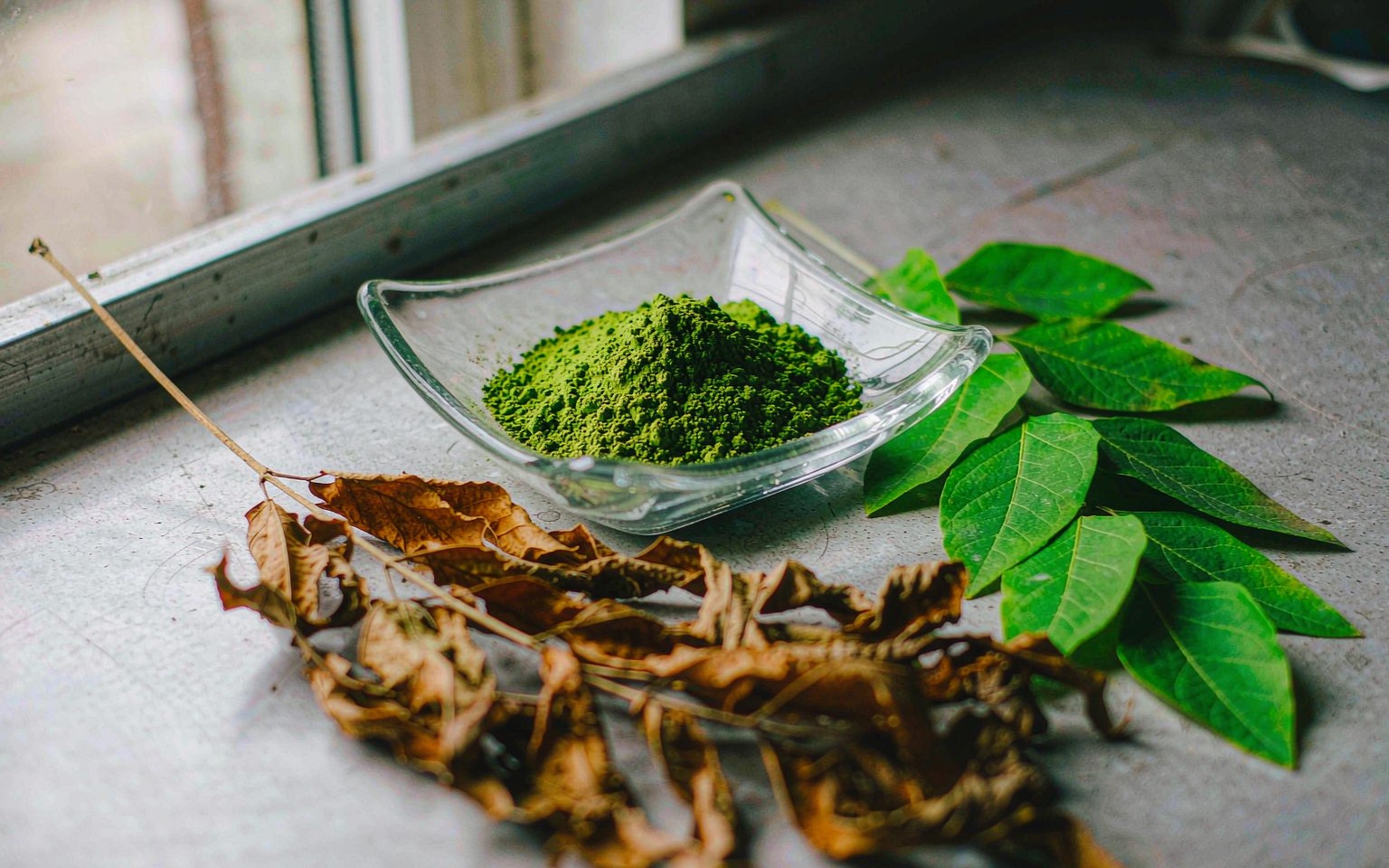
The green in moringa leaf is chlorophyll, and chlorophyll degrades with heat and with prolonged exposure to light and oxygen. Leaf dried slowly at low temperature keeps a strong green; leaf dried hot or held wet before drying turns olive and then brown. Since the written specification does not set a colour value, the powder’s appearance is the buyer’s only on-the-spot indicator of how the material was handled — and it correlates with the vitamin and enzyme content that nobody is putting a number on either.
The practical consequence is that two suppliers can both ship a compliant powder and one will look noticeably better in a smoothie or a capsule. If appearance carries weight in your market, say so and ask for a photograph of the actual lot rather than a reference image. We would rather send a phone photo of the bag you are buying than have a colour expectation set by a stock picture.
The 12% Moisture Ceiling and What It Hides
A 12% maximum moisture limit is a wide ceiling for a milled leaf powder, and a lot sitting at 11% passes while a lot at 7% also passes. The difference matters: higher moisture shortens shelf life, raises the risk of mould during transport and makes the powder more prone to caking in a humid filling room. Ask for the actual figure on the lot you are buying rather than accepting the ceiling as the value.
The same logic applies to microbiology. The aerobic count ceiling is 1,000 cfu/g and the Salmonella requirement is absence in 25 g, which are the two figures that decide whether a container clears an EU border. Salmonella in dried leaf products is the single most common cause of a rejected or recalled consignment in this category, so the negative result on the certificate is the line to read first, not last.
Applications
- Green powder blends and smoothie bases, where the colour is part of the product
- Capsules and tablets for the supplement channel, usually at a few hundred milligrams per serving
- Beverage powders and instant drinks marketed on a plant-based positioning
- Bakery and snack applications using moringa as a coloured ingredient rather than a supplement
Why Buyers Source Moringa Leaf Powder From Green Spring
- Milled and packed in our own plant, so the mesh and the moisture ceiling are process settings rather than trading descriptions
- Full declaration set on the data sheet — non-GMO, gluten-free, BSE/TSE-free, non-irradiated, no declared allergens — which is what most EU and UK buyers ask for first
- Heavy metals by AAS with cadmium separately limited at 1.0 ppm, a common failure point in leaf powders
- 25 kg bags with a 24-month shelf life, and photographs of the actual lot on request before shipment
Frequently Asked Questions
Is the leaf or the extract being sold here?
The leaf, dried and milled. This is not a standardised extract, so there is no marker compound and no assay figure. If you need a concentrated or standardised moringa product, that is a different item and its regulatory position may differ from the leaf’s.
What is the moisture content of a specific lot?
The specification ceiling is 12% and individual lots usually sit below it. Ask for the figure on the lot being offered; it is on the certificate of analysis and it matters for shelf life and for caking in a humid filling room.
What is the EU position on moringa leaf?
Dried moringa leaves and pods have a documented history of consumption in the EU before 1997 and are listed as not novel in the EU Novel Food Catalogue, so the leaf and leaf powder do not require novel food authorisation. Concentrated or extracted forms can fall outside that position. Pesticide residue limits under Regulation (EC) 396/2005 apply and are a frequent cause of border rejection, so residue data should be requested with the certificate.
Can you supply organic or a finer mesh?
Both are quotable on request. Organic supply is a certification question rather than a specification question and needs to be settled before pricing is discussed. Mesh changes are a milling setting; a finer powder tends to be more hygroscopic and to cake more readily, which is worth weighing against the visual benefit.
Tell us the application, the market and any colour expectation, and we will send the specification, a photograph of the current lot and a sample. Request a quotation and a sample.