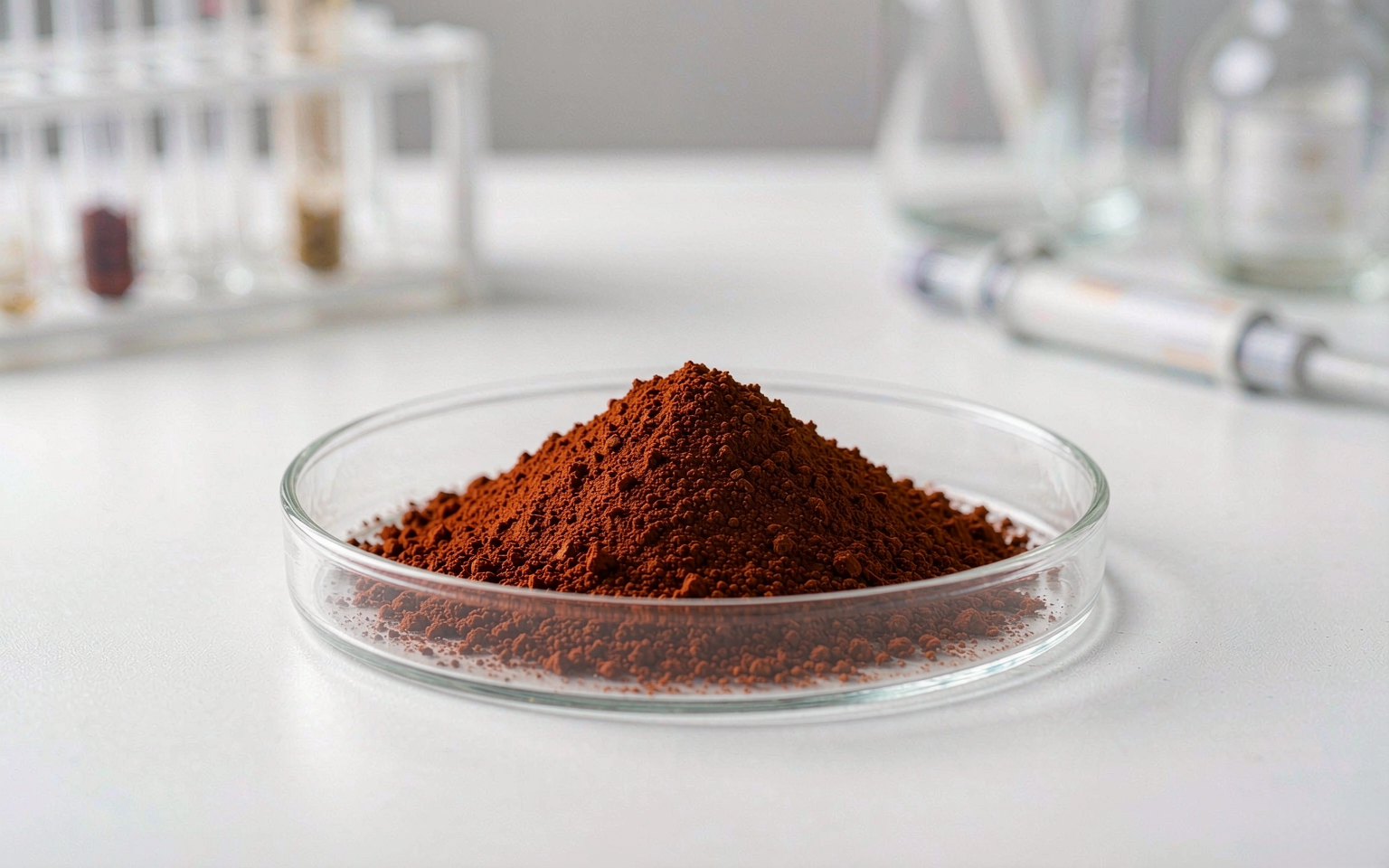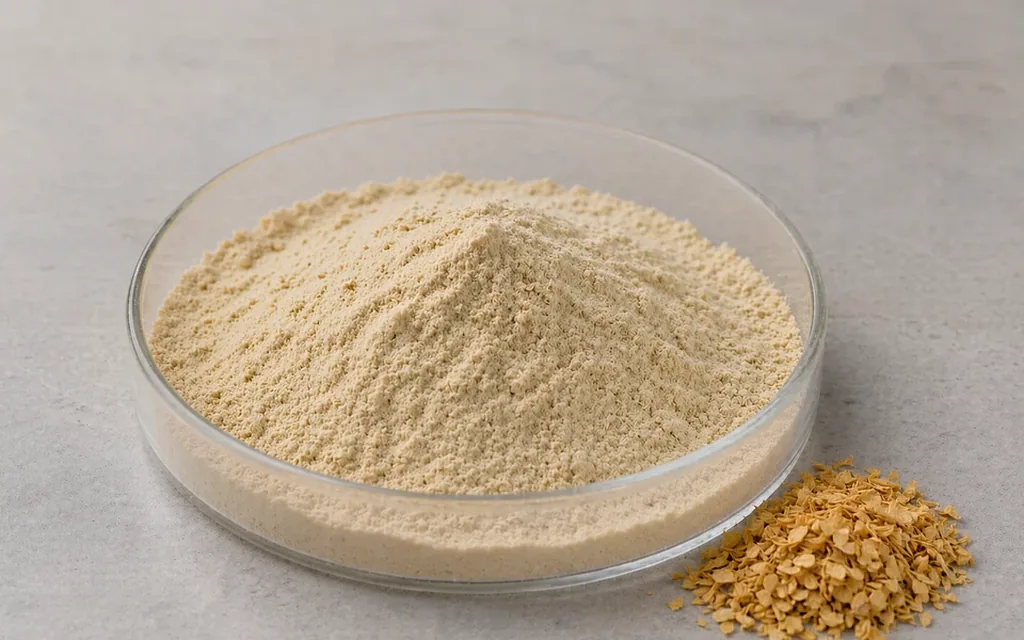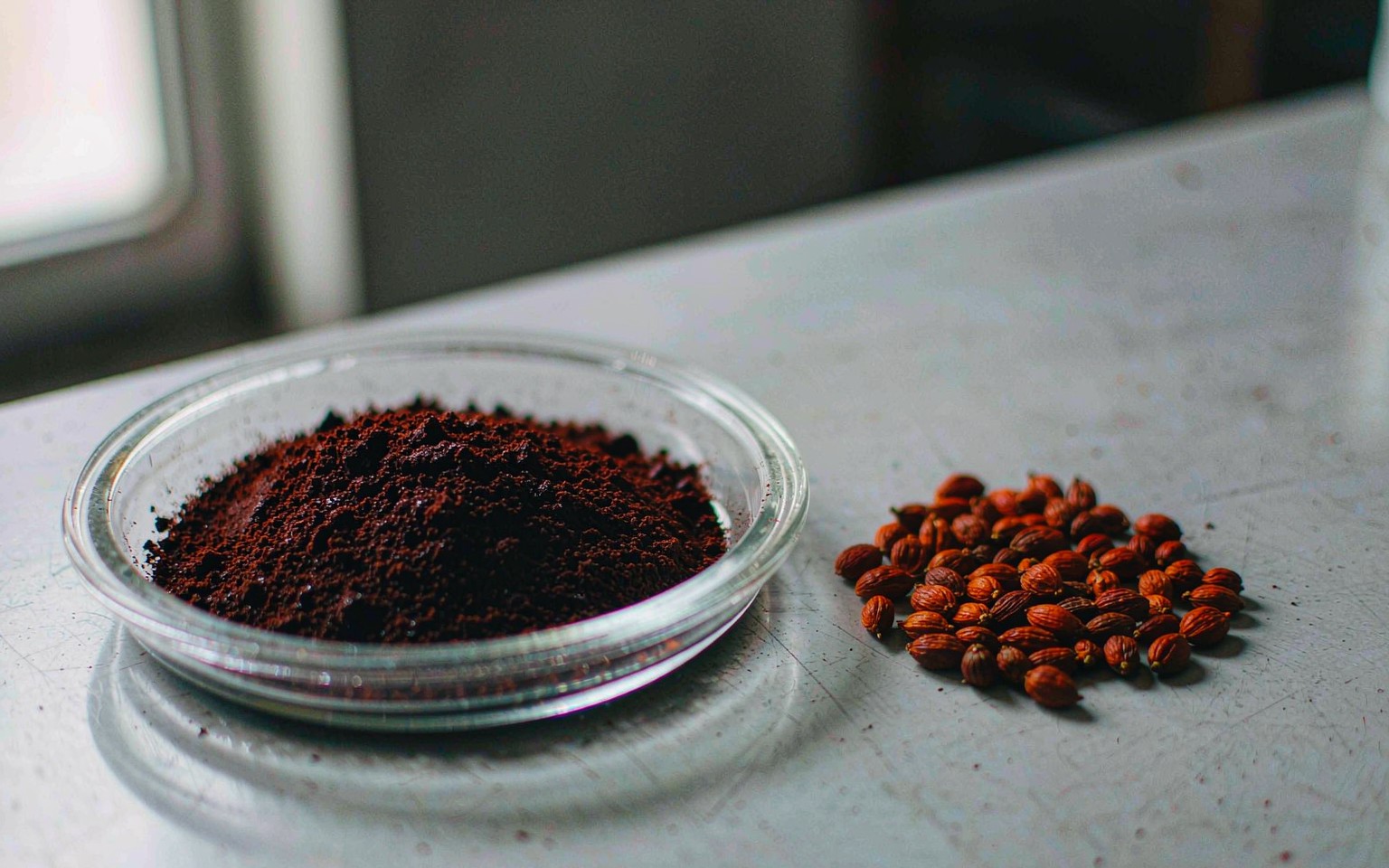

Plant protein solubility in beverages is decided by pH, not by the grade you bought. Pea and soy isolate both lose net charge close to pH 4.5, so a fruit drink at pH 3.2 to 4.0 sits near enough for electrostatic repulsion to collapse. Particles aggregate, scatter light, settle. The formula has put the protein where it cannot stay dispersed.
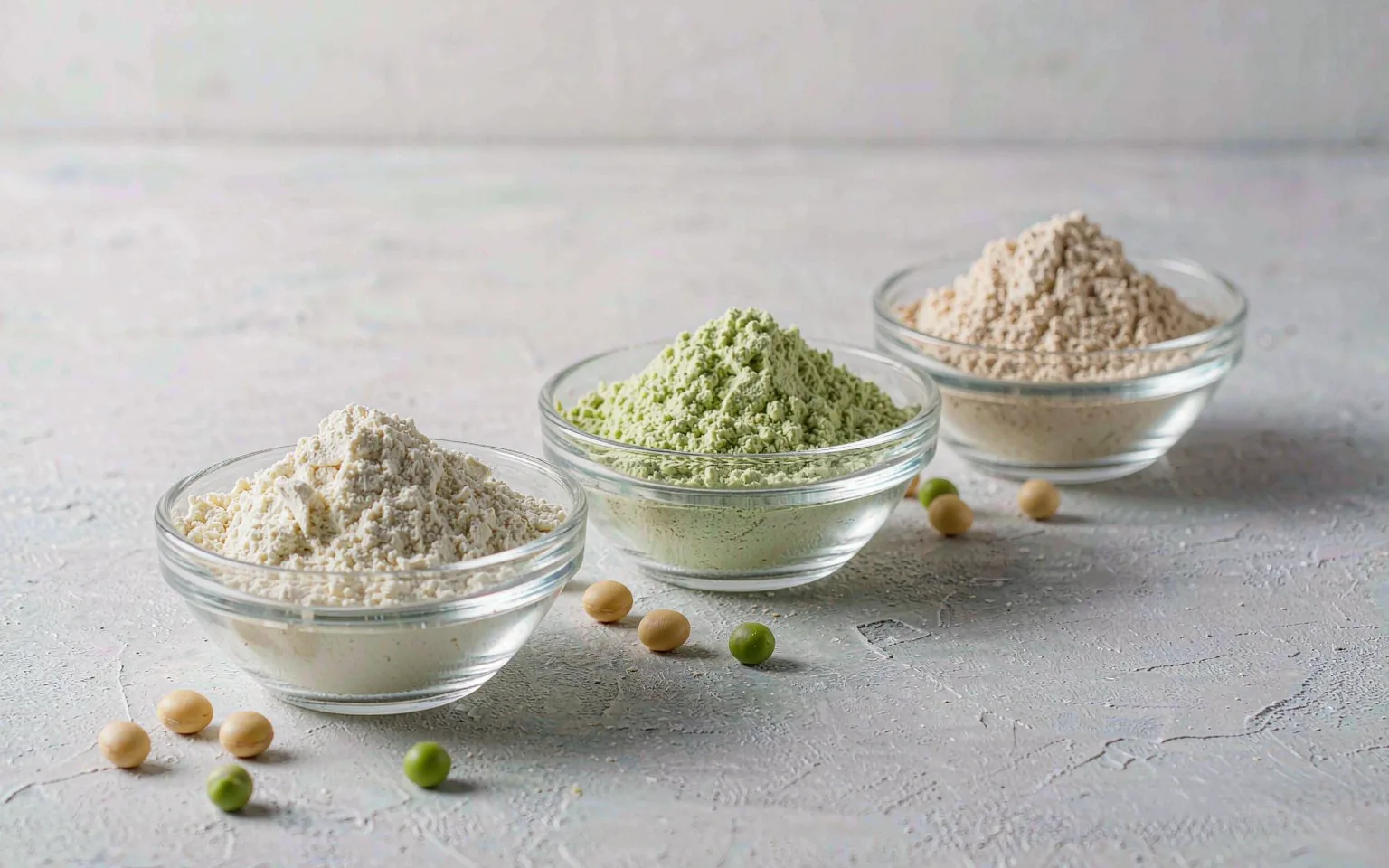
The failure arrives in a predictable order. A bench trial reads clear at pH 3.4 on day one, the batch is scaled, and a hard ring shows up by day twenty-one. What changed is the heat step, an added mineral, or time.
Protein carries a net charge that varies with pH. At the isoelectric point that charge approaches zero, repulsion disappears and molecules associate instead of staying apart. Aggregates grow until they scatter light, then settle. Heat makes it worse: denaturation exposes groups that aggregate faster. For the plant proteins used in beverages that point sits around pH 4 to 5, placing a pH 3.2–4.0 fruit drink close to the worst place on the curve.
| Protein | Isoelectric point | Consequence for an acidic drink |
|---|---|---|
| Pea protein isolate | ≈ pH 4.5 (sources quote 4.0–5.0) | Most likely to sit directly on a pH 3.8–4.2 formula |
| Soy protein isolate | ≈ pH 4.5–4.6 | Solubility minimum reported across pH 4–5 |
| Rice protein | ≈ pH 4–5, glutelin-dominant — confirm with supplier | Same region, but the aggregate re-suspends instead of cementing |
Typical literature values, not specifications. Ask for the supplier's recovery-versus-pH curve for the grade you are quoting; if it does not exist, that answers whether the grade is sold on function or on percentage. Dose margin buys repulsion, and repulsion on its own does not survive sterilisation — treat any single number as a starting point.
Rice protein is not more stable in any absolute sense. Its advantage is a combination: bland flavour, low viscosity, and aggregation that produces a soft resuspendable haze rather than a dense layer in the bottle. Where clarity is already off the table, that is worth more than the last points of protein content — which is why rice protein for low-pH beverages is the easier start of the four we supply.
Where clarity is required, brands either cut the dose to what the system can hold or change the acidulant and target a pH further from the isoelectric point. Both are cheaper than the reformulation a failed launch forces. If the binding constraint is the label rather than the pH, the calculation changes — what a soy-free allergen declaration actually requires is a separate decision, and it has nothing to do with the isoelectric point. For the source comparison, see how yeast, soy and pea protein compare in beverage systems.
A stabiliser — pectin, CMC, gellan, xanthan — raises viscosity and slows particle movement, delaying visible settling without stopping the aggregation. If protein is already coming out of solution, it buys shelf life rather than solving the cause, and overdosing changes mouthfeel.
The exception is real, though: below the isoelectric point a protein and an anionic polysaccharide can form a soluble complex. The polysaccharide binds the positive patches, the complex carries net negative charge, and the protein stays in solution where it would otherwise precipitate. Pectin and gum arabic are the usual partners and the gains are real, but the outcome depends on the ratio, the ionic strength and the pH. Get the ratio wrong and you have a coacervate, not a fix — which is the difference a supplier should be able to name.
Divalent cations bridge between protein molecules: one ion binds two anionic patches and forms a cross-link no extra protein will undo. That is why two identical formulas diverge once one of them is fortified, and it is a common route to age-thickening, where a drink stays clear but pours like gel.
Order of addition matters more than the calcium source. Chelating buffers — dipotassium phosphate and trisodium citrate are the two most used — bind divalent cations before they reach protein. Added to the water phase ahead of the mineral they hold calcium in solution; added afterwards they do much less. Dose follows total divalent load, including hard process water.
Reducing particle size does not change the chemistry — the protein still has no charge at its isoelectric point — but it slows the rate at which aggregates become visible, and two-stage homogenisation is the standard configuration. Position matters as much as pressure: where post-thermal homogenisation is possible, running it after the protein has taken its heat load breaks up the aggregates heating formed, not the ones that form later at the filler.
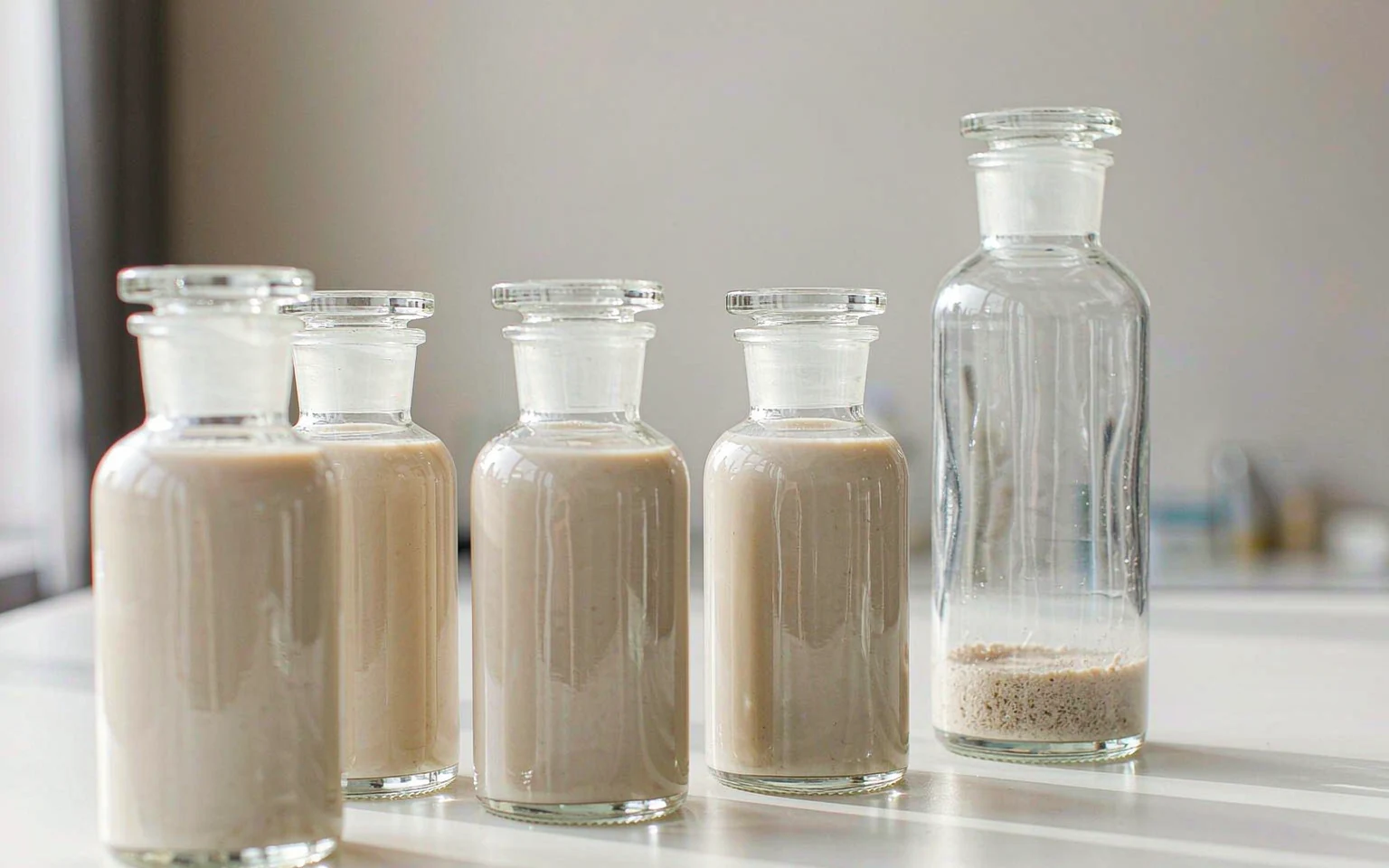
Neither lever counts unless written down. Pressure per stage, valve temperature and the position of the step belong in the tech transfer document, because a co-manufacturer at half the pressure makes a different product — and the difference shows up a month later.
Much of the material blamed for poor solubility was never dispersed. Pea protein wets badly: the powder skins over and forms lumps with a dry core, and a lump that makes it into the bottle hydrates there and looks exactly like insoluble protein. Disperse under shear at 55–60 °C — the range most commonly quoted — and hold 45 to 60 minutes before acid and heat. What breaks under light shear was a hydration problem; what re-forms is aggregation.
"It looked clear" is not a release criterion. These tests turn the problem into numbers; the pass limits should be agreed against a retained reference.
| Method | What it measures | What it lets you decide |
|---|---|---|
| Turbidity, absorbance near 600 nm across a pH titration | Light scattered as pH moves | Where the protein starts to come out; the fastest test that replaces the eye |
| Zeta potential | Net surface charge at formula pH | Whether you still have repulsion, or are where it has gone |
| Particle size, D50 and span | Size of dispersed particles, and whether a second population grows | Whether aggregation has begun before anything is visible |
| Centrifugal sedimentation, percent by volume | Material that separates under a defined force | A number you can write into a specification, unlike "clear" |
The same holds for the protein figure: a percentage without a method and basis is a marketing number, and what the protein percentage on a specification actually means is worth reading first. A yeast protein for a neutral pH 6.8 system is a different evaluation again.
Ask for the curve, run the ladder, and put a sediment number into the specification before anyone books a production slot.
Send us your base, your pH and your process temperature and we will tell you which protein fits it — and which one will settle. Request samples and application data
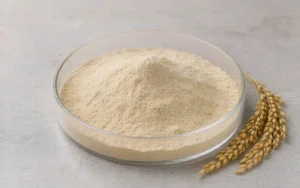 Rice ProteinGenerally the most forgiving of our proteins in low-pH drinks; bland taste and low viscosity.Read More »
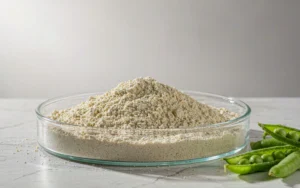 Pea Protein IsolateApprox. 80–85% protein, allergen-friendly, brings structure to bars and beverages.Read More »
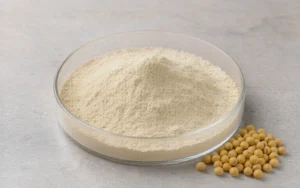 Soy Protein IsolateApprox. 90% protein on a dry basis with a complete amino acid profile.Read More »
Aggregation is time-dependent. Protein molecules that are only marginally soluble at your pH associate slowly, so the drink can look acceptable during the first hours and develop haze over days or weeks. A 24-hour observation is not a stability result — hold the samples for the shelf life you are claiming, at the storage temperature you are claiming, before deciding the formula is stable.
It is generally the more forgiving of the proteins we supply in low-pH systems, largely because its aggregation tends to produce a soft haze that resuspends rather than a dense sediment. That does not make it immune to the isoelectric point, and it still has one in the same broad region. Where clarity is essential we would rather adjust the pH or the dosage than rely on the protein alone.
It manages it rather than solving it. A stabiliser raises viscosity and slows particle movement, which delays visible sedimentation and can extend shelf life, but it does not prevent the aggregation that causes it. It is most effective applied after pH, protein selection and heat load have been addressed, and dosing it too high changes the mouthfeel of the finished drink.
Divalent ions such as calcium can bridge between protein molecules and promote aggregation, effectively amplifying what the pH is already doing. This is why two formulas that differ only in their mineral premix can behave completely differently, and why it is worth listing every added salt when you describe the system to us.