Pea protein isolate is the workhorse of plant-based formulation: a neutral, cost-stable protein that most consumers already accept. Getting it to work in a finished product is less about the protein number on the COA and more about keeping the beany note out of the final taste, and about how the powder disperses in your line.
We supply pea protein isolate as a bulk ingredient for beverage, bar and meat-analogue applications, with the spec agreed to your end use rather than to a generic catalogue sheet.
Product Specifications
| Item | Specification |
|---|---|
| Product Name | Pea Protein Isolate (Pisum sativum) |
| CAS No. | 222400-29-5 |
| Protein (dry basis, Kjeldahl) | 80% min (85% grade available) |
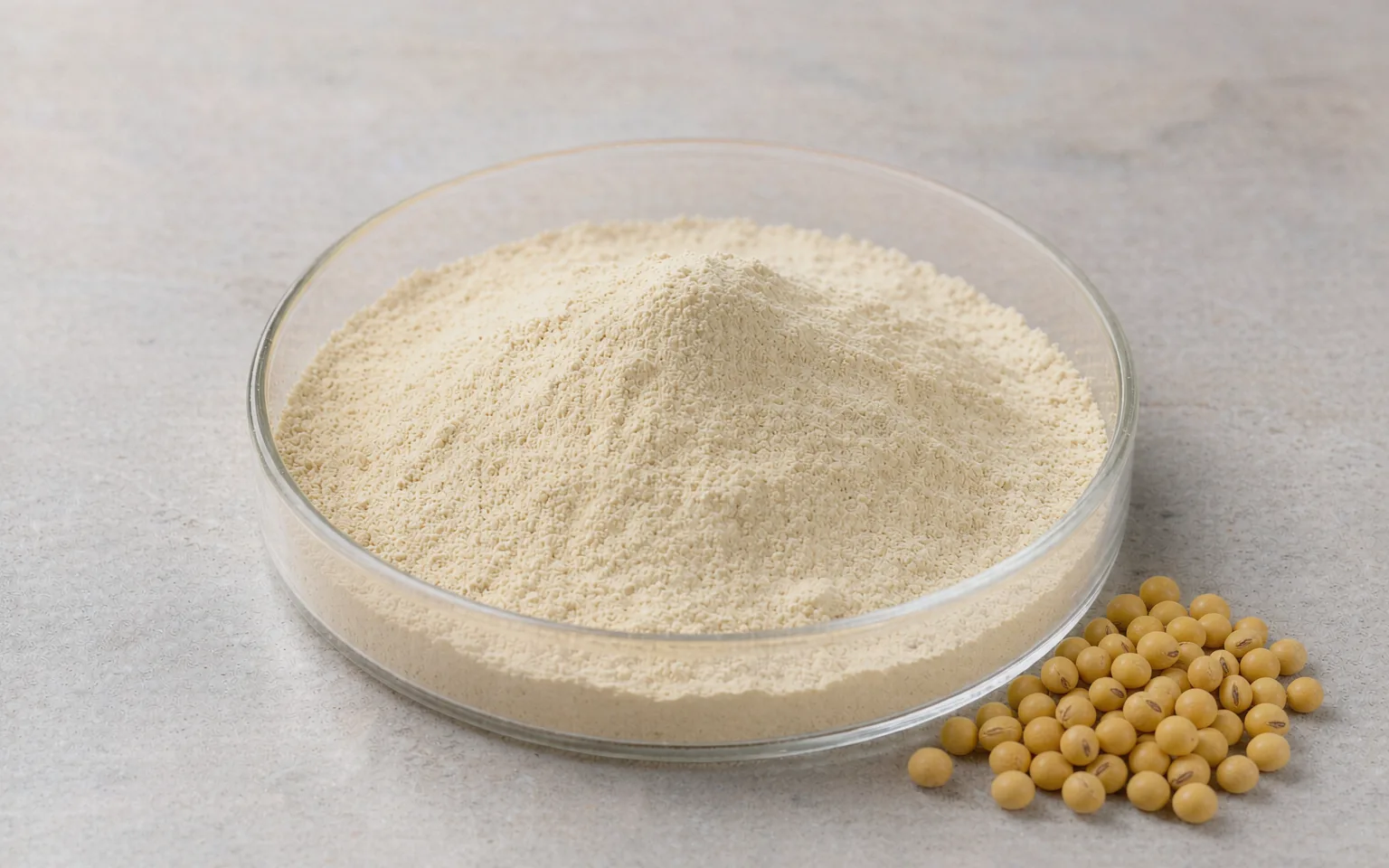
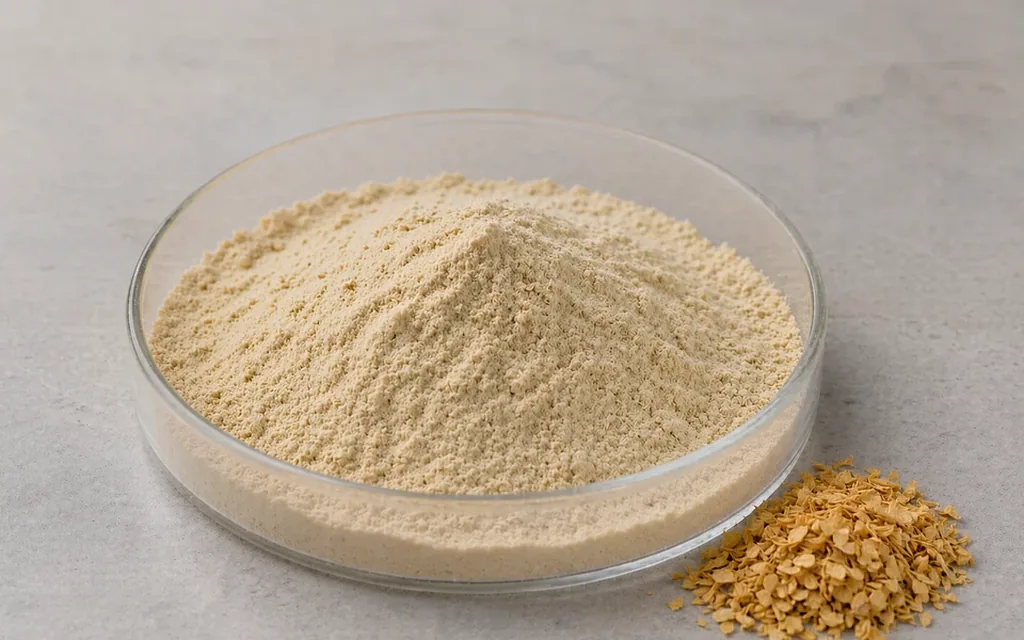
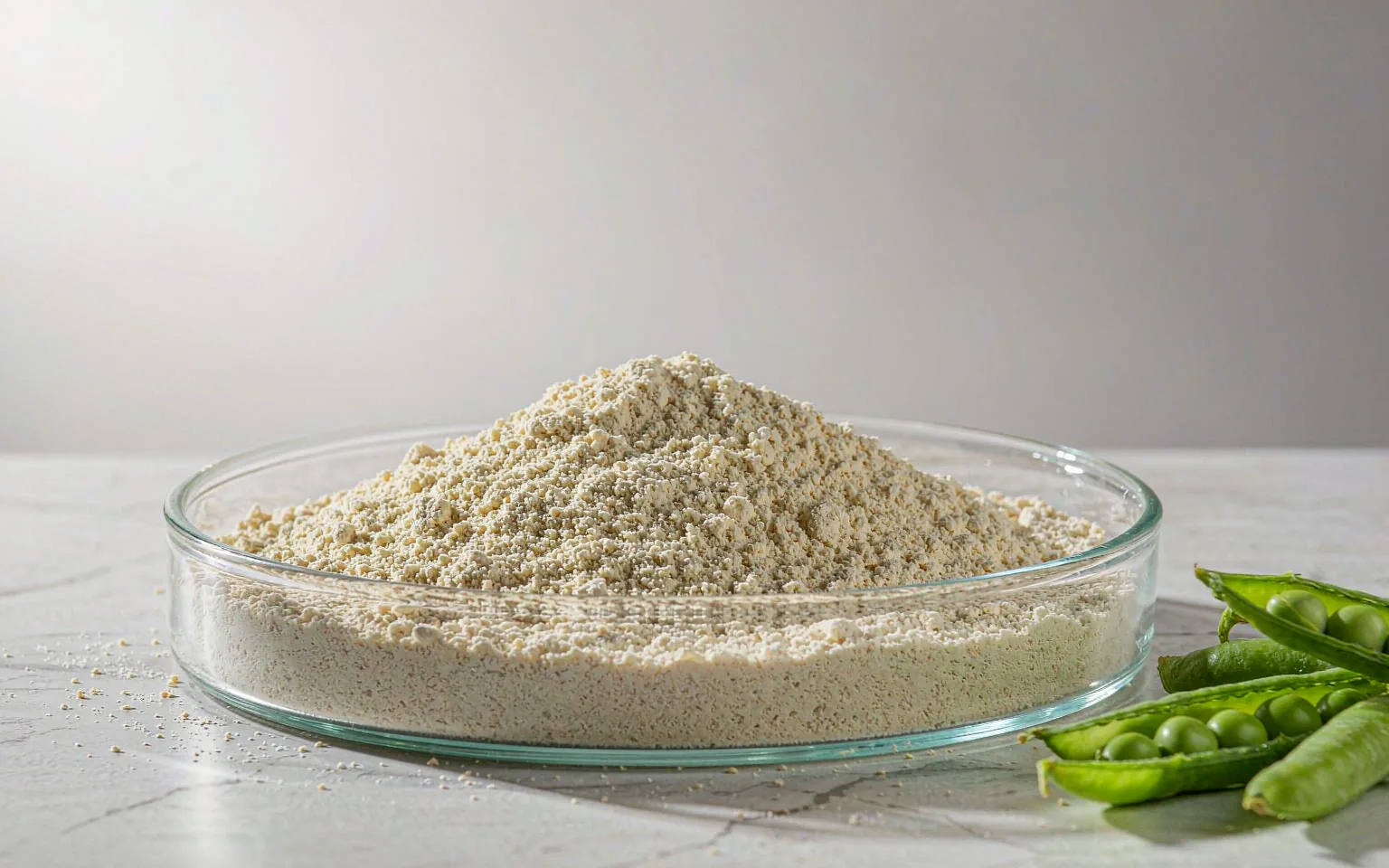
| Appearance | Light cream to beige fine powder |
| Moisture | 8.0% max |
| Particle Size | 95% through 100 mesh (coarser grades on request) |
| Standard | Food grade, Non-GMO |
| Packaging | 20 kg / 25 kg kraft bag with food-grade inner liner |
| Shelf Life | 24 months (sealed, cool and dry storage) |
| MOQ | 25 kg for bulk; samples available on request |
Applications
- Ready-to-drink plant milks and protein beverages – dispersion and mouthfeel are the limiting factors rather than protein content
- Protein bars and snack bites – where the protein has to survive a low-water, high-shear matrix without turning chalky
- Plant-based meat analogues – as a binding and texturising component alongside a structured protein
- Powdered supplements – where a clean ingredient statement matters more than the highest possible protein figure
Where pea protein actually goes wrong
The beany, sometimes bitter note that buyers complain about does not come from the protein itself. It comes from the lipid fraction that survives fractionation and from saponins carried through the process, and it gets worse when the powder is exposed to heat or shear in the presence of oxygen. Two consequences follow: the isolation route and the residual lipid figure matter more than most spec sheets admit, and if your process involves heat, it is worth fixing the flavour strategy before you scale rather than masking it later.
Pea is also worth choosing for what it is not. It is not one of the major eight allergens, and it is naturally Non-GMO, which removes two labelling burdens that soy carries. Where a formula needs a complete amino-acid profile, pea is low in methionine, so it is normally paired rather than used alone.
On the line, the practical variables are dispersion and settling. In a beverage, fine mesh grades hydrate faster but tend to sediment unless the system is stabilised; in a bar, a coarser grade gives better structure. Tell us which one you are producing and we will spec the mesh and the protein figure together.
Regulatory status by market
Pea protein needs no pre-market authorisation in any market below, which is exactly why the detail that matters is different: not whether it can be sold, but how it is described. The United States relies on GRAS notices, the EU and UK on a pre-1997 history of use rather than any approval, and pea is not on the allergen lists in either, so the allergen statement is where specifications usually diverge.
United States — GRAS
European Union — not a novel food
United Kingdom — not a novel food
Japan — food material
Indonesia, Malaysia, Vietnam and Thailand — food ingredient
Korea — 식품원료
Frequently Asked Questions
The questions below are the ones that come up in technical discussions before a first order. For the soy-free substitution decision itself, see our comparison of pea and soy protein; for the settling problem in drinks, see why plant protein settles in acidic beverages.
On what basis is the protein content measured?
By nitrogen determination (Kjeldahl) multiplied by 6.25, and we report the figure both as-is and on a dry basis on the certificate of analysis. Moisture alone can move the as-is number by two or three points between lots, so if your label claim is built on the dry-basis figure, agree that in the specification before the first shipment rather than after.
Is pea protein a declared allergen?
No. Pea is not on the EU list of allergens that must be declared under Regulation 1169/2011, and it is not on the US major-food-allergen list either, which is usually the first reason a formulator reaches for it. We supply an allergen statement and the cross-contact declaration for the line it is produced on, because that is what your customer questionnaire will ask for regardless.
Will it settle or taste chalky in a drink?
Pea protein solubility falls away steeply through the acidic range around pH 4 to 5, so acidic fruit-type drinks are where it flocculates; near neutral pH it behaves acceptably. Settling in a neutral ready-to-drink product is normally a dispersion problem rather than a solubility problem, and it responds to full hydration under high shear plus a hydrocolloid system before filling.
How should the powder be stored, and how long does it keep?
Twenty-four months sealed in the original liner, cool, dry and away from strong odours. Because the powder has a large surface area and a small residual lipid fraction, it takes up moisture and off-odours more readily than a crystalline ingredient, so once a bag is opened it should be resealed and used within the working window. Smaller pack sizes are available for bench work.
Is genetically modified pea a concern?
No genetically modified pea is grown commercially, so the protein is inherently non-GMO and we can confirm that in writing. This is worth contrasting with soy, where non-GMO status genuinely changes what you receive and how it has to be documented. Where the project requires it we can also supply identity-preserved lots.
Send us your application and target protein level, and we will confirm the grade, mesh and documentation set. Request samples and COA