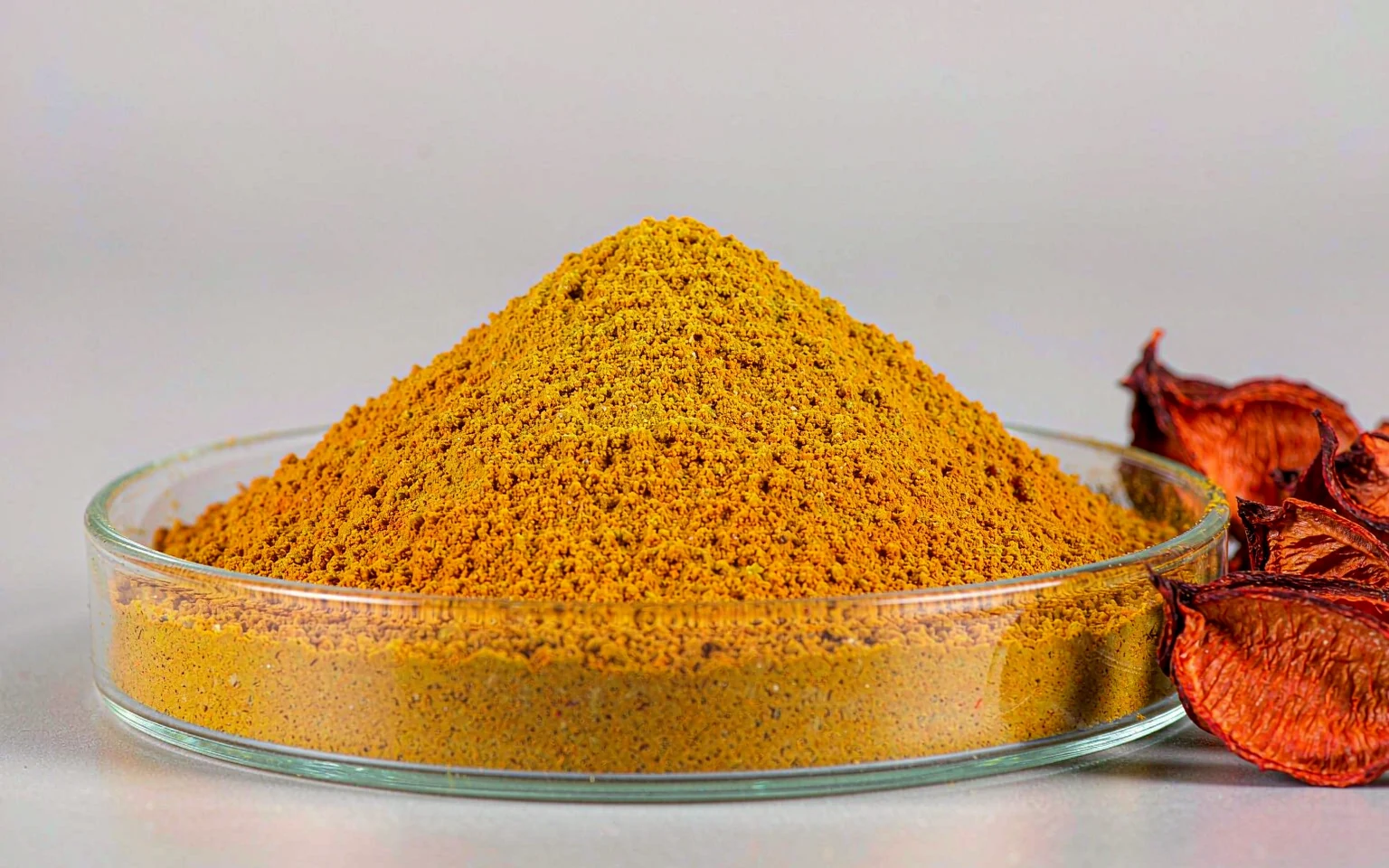
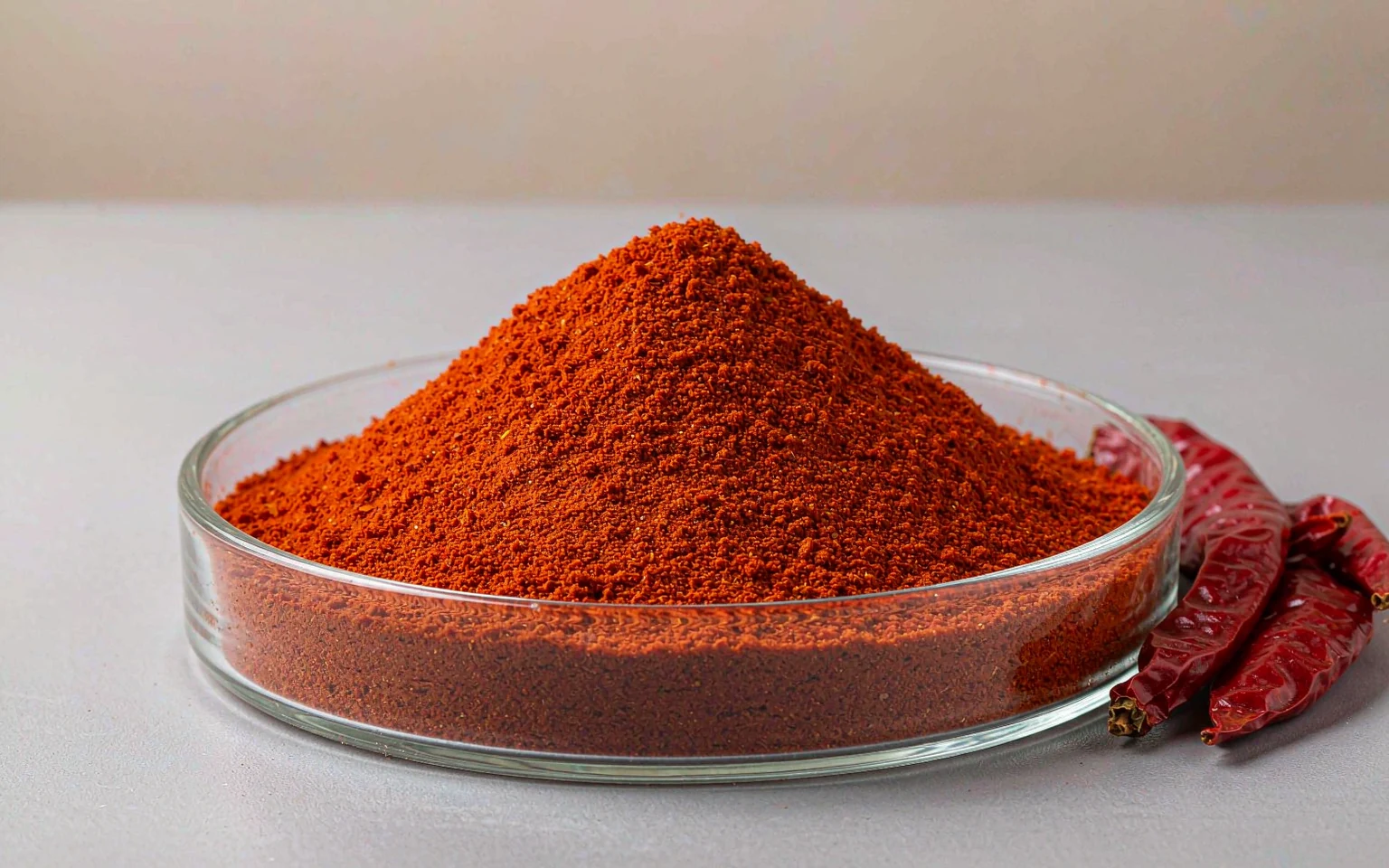
Paprika powder sold for colour is a different purchase from paprika powder sold as a spice, and the difference is not the material — it is the specification behind it. A lot that passes a spice standard can still be unusable as a colour source, and a lot that meets a colour value can fail a microbiological gate that the spice trade never applies. This page is about writing a purchase order that gets you the one you actually need.
Regulatory Identity: Colouring Food, Not Additive
Paprika has an advantage most colour materials do not: the ground fruit is already a food with its own commercial identity as a spice. That means a paprika powder can be sold and declared as paprika, while the pigment pulled out of the same fruit becomes E 160c, an additive with a standardised colour value.
The dividing line is extraction. Grinding dried fruit involves no selective removal, so the material stays an ingredient. Dissolving the pigments out and standardising them does the opposite, which is why the oleoresin carries an additive identity and the powder does not.
In the US the distinction follows the intended use: paprika for colour is a colour additive, paprika sold as a spice follows a separate route. That makes the purchase order wording matter as much as the specification, and it has to be confirmed for the destination market before the order is placed.
Product Specifications
| Item | Specification |
|---|---|
| Product name | Paprika Powder |
| Colour value | To be confirmed |
| Appearance | To be confirmed |
| Carrier | None — ground fruit |
| Solubility | Dispersible; not a clear solution |
| Standard | To be confirmed |
| Packaging | 1 kg bag for bench work, 25 kg drum for production |
| Shelf life | To be confirmed |
| MOQ | To be confirmed |
Fields marked To be confirmed are pending the supplier certificate of analysis for the grade you require.
Applications
- Seasonings and snack coatings — where the paprika name and the colour both do work
- Processed meats and meat analogues — colour plus the expected spice note
- Sauces, dressings and soups — applications where a dispersed powder is acceptable
- Cheese and dairy analogues — where an orange tone is required alongside a recognisable ingredient
Spice Standard or Colour Standard: They Are Not the Same Specification
This is where most of the commercial disappointment in paprika arises. The same drum of powder can be bought against two entirely different documents, and they measure different things.
| Bought as a spice | Bought as a colour source | |
|---|---|---|
| Primary measure | General quality: appearance, aroma, moisture, total ash | Colour value, stated in ASTA units and measured by the standard method |
| Microbiology | Spice trade limits — typically wider, because the material is used in small amounts and often cooked | Tighter, because the material is used at higher rates and may not receive a kill step |
| What fails a lot | Off-aroma, insect fragment count, moisture | Colour value below the agreed figure, or a microbiological load that cannot be reduced without damaging the colour |
The trap is that a spice-standard lot can look acceptable on arrival and still be wrong: the colour value is lower than expected, so the dose has to rise, and at the higher dose the flavour and the microbiological load both become problems. By then the material is in your warehouse.
Three things belong on the purchase order, not in a later email:
- The colour value in ASTA units, with the test method named, and the minimum accepted figure stated as a reject limit rather than a target
- The microbiological limits that apply to your use, not the ones that apply to the spice trade
- The intended use stated explicitly — “for colour” or “as a spice” — because the supplier’s own specification and declaration depend on it
It is also worth asking how the powder was treated, if at all. Steam treatment reduces microbial load and costs some colour; irradiation does the same job with a different regulatory footprint in each market. Neither is visible in a colour value, and both change what the material can be used for.
Available Forms
This grade is supplied as a ground powder. Particle size matters more than it first appears: a finer grind disperses more evenly and reads stronger per unit weight, while a coarser grind is easier to handle and less prone to dusting in the plant. Mesh size belongs in the specification alongside colour value, because the two are traded off against each other in milling.
Why Green Spring
- Colour value and microbiology quoted as one specification. Either on its own fails to describe a material that can actually be used for colour.
- Intended use settled before price. Colour or spice changes the specification, the declaration and the documentation, so it is confirmed at the start.
- Powder and oleoresin from the same fruit. The two grades can be compared on one raw material rather than across two supply chains.
Frequently Asked Questions
What is the difference between paprika powder and paprika extract?
Paprika extract (E 160c) is an oleoresin — the pigments dissolved out of the fruit and standardised, with a high colour value and no fibre or bulk. Paprika powder is the ground fruit, with a much lower colour value but a legitimate spice identity and a label that can say paprika. The extract is dosed in grams per tonne; the powder in kilograms. They are not interchangeable, and substituting one for the other requires re-running the colour trial.
How is colour value measured?
By the ASTA method, which extracts the pigments under defined conditions and reads the absorbance against a standard. The number is only comparable when both parties use the same method and the same basis, which is why the method should be named on the specification rather than assumed. A figure quoted without a method is not a specification.
What microbiological limits should I specify?
The limits that fit your process, not the spice trade’s. If the powder is added after any kill step, or used at a rate above a few percent, the spice limits are too loose. The practical approach is to state the process and the dose rate to the supplier and ask what they can hold consistently, then set the specification at that level rather than at a generic spice figure.
Is there capsaicin in colour-grade paprika?
Colour-grade paprika is normally produced from sweet varieties selected for pigment rather than heat, so capsaicin content is low. It is not necessarily zero, and where a product makes a claim about heat or about a mild flavour profile, the capsaicin or Scoville figure belongs in the specification rather than in an assumption about the variety.
If you are specifying paprika for colour rather than for spice, send us the application, the process step and the colour value you need, and we will confirm what the grade can hold. Contact us, or browse the full colouring foods range.