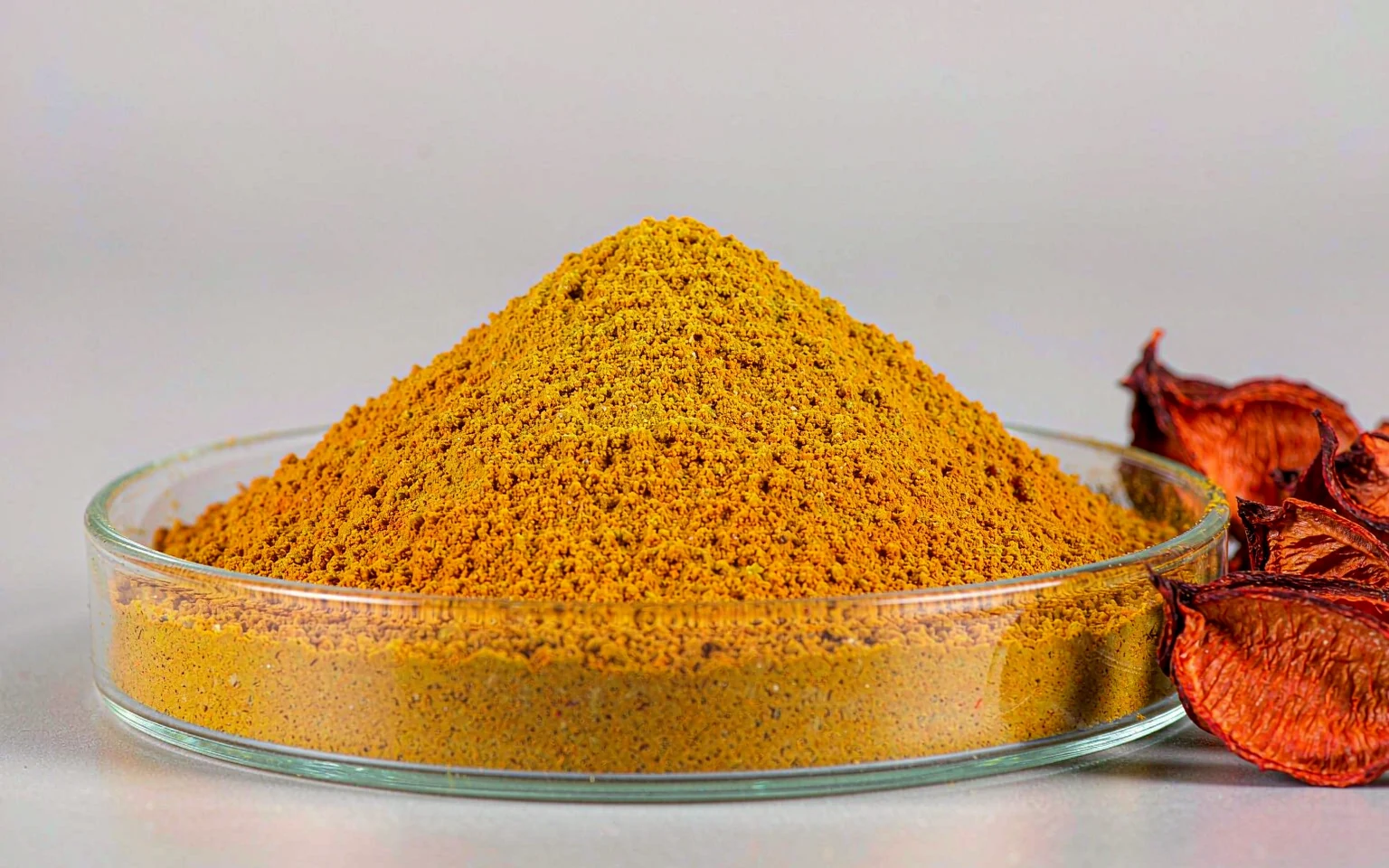
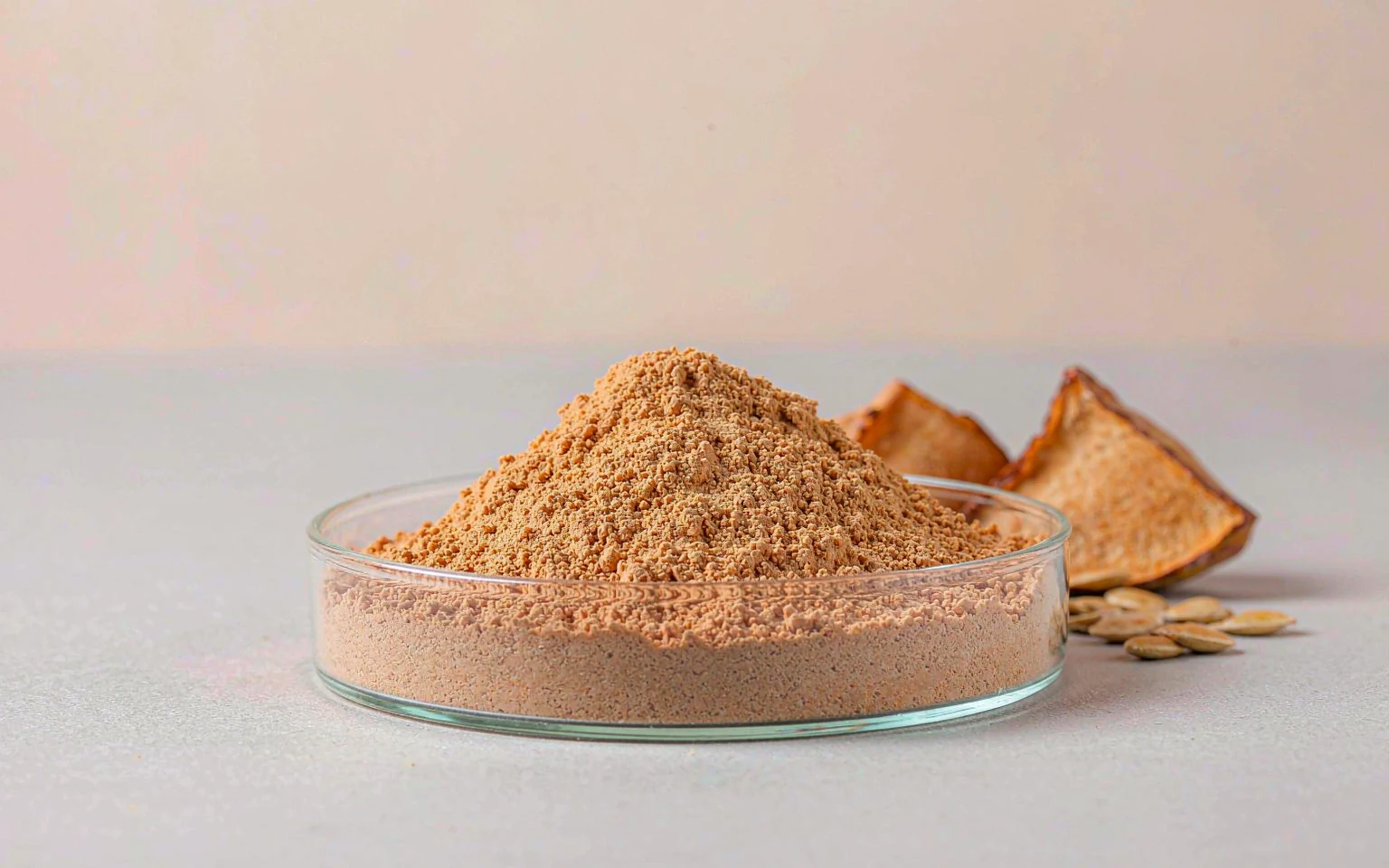
Pumpkin concentrate is the lowest colour-value material in this range, and this page is written to make that limitation clear before a specification is agreed rather than after a first batch disappoints. It is the right material for a specific set of problems — mainly where the word pumpkin needs to appear in the ingredient list, or where a warm yellow-orange has to come with a recognisable vegetable rather than a colourant. It is the wrong material for anything that needs colour intensity per kilogram to be high.
Regulatory Identity: Colouring Food, Not Additive
Pumpkin is the least complicated material in this range on the identity question, precisely because its colour value is low. Nobody purifies a pumpkin to reach a pigment — the economics do not work — so the material stays a vegetable through processing and arrives as an ingredient without argument.
That is the ingredient route in its plainest form: an edible source, ordinary processing, and enrichment that never approaches the point where the material stops being food. The colour is whatever the vegetable carries, not a target the process aims at.
It is worth stating because the same test does not produce the same answer for every material in the range — several of them sit close enough to the line that the process decides the outcome. For pumpkin the line is not in question. The US has no equivalent ingredient category and treats the concentrate as a colour additive from vegetable juice, so the destination market still determines the declaration.
Product Specifications
| Item | Specification |
|---|---|
| Product name | Pumpkin Concentrate |
| Colour value | To be confirmed |
| Appearance | To be confirmed |
| Carrier | To be confirmed |
| Solubility | Water-soluble |
| Standard | To be confirmed |
| Packaging | 1 kg bag for bench work, 25 kg drum for production |
| Shelf life | To be confirmed |
| MOQ | To be confirmed |
Fields marked To be confirmed are pending the supplier certificate of analysis for the grade you require.
Applications
- Products where the ingredient declaration needs to name pumpkin, and the colour supports that claim
- Baby food and infant formulations, where a recognisable vegetable ingredient is preferred to a colourant
- Bakery and pasta where a warm yellow-orange is wanted alongside vegetable solids
- Soups, sauces and ready meals where the colour and the vegetable identity serve the same purpose
What the Low Colour Value Actually Costs You
Colour value is the amount of colour a kilogram delivers. Pumpkin’s is low, which means the dose required to reach a given shade is high, and three costs follow from that — only one of which appears on the quotation.
The material cost. At a low colour value, you buy more kilograms for the same delivered colour. Per unit of colour, pumpkin is one of the more expensive natural options, even where the price per kilogram looks reasonable.
The formula cost. A high dose brings water, sugars and fibre with it. In a beverage that means a solids increase and a flavour contribution; in a baked product it means a change in water activity and texture. Rebalancing the formula around those effects is real work, and it can force other changes — a reduced sugar addition, an adjusted stabiliser, a different bake profile.
The logistics cost. Ten times the mass is ten times the freight, ten times the warehouse space and ten times the handling. For a buyer in Europe sourcing from Asia, this is often the item that erases the apparent saving.
None of these is a reason to avoid the material. They are the reasons to specify it only when the other benefits justify them.
When Pumpkin Is the Right Choice — and When It Is Not
Right choice:
- The ingredient declaration is part of the product’s proposition, and naming pumpkin is worth more than a cheaper colour would save
- The dose needed is modest because the target shade is pale, so the cost penalties stay small
- The vegetable solids are functionally useful — contributing body, flavour or an expected texture rather than being an unwanted addition
- The product sits in a category where a recognisable vegetable ingredient carries regulatory or consumer value, such as infant food
Wrong choice:
- Confectionery or beverages that need a strong, saturated yellow-orange — the dose required would be impractical and the flavour would dominate
- Cost-sensitive products at volume, where cost per unit of delivered colour is the deciding variable
- Formulations with no room for additional solids, or where the flavour contribution cannot be masked
- Any application where a defined, repeatable colour value is a specification requirement rather than a preference
Where those constraints dominate, the correct material is usually a standardised colour additive, and in some cases a beta carotene preparation delivers a similar hue at a fraction of the dose. The relationship is worth understanding: pumpkin’s colour comes largely from carotenoids, but a pumpkin concentrate is not a beta carotene product, and the two are not interchangeable either on dose or on declaration.
What the Yellow Actually Is
Pumpkin colour is not one pigment. It comes from a mix of alpha- and beta-carotene together with lutein and zeaxanthin, and the balance shifts with variety and with how mature the fruit was at harvest. A fully mature, deep-orange squash carries a different profile from a paler, earlier crop — one more reason the figure has to come from the batch record rather than from the variety named on the contract.
Available Forms
With colour value this low in both forms, choosing between them is not a colour decision. It is a handling decision: liquid where the water can be absorbed and storage is short, powder where the blend has to stay dry or ambient shelf life has to be long. Either way the dose stays high, and freight is calculated on a great deal more mass than an additive would need.
Why Green Spring
- A written boundary rather than a sales claim. The applications this material does not suit are set out above, because a buyer who discovers that afterwards does not come back.
- Colour value per batch. In a dilute material small absolute differences are proportionally large, so the lot figure carries more weight here than in any other grade.
- Adjacent carotenoid grades available. Beta carotene is supplied as well, so the alternative can be priced against your actual application.
Frequently Asked Questions
What colour value does pumpkin concentrate carry?
To be confirmed per grade. It is low relative to every other material in this range, which is the defining characteristic of the product rather than a defect. The exact figure has to come from the batch certificate, because for a material this dilute the difference between lots is proportionally significant.
How much does it affect flavour?
At the doses needed for a pale shade, the contribution is mild and reads as cooked pumpkin — slightly sweet, slightly earthy. At the doses needed for a saturated colour it becomes the dominant flavour in the product, which is why strong-shade applications are outside this material’s range rather than merely expensive.
Is it the same as beta carotene?
No. Pumpkin’s colour comes largely from carotenoids, but a pumpkin concentrate is the whole vegetable with its solids, fibre and flavour, declared as pumpkin. A beta carotene preparation is a standardised colourant with a defined colour value and no vegetable identity. They can produce a similar hue, but at completely different doses and with different declarations, so one cannot be substituted for the other.
When should I not use it?
When the target is a strong, saturated yellow-orange; when cost per unit of colour is the deciding variable; when the formula cannot absorb the extra solids; or when a repeatable colour value is a hard specification. In those cases a standardised colour additive is the correct choice, and choosing pumpkin will cost more and deliver less.
If you are considering pumpkin for the ingredient declaration rather than for colour intensity, send us the application and the target shade and we will tell you honestly whether the dose is workable. Contact us, or browse the full colouring foods range.