
Ask two suppliers for a quote on the same beetroot colour and you may receive two documents that describe genuinely different products. One lists E 162, a colour value, and a dosage in grams per tonne. The other lists beetroot juice concentrate, a solids content, and a dosage in kilograms. Both are red. Both come from the same root. The difference is not in the marketing — it is in what the material legally is, and that difference decides what can be printed on the pack, what can be claimed in a specification, and which markets the product can enter at all.
The European Union recognises both routes. Its additive framework authorises certain colour additives, each with an E number and conditions of use; its food law also permits colour to arrive as part of an ingredient, provided that ingredient is made in an ordinary way from something people eat. The second route has no E number because it is not an additive — it is a food that happens to be strongly coloured.
The United States does not have that second category. Under US rules, a material added to give colour is a colour additive, regardless of how it was produced, and it needs a listing that covers its use. A concentrate that arrives in Rotterdam as an ingredient arrives in Chicago as a colour additive. Neither system is wrong; they simply ask different questions of the same drum.
The EU test is not a matter of labelling preference. A material qualifies as a colouring food only where three conditions are met simultaneously, and failing any one of them moves it back into the additive category.
The source has to be a food in its own right. Fruit, vegetables, edible plants, algae — materials with a history of being eaten. This is usually the easiest condition to satisfy and the least interesting, but it is not universal: not every plant with a strong colour has a food history, and a material without one has no ingredient route to stand on.
The process has to be ordinary food processing. Pressing, filtering, concentrating, drying, milling. What the condition excludes is the step that isolates the pigment — solvent extraction, purification, standardisation toward a colour value. This is the condition that actually decides most cases. A juice that has been concentrated is still juice. A pigment that has been pulled out of the juice and cleaned up is no longer food; it is an additive.
The enrichment has to stay within what that process can reasonably reach. This is the softest of the three and the most contested. A concentrate is concentrated; at some point it stops being a concentrate and becomes an extract wearing a concentrate's name. The industry needs a way to talk about where that point sits, and that is what the enrichment factor is for.
The enrichment factor, usually written FN, compares the concentration of a marker substance in the finished material against its concentration in the raw food. An FN of 1 means nothing has been concentrated. An FN of 5 means the marker is five times as concentrated as it was in the original vegetable. The number is a ratio, not a purity figure, and it says nothing about quality — it describes how far the process has pushed the material away from the food it started as.
The NATCOL code of practice uses this measure to give the category a defensible boundary, and the practical value for a buyer is that it turns a vague argument into a number that can be requested. A supplier who works on this basis can state the factor and describe the process that produced it. A supplier who cannot describe the process in concrete steps — what was pressed, what was filtered, what was concentrated, and whether any selective purification took place — has not established the route, regardless of what the label says.
It is worth being precise about what the FN value does not do. It does not by itself make a material compliant; it is a tool for assessing whether the enrichment is consistent with the process claimed. A high factor is a reason to ask harder questions, not automatic proof of anything. Conversely, a modest factor tells you the material is close to its source, which is the point of the category.
This table is the practical core of the distinction. The left column is the raw material; the two middle columns are what your label says depending on the route; the right column is the EU position on the additive identity.
| Raw material | As a colouring food (EU) | As a colour additive | EU additive status |
|---|---|---|---|
| Black carrot | black carrot juice concentrate | anthocyanins, E 163 | Authorised |
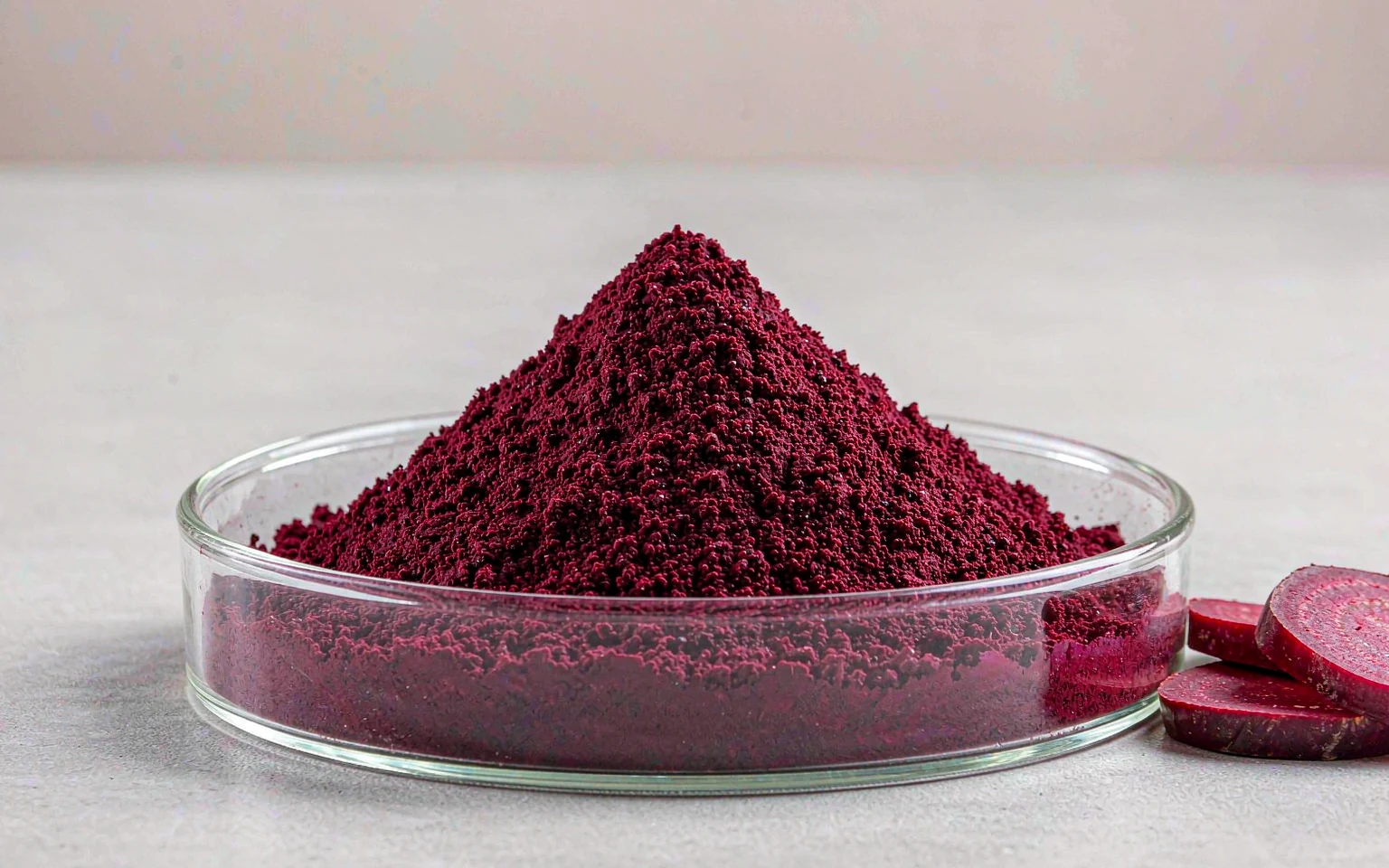
| Beetroot | beetroot juice concentrate | beetroot red, E 162 | Authorised |
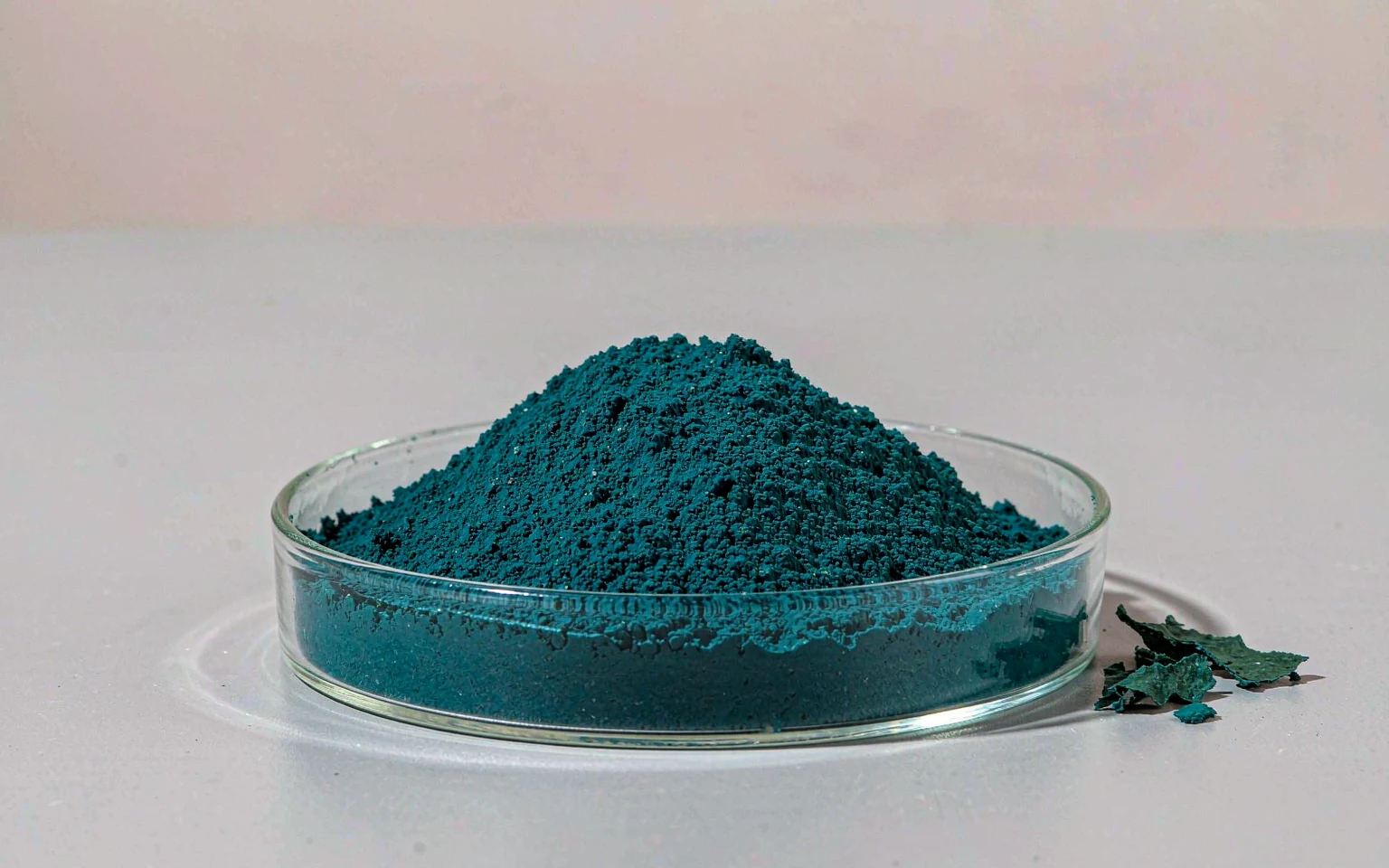
| Spirulina | spirulina concentrate | phycocyanin from spirulina | Handled as a colour additive |
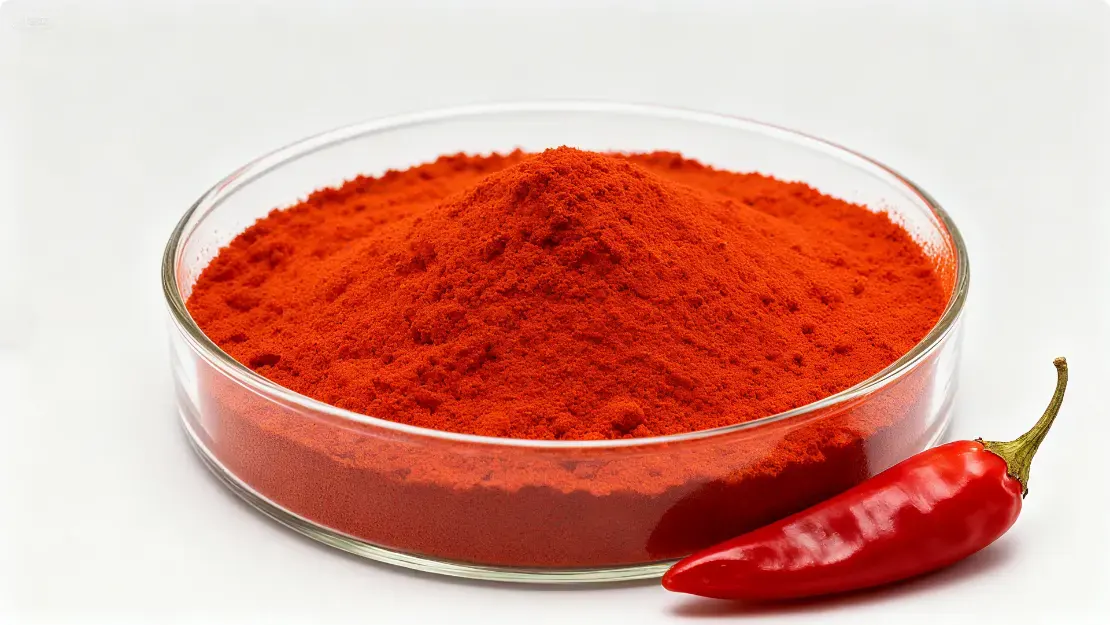
| Paprika | paprika powder | paprika extract, E 160c | Authorised |
| Safflower | safflower concentrate | carthamus yellow | Not authorised |
| Pumpkin | pumpkin juice concentrate | — | No additive identity in this range |
Two rows deserve a second look. Safflower is the case where the distinction is not academic: the additive route is closed in Europe, so the ingredient route is the only way the material can be used there at all. And pumpkin illustrates the opposite situation — a material whose colour value is so low that nobody has bothered to create a purified additive from it, which means the ingredient route is the only realistic one.
Paprika is the awkward one. It occupies both categories legitimately, because the ground fruit is a spice in its own commercial right while the extracted pigment is a standardised additive. Which declaration applies depends on which material you actually bought, and the two are not interchangeable in a formula.
Three misunderstandings cause most of the trouble in this category.
It is not an exemption from regulation. A colouring food sits under general food law in full: safety obligations, traceability, labelling truthfulness, the prohibition on misleading claims. What changes is the legal category, not the regulatory burden. The absence of an E number means the additive authorisation process did not apply — it does not mean nothing applies. A supplier who presents the route as a way around the rules is telling you something about how they will handle a problem later.
It is not automatically organic, clean-label in every sense, or free of processing aids. The category describes how the material was made, not what certifications it holds or what was used on the crop. Organic status is a separate certification with its own rules, and a concentrate can be perfectly conventional. Equally, "no E number" says nothing about allergens, additives used earlier in the supply chain, or the carrier the material is standardised on.
It is not a drop-in replacement at the same dose. This is the error that costs the most time. A concentrate carries the water, sugars and solids of its source, so its colour value per kilogram is far lower than a standardised additive's. Using the additive dose under-colours; matching the additive's colour intensity means a much larger weight of material, which changes flavour, solids content, water activity and cost. The dose has to be established on the concentrate, in the actual matrix.
Whether you are buying a colouring food or an additive, these four questions separate a supplier who knows the category from one who is repeating a brochure.
1. Describe the process in writing. Not the marketing description — the actual steps, in order, including whether any solvent extraction or purification happens. If this cannot be produced, the ingredient route has not been established and should not be claimed downstream.
2. What is the enrichment basis? Ask for the concentration factor or the equivalent evidence that the material is a concentrate rather than an extract. A supplier working legitimately in this category will have the answer ready because they had to establish it themselves.
3. What is the identity in each destination market? The answer is not the same everywhere. The EU has the ingredient route; the US treats the material as a colour additive and requires a listing that covers the use; China runs its own framework. An answer that begins "it depends on the market" is the correct answer, provided the specifics follow.
4. What is the colour value range across batches? A concentrate cannot be sold against a single fixed figure. You want a stated range, with the actual value on each certificate, and you want to know what the supplier does when a lot falls outside it.
The ingredient route is worth having in the toolkit, but it is not a universal upgrade. It asks more of the formulation — a lower colour value, wider batch variation, and in several cases a narrower stability window than the additive equivalent. In exchange it gives a declaration that names a food instead of a number.
Whether that exchange is worth making depends on what the product is selling. Where the ingredient list is part of the proposition, the route earns its keep. Where a precise, repeatable shade at the lowest cost per unit of colour is what matters, a standardised additive remains the correct answer, and choosing the ingredient route will cost more and deliver less.
Both routes are legitimate. The mistake is treating them as interchangeable, or assuming that one is simply the modern version of the other. They solve different problems, and the first step is knowing which problem you have.
We supply six materials on the ingredient route, each with its own technical constraints and its own position in each market. The Colouring Foods range sets out what each grade is, what it is not, and where it works — including the cases where it does not. If you are weighing the two routes for a specific product, send us the application and the target market and we will set out what each option requires.