
A certificate of analysis for rhodiola rosea extract bulk material usually leads with the assay — 3.05% rosavins, 1.07% salidroside — because that is what the purchase order asked for. Further down, past the heavy metals and the microbiological panel, sit two lines that rarely get read: bulk density and tapped density. They are the two figures that decide whether the powder which passed your assay also runs at speed on your filling line.
This article is about those lines, and it is built on the physical data from one real production lot of Rhodiola rosea L. root rather than a generic range: batch 260828, 2,000 kg, manufactured on 28 August 2026 and released to a 36-month shelf life, standardised to 3% rosavins and 1% salidroside. Where the values sit, what they change downstream, and what belongs in the specification you send with the enquiry.
Bulk density is mass divided by the volume a powder occupies when it is poured into a graduated cylinder and levelled. Because that volume includes the air between particles, it describes the powder as it arrives — the condition your feeder, hopper and drum actually see.
Tapped density is the same mass measured after the cylinder has been lifted and dropped a set number of times until the bed stops settling. The particles have rearranged, the air has escaped, and what remains is closer to the packing the powder will reach inside a capsule or a die cavity.
The figures are reported as a pair because the gap between them carries the information. Tapped divided by bulk gives the Hausner ratio; bulk subtracted from tapped and divided by tapped gives the Carr index. Both describe one behaviour: how much further the powder compresses once it starts to move. A free-flowing granule settles very little and lands near 1.1–1.2. A cohesive fine powder can pass 1.5. Neither number is good or bad by itself — it depends entirely on what you are asking the powder to do.
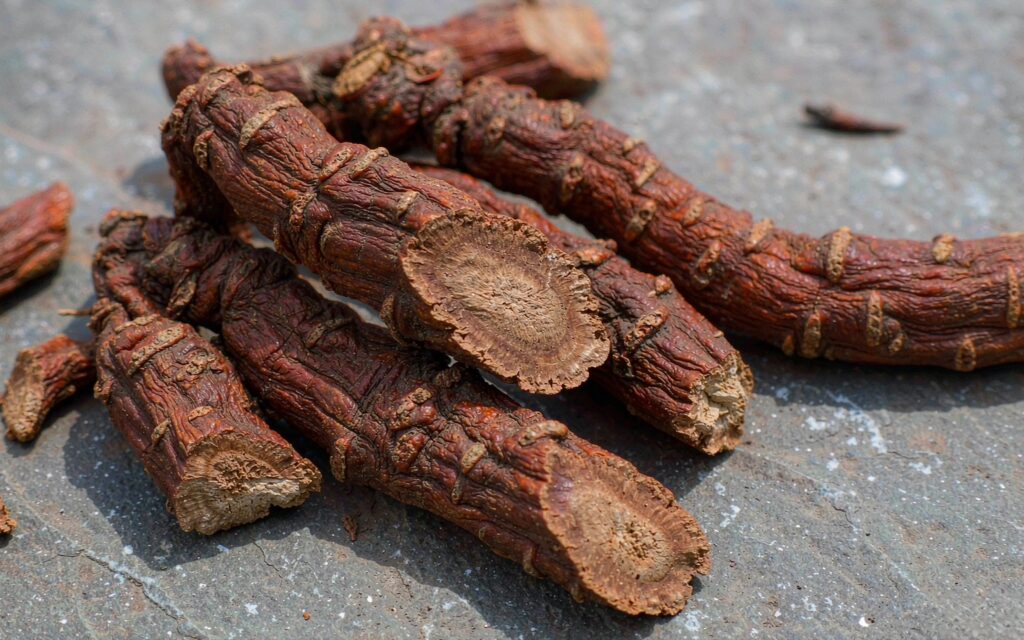
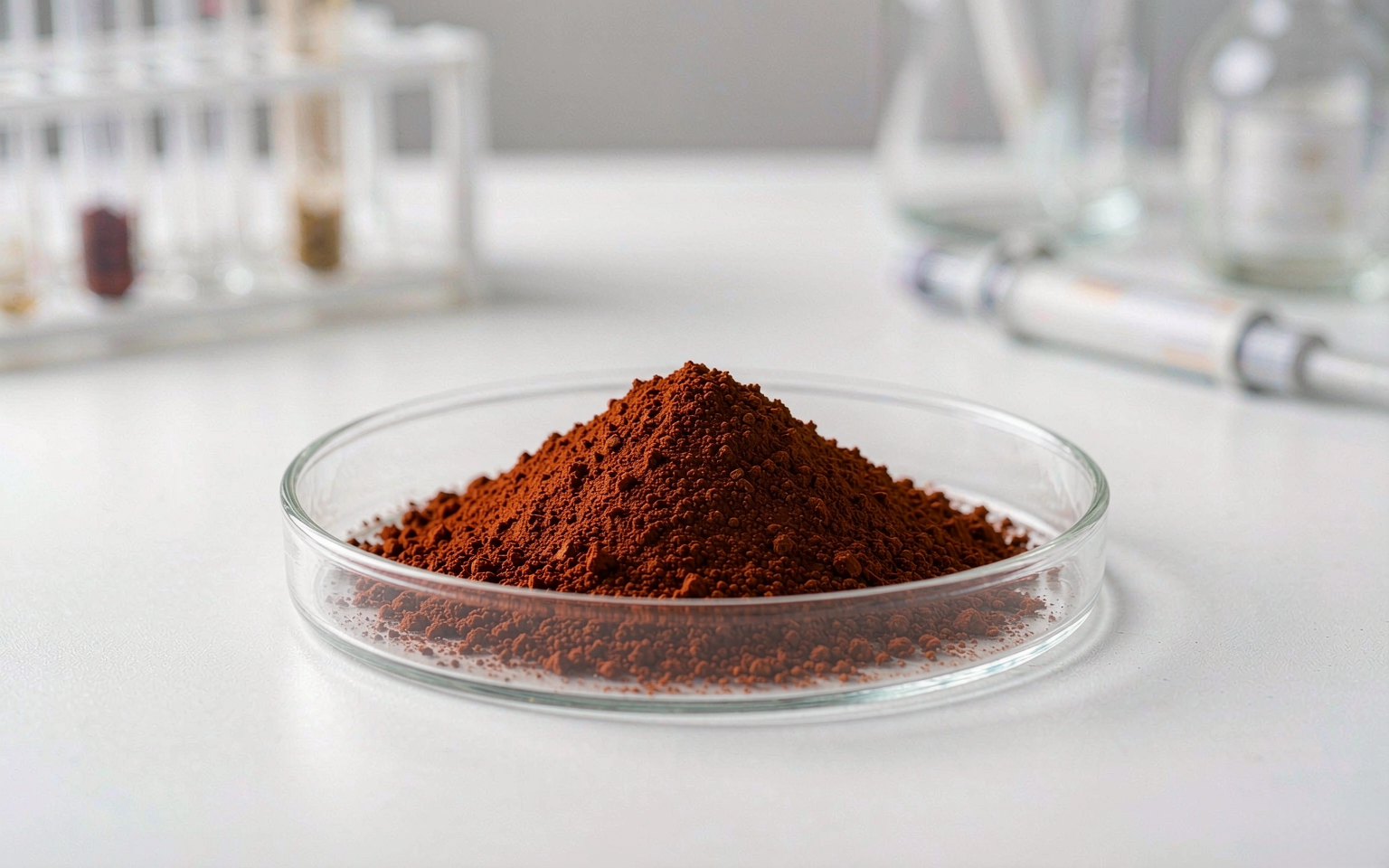
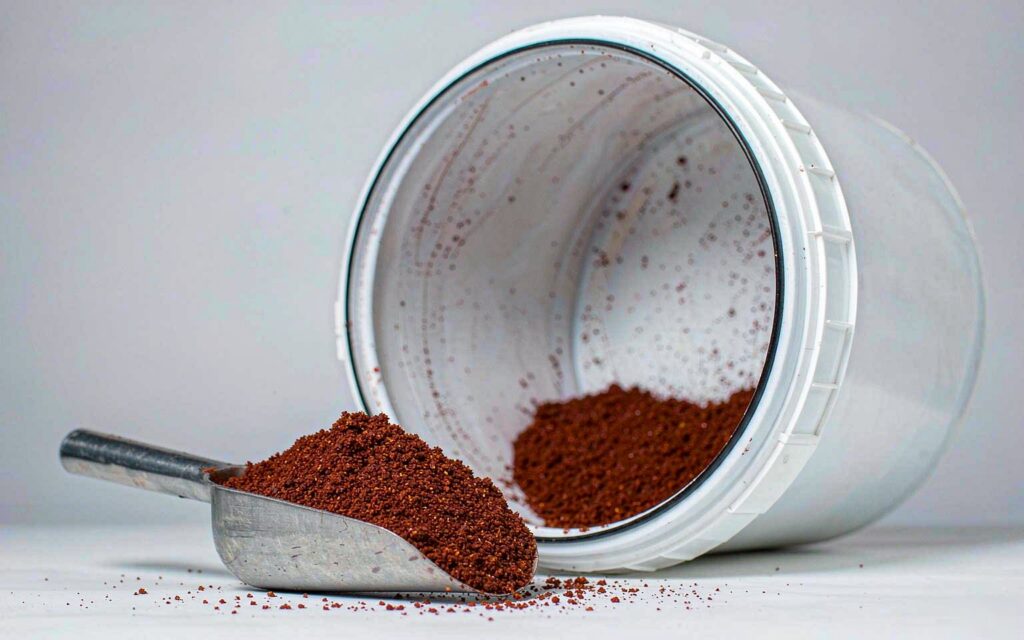
These are the results for batch 260828, a reddish brown powder extracted with ethanol and water and milled to pass 80 mesh:
| Property | Release limit | Batch 260828 | Why a buyer should care |
|---|---|---|---|
| Identity | Positive by TLC | Positive | Confirms the species behind the assay |
| Bulk density | 30–65 g/100 mL | 51.0 g/100 mL | Hopper volume, drum fill, freight on volume |
| Tapped density | 65–85 g/100 mL | 69.0 g/100 mL | How far the powder packs under tamping |
| Hausner ratio | Derived | 1.35 | Flow in feeders and through chutes |
| Carr index | Derived | about 26% | Settling between tamps, fill-weight drift |
| Loss on drying | ≤5.0% | 3.85% | Caking in store, sticking on punches |
| Particle size | 100% pass 80 mesh | Complies | Dust, segregation in a blend |
| Total ash | ≤5.0% | 1.24% | Mineral load carried into the finished dose |
Read the derived rows rather than the raw ones. Tapped over bulk gives a Hausner ratio of 1.35, and the Carr index works out at roughly 26%. Both sit in what powder handling calls the fair band: the material flows through a feeder under its own weight, but not with the effortless consistency of a granule. For a standardised ethanolic root extract that is the expected result. An 80-mesh powder carrying tannins and water-soluble rosavins has a great deal of surface for inter-particle friction, and 3.85% residual moisture is a normal place for a dried botanical extract to sit inside a ≤5.0% limit.
The total ash figure deserves a second look as well: 1.24% against a 5.0% limit says the root was graded before extraction, since it is soil and silica that push ash up, and in a root extract a high ash result usually points at the raw material rather than at the process.
The practical consequence is that one figure in a specification is not enough. Ask for both densities as ranges, because the ratio between them is what you are really buying — and the same average can hide two very different powders.
Capsule filling. Tamping stations compact powder to a volume, not to a weight, so a powder with a Carr index in the mid-twenties keeps settling through the first part of a run. Fill weight typically comes out heavy at start-up and drifts toward target as the stations stabilise. Plan to re-trim after the first few thousand capsules instead of accepting the opening ten as representative.
Tabletting. Die fill is volumetric. At 51 g/100 mL a 500 mg dose needs roughly twice the cavity volume a 100 g/100 mL granule would, which caps turret speed for a given output. Moisture matters here as well: at 3.85% loss on drying the extract is inside its limit but still hygroscopic enough to pick up water in a humid press room, and sticking tends to show up first as a reddish-brown film on the punch faces rather than as a clean weight failure.
Blending. An 80-mesh powder dusts easily and can segregate against coarser excipients in a V-blender. If your blend carries a coarse filler, check whether a granulated grade is available before lengthening the mixing time — more mixing does not fix segregation.
Drum volume and freight. This is the one that catches buyers out. At 51 g/100 mL, 25 kg of powder occupies about 49 litres. A 25 kg fibre drum is sized around that volume, so it arrives part-full, which is normal and does not mean the net weight is short. It does mean that repacking into smaller units is a volume decision as much as a weight one, and that air freight should be quoted on volume, not only on kilograms.
Five lines turn this from a post-delivery surprise into a purchase condition:
The Rhodiola Rosea Extract page carries the full specification, the CITES position and the documents supplied with each lot. Batch 260828 is held in our Paris warehouse, so an EU buyer can take delivery from stock. Free samples are available for bench trials, and the 25 kg fibre drum is the standard production pack.
Send your target fill weight, the machine type and the destination port, and we will quote against the density window your line needs rather than a single average figure. Request a quote or a sample.
 Rhodiola Rosea ExtractThe 3% rosavins / 1% salidroside grade measured in this article, with the batch COA and…Read More »
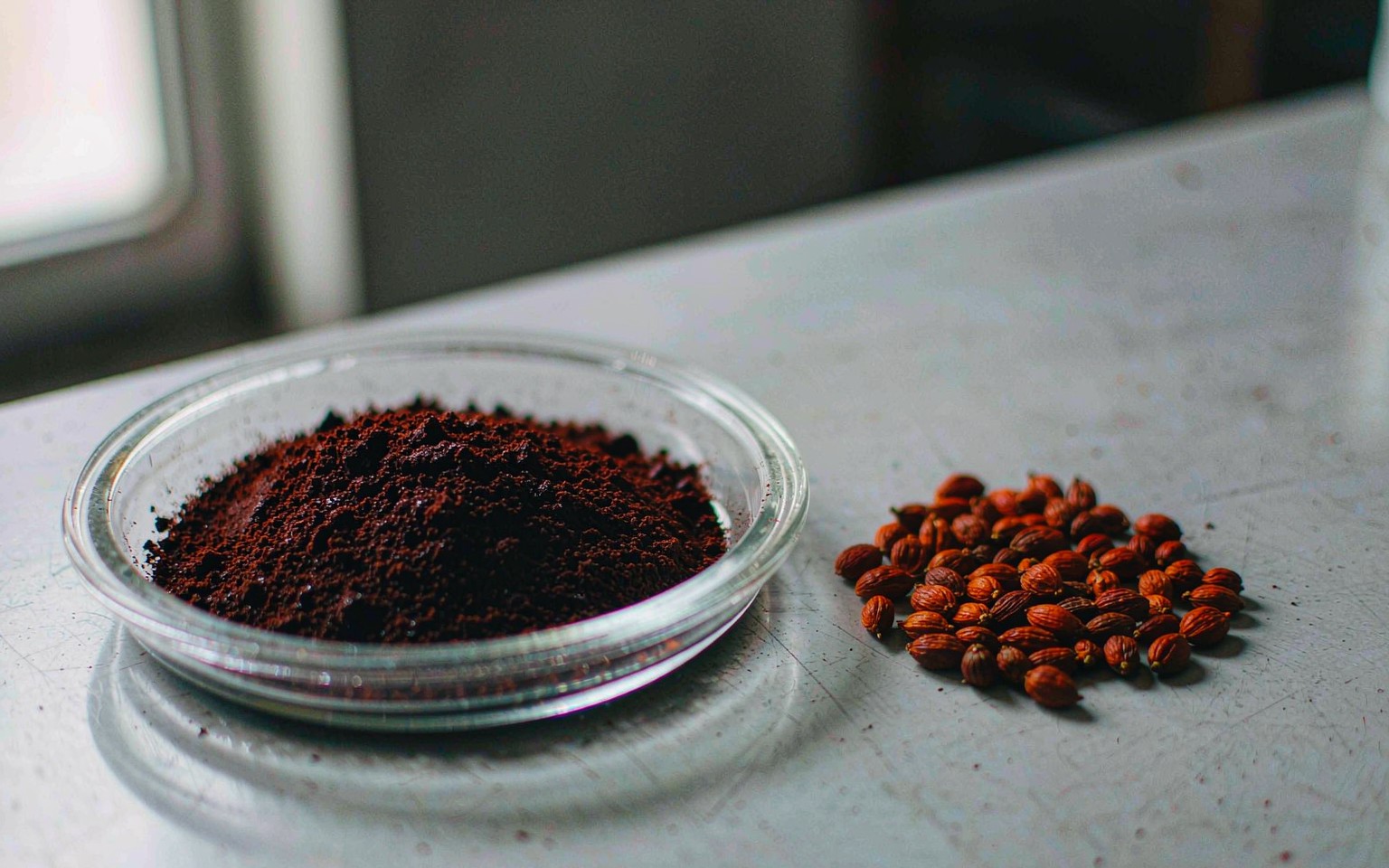
 Beetroot PowderAnother 25 kg drum powder where the same questions about density, moisture and behaviour in a…Read More »
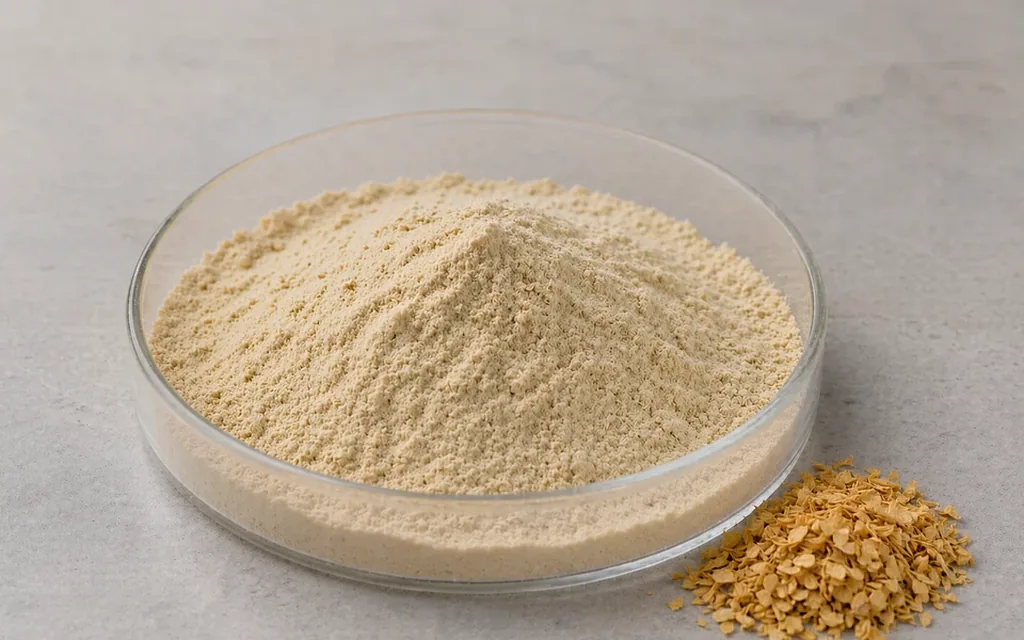
 Yeast ProteinA finer, lighter powder again - useful to compare against if your blend mixes botanicals with…Read More »
Not the price per kilogram directly, but it changes the cost of moving and packing the material. A lighter powder needs more drum volume for the same net weight, so freight quoted on volume and any repacking charge can differ between two lots that read identically on assay.
Sometimes. Granulation changes density and flow, and it can also move the assay slightly, so it is quoted against your target range rather than offered as a stock option. Send the fill weight and the machine type and we will confirm what is achievable for the grade.
Because the specification is a floor, not a target. Production aims above the minimum to leave room for HPLC repeatability, and the figure on the certificate is the measured value for that batch. Every lot is released against the same limits.
Usually yes - most capsule fills run on powders in this range. Whether you need a flow aid depends on the machine, the target fill weight and the other ingredients in the blend, so it is worth a bench trial with the actual formula before the production order.