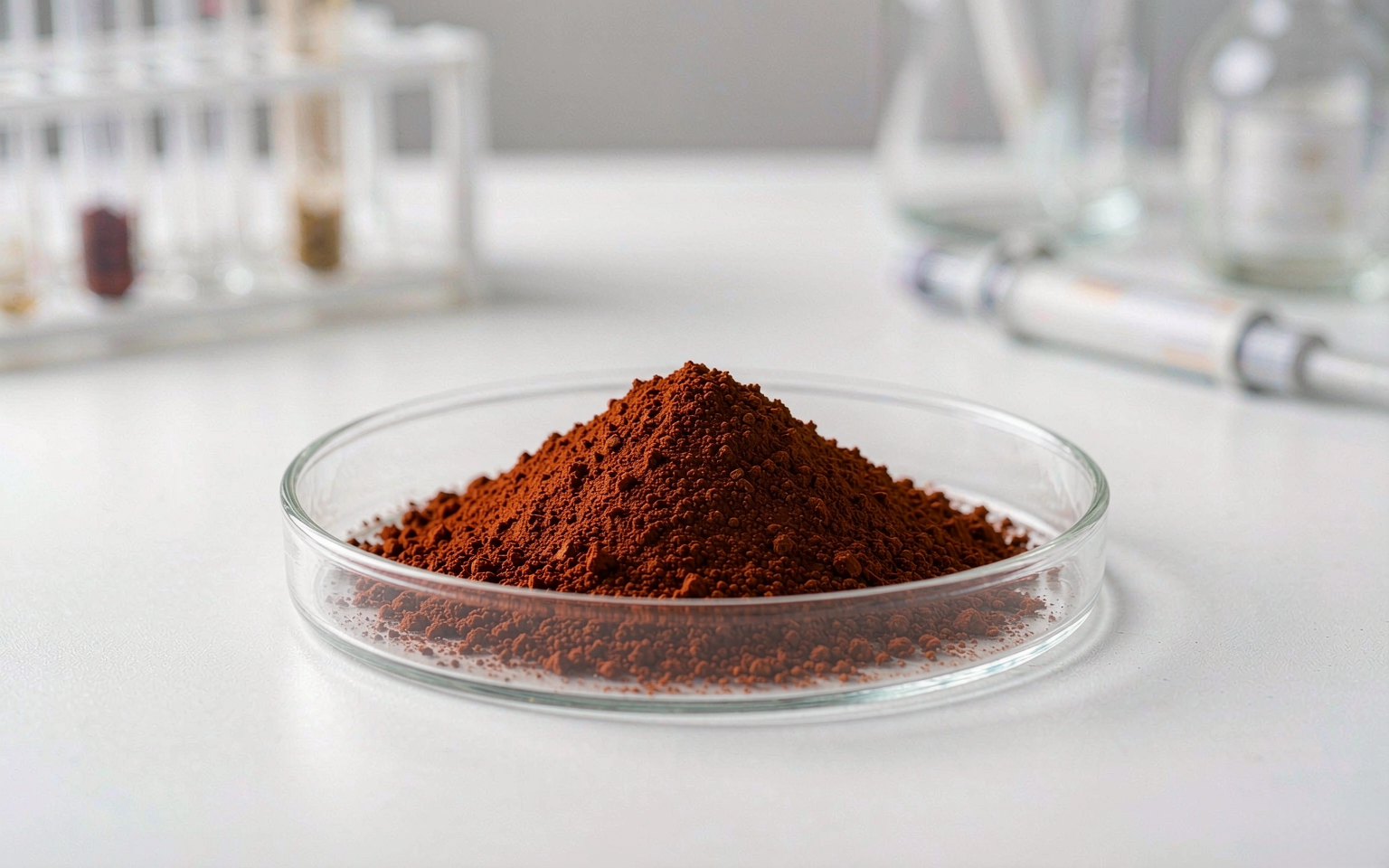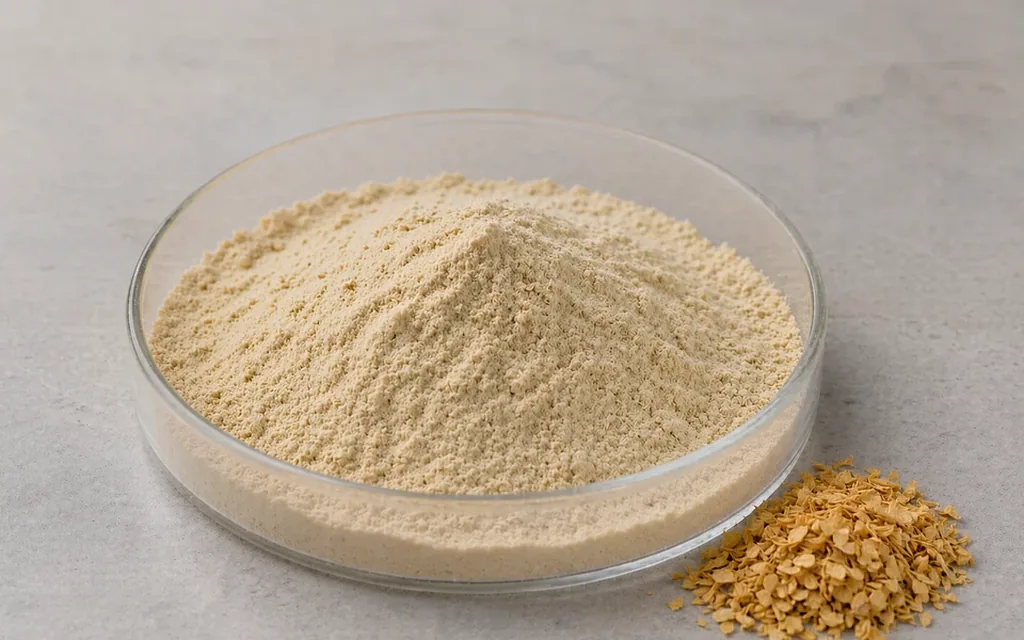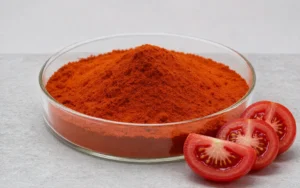

Spray dried vs freeze dried vegetable powder is a specification question before it is a price question. Spray drying removes water in seconds with hot air against a droplet; freeze drying removes it over days by sublimation below freezing. Spray drying gives a fine, fast-wetting powder and takes colour and aroma out of it. Freeze drying keeps the colour and costs several times more per kilogram. Both arrive described as "spinach powder".
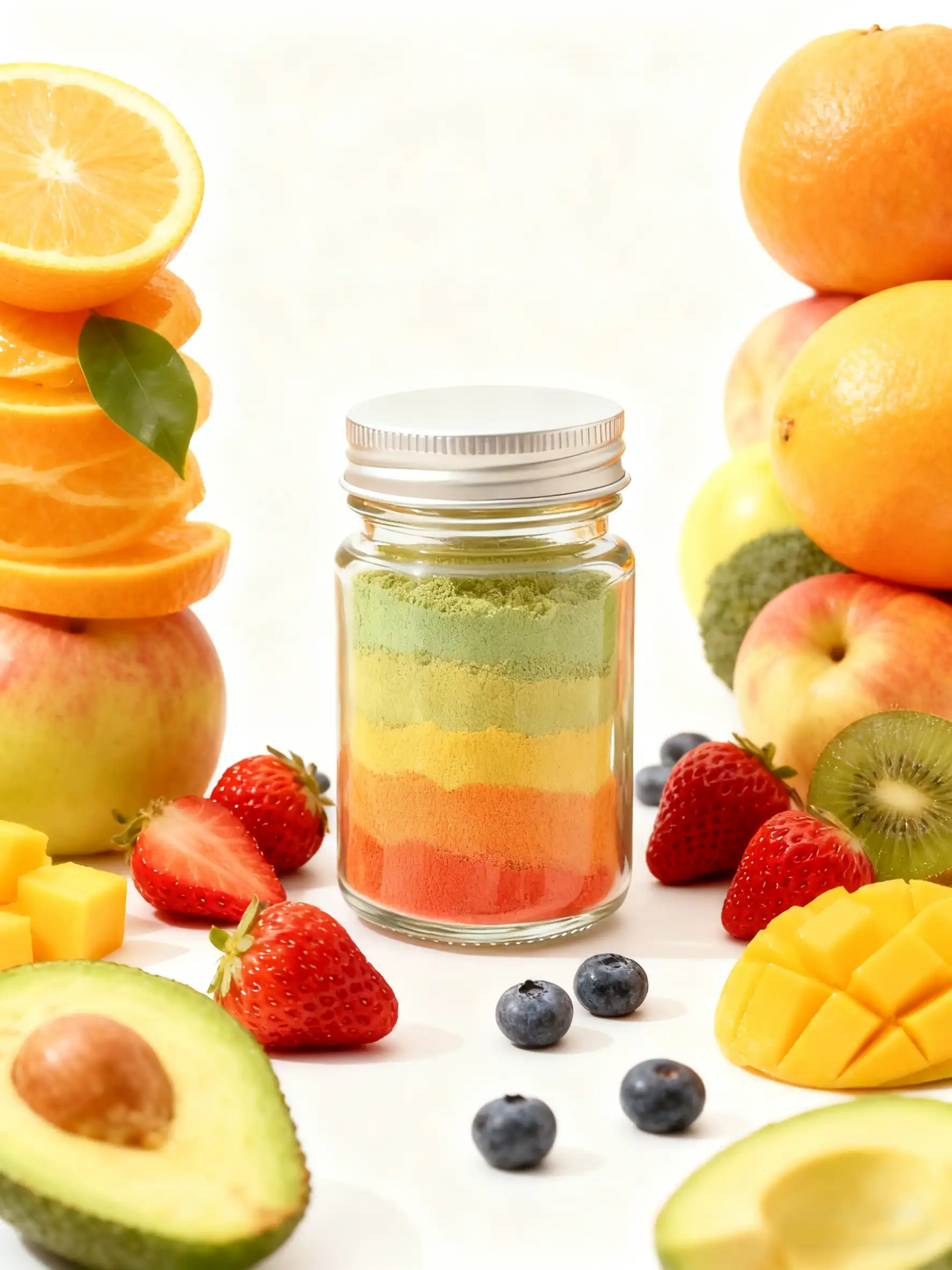
The gap is not quality — it is specification, and specification is where the money goes. One powder disperses instantly and colours at low dose; the other is darker in tone, lower in marker content, and needs several times as much. Price per kilogram tells you nothing, because you are not buying kilograms but colour, or dispersion, or a label claim.
The route sets most of the other numbers: the two things heat destroys — chlorophyll and volatile aroma — are what buyers judge the powder on. Ranges below are quoted in trade literature, not one house standard.
| Route | Regime commonly quoted | What it protects | What it costs |
|---|---|---|---|
| Freeze-drying | Below 0 °C under vacuum; water leaves by sublimation | Colour, aroma, cell structure | Most expensive; low bulk density means more pallet space per tonne |
| Spray-drying | Inlet air typically 150–200 °C, the droplet far cooler as it evaporates | Speed, and a powder that wets out instantly | Colour and volatiles; a hygroscopic extract needs a carrier, which lands on your label |
| Air or hot-air drying | Commonly 50–100 °C for hours | Cell structure and cost — the cheapest route | Widest lot-to-lot variation and the largest accumulated colour loss |
What the product is judged on decides the route: where dispersion speed is the binding constraint, spray-dried; where colour and aroma are, freeze-dried; where cost is, air-dried whole powder. For a powder bought as a colour rather than as a nutrient, the drying route only decides half of the outcome; losing that colour in the oven is the other half, and why beetroot colour fades in a baked crumb is the worked case.
Bulk density separates them fastest: spray-dried powder is dense and dusty, freeze-dried is light and clumps. Colour value and aroma confirm it. Density and colour are COA lines, so ask for both before you judge.
Density ranges below are quoted across the trade rather than from one house standard; confirm them against the COA of the lot.
| What to measure | Spray-dried | Freeze-dried |
|---|---|---|
| Bulk density | Roughly 0.40–0.60 g/mL | Roughly 0.25–0.35 g/mL |
| Flow and dusting | Free-flowing and dusty; wets out fast | Light and clumpy; slower to wet out |
| Colour and nutrient retention | Lower — heat-sensitive markers fall furthest | Higher — chlorophyll and aroma largely kept |
| Heat exposure in the drying step | Real — hot air for seconds rather than hours | No heat in the drying step; the cost is time and money |
These are agricultural materials that are dried rather than sterilised, so microbiology, water activity and particle size reject more deliveries than colour does. Ranges are typical of data sheets; confirm against the COA of the lot.
| Parameter | Ranges you will see quoted | Why it rejects a delivery |
|---|---|---|
| Moisture | 5–6% maximum is the common ceiling | Above it the powder cakes and browns, and every dry-basis comparison shifts |
| Water activity | Commonly below 0.5; air-dried often 0.4–0.6 | Aw, not moisture, governs microbial growth and browning |
| Mesh or particle size | 60–100 mesh typical; fine grades to 200 | Off-spec mesh dusts in a blend or disperses badly in a beverage |
| Total plate count | Below 10,000 cfu/g typical; low-count grades below 1,000 | Sets whether the material must be heat-treated — which costs colour |
| Yeast and mould | Below 100 cfu/g is the usual limit | A spoilage indicator and a signal about drying hygiene |
| Salmonella, E. coli | Absent in the stated quantity | Absolute. A positive ends the lot with everything else in range |
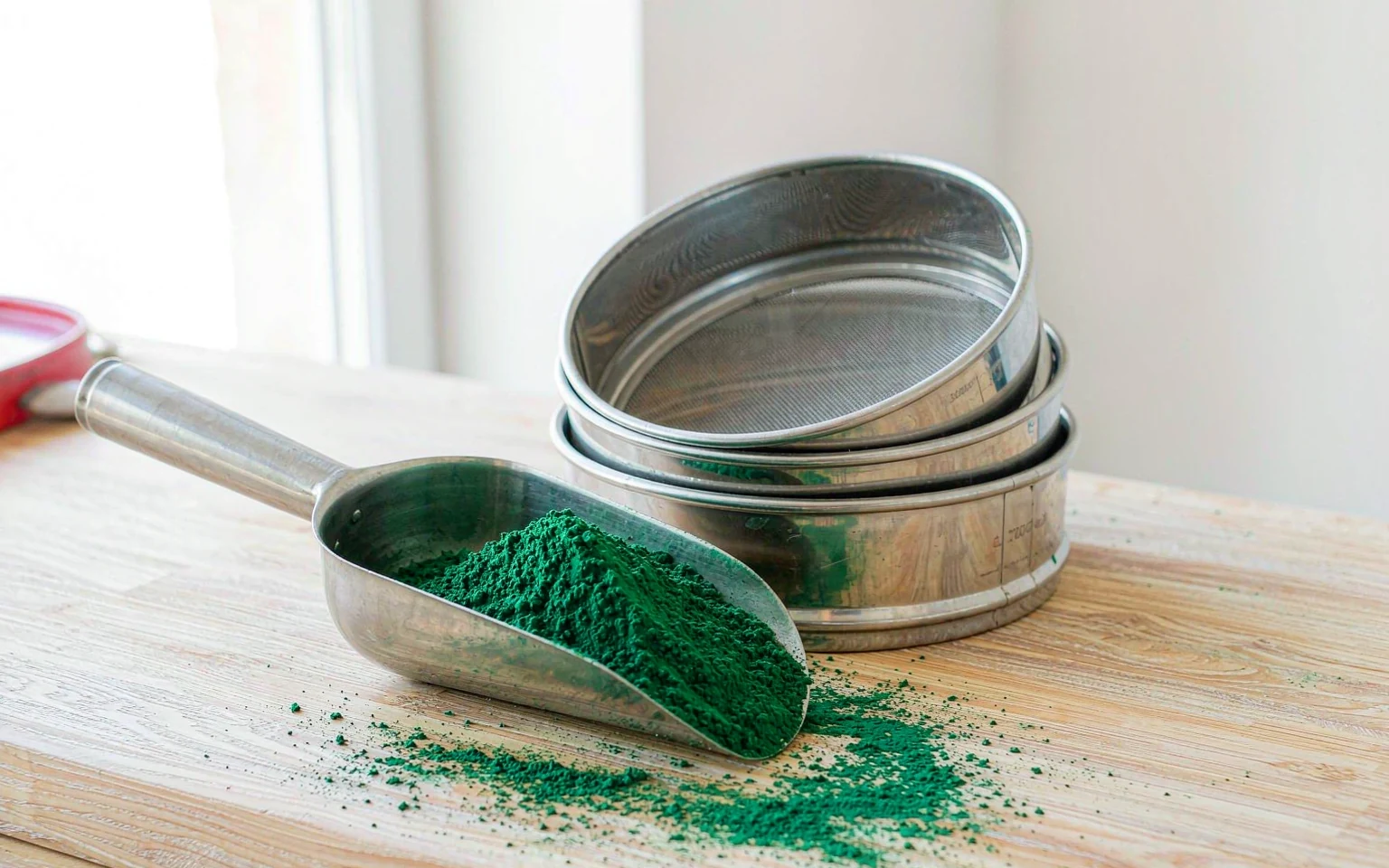
Heavy metals and pesticides decide whether the same lot can ship to two customers. Neither is governed by one global limit: both follow the destination market's rules plus the buyer's specification, which is usually tighter. Buyer limits quoted in the trade commonly sit at sub-ppm across lead, arsenic, cadmium and mercury, with cadmium and lead the two that fail in root and leafy vegetables — both come from soil, not surface deposit.
So put the destination country in the RFQ, or you will get a generic panel. For the EU, maximum residue levels are set under Regulation (EC) No 396/2005, with a default limit where a substance is not listed — so "no MRL exceeded" means nothing without a residue definition and a reporting limit.
A colour name describes an appearance, so a dispute about it comes down to whose sample is on the bench. A marker is an input you can measure and put a number on in the purchase order.
| Powder | Marker worth standardising on | Why that one |
|---|---|---|
| Spinach powder | Chlorophyll, as a green colour value | It degrades with heat, so the marker tracks how gently the crop was dried |
| Carrot powder | Beta-carotene content | It varies by crop and season, so a fixed figure without a method is not enforceable |
| Tomato powder | Lycopene content | It is fat-soluble, so it disperses poorly in water-based systems regardless of dose |
Attach the method and the basis. Beta-carotene is measured by HPLC or spectrophotometry, and the two do not agree to the last decimal. Some report dry basis, others as-is, so two identical powders with different moisture read as different products. Figures of 20 and 50 mg/100 g for the same vegetable both circulate, and neither is wrong until you know which.
So divide price by marker content per kilogram. That is cost per unit of what you actually need, and it often reverses the order of the quotes.
Most of the value is in the lines people skim:
Much of "the product faded" means it faded in our warehouse. Trade guidance commonly puts optimal storage below 15 °C and 15–25 °C as acceptable, with anything above 25 °C accelerating loss of colour and free-flowability. Below 40% relative humidity is usual; above 60% brings caking and microbial risk. Unopened shelf life is commonly quoted at 24 months, the window after opening at 30 days. The TDS governs, but storage belongs in the specification next to the mesh size.
Finer is not automatically better. A beverage line wants fine and fast-wetting. A dry blend wants a coarser granule so fractions do not separate in the bag. A bakery application often wants coarser deliberately, to keep visible identity in the crumb. In a dry mix, going finer than needed raises the surface area available to moisture and makes caking worse. Specify the mesh your process needs.
Send us the vegetable, the marker, the destination market and your microbiological specification, and we will quote a specification rather than a colour name. Request specifications and samples
It describes how much raw material went in relative to the extract obtained, not how much marker the finished powder contains. Two suppliers can both state 10:1 and ship materials with different marker levels, because the ratio says nothing about extraction efficiency or about the carrier added afterwards. Standardise on the marker and its test method instead, and treat the ratio as descriptive background.
Lycopene is fat-soluble, so it has little affinity for a water-based system and will not distribute evenly no matter how finely it is milled. In aqueous products it is normally delivered through an emulsion or with a suitable carrier, or the tomato powder is used where the fat phase of the recipe can carry it. Dispersibility is a formulation question, not something a finer mesh will fix.
It depends on the crop and the drying regime, because reaching a low microbial count without treatment requires good raw material and controlled drying. We will state clearly at enquiry which items can meet a non-irradiated specification and which cannot, rather than leaving it to the documentation stage. Raise the requirement before sampling so that the material quoted from the outset can actually satisfy it.
Reduce both to cost per unit of the marker you need. Multiply the price per kilogram by the kilograms required to reach your target marker level in the finished batch, and compare those figures. This normalises for carrier content, marker strength and grade differences, and it frequently changes which quotation is actually cheaper once the dosage is accounted for.