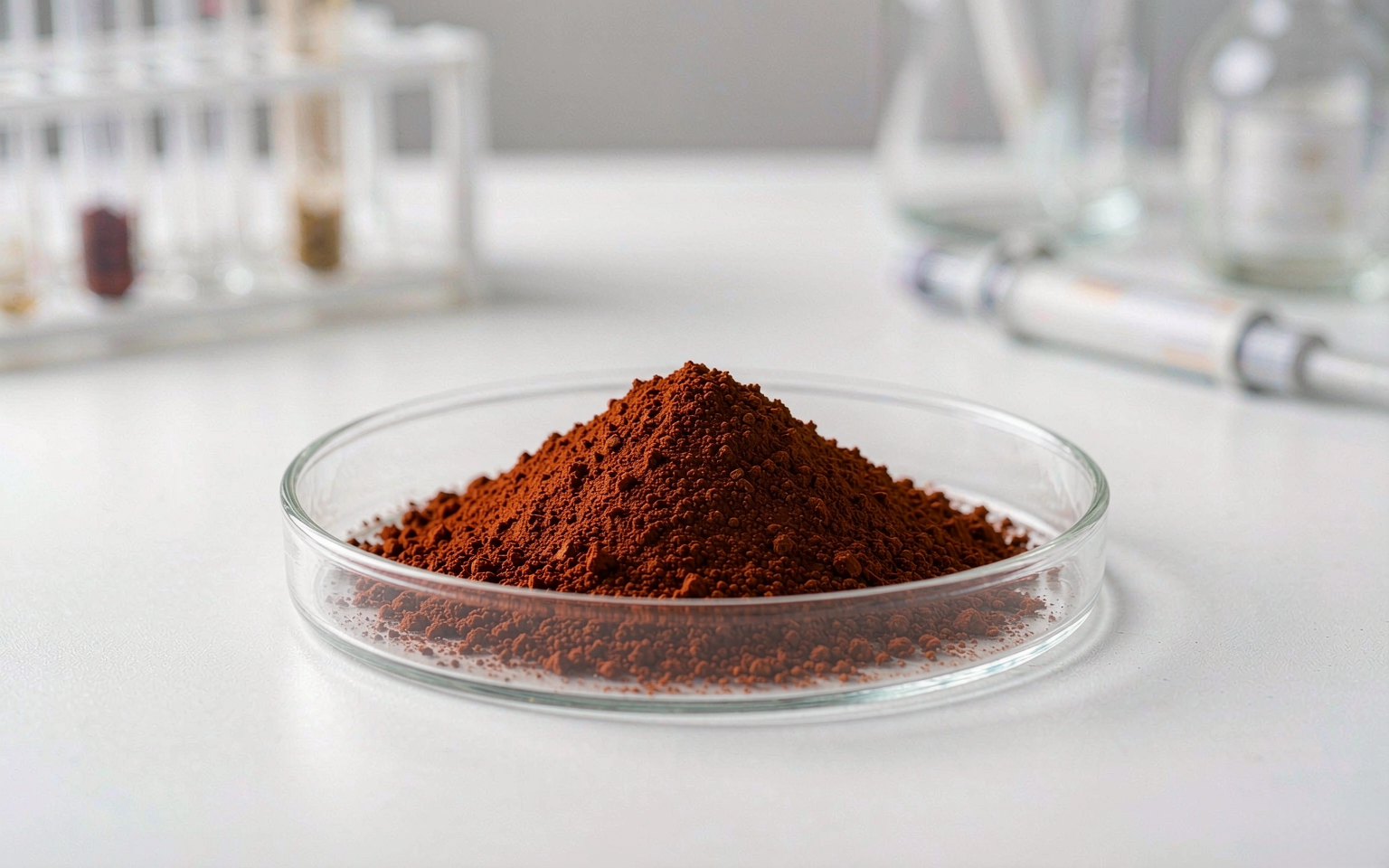

Beetroot powder for baking color fails for three predictable reasons, and only one is the oven. Published beet-root stability work reports betalains degrading from around 50 °C upward, so a bake costs color from the first minute. But the crumb pH your leavening sets matters as much as the temperature, and the light the finished product sits under matters more than either.
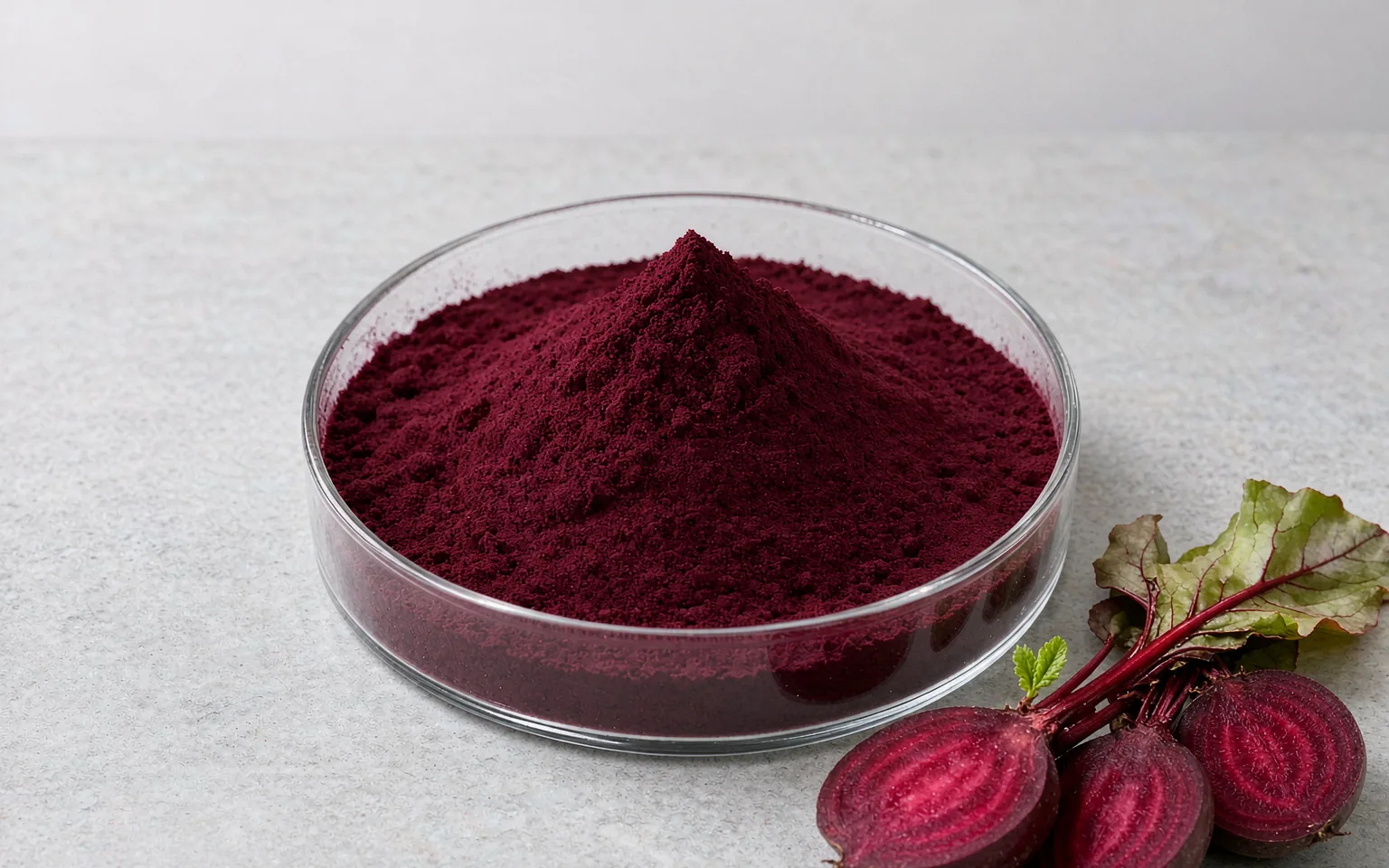
The pigment is not unreliable. It is being asked to do something the bake was never set up for.
Same powder, two regulatory identities, depending on the market and on how far the pigment was concentrated. Which of the two applies decides what the label says.
In the United States, dehydrated beets are a color additive at 21 CFR 73.40, exempt from batch certification, permitted in foods generally at GMP levels — with specifications: volatile matter not more than 4%, acid-insoluble ash not more than 0.5%, lead not more than 10 ppm, arsenic and mercury not more than 1 ppm each. It may not color foods with a standard of identity unless that standard allows added color.
In the EU, beetroot red is E162, authorized under Regulation (EC) No 1333/2008, with specifications in Commission Regulation (EU) No 231/2012. It is defined as a product obtained by pressing or aqueous extraction and subsequent enrichment in the active principle — that enrichment is what makes it an additive.
Whole dehydrated beetroot, not selectively extracted, sits on the other side as a food ingredient with coloring properties.
The Commission's guidance notes on food extracts with coloring properties, adopted by the Standing Committee in late 2013, are the operative document: they use an enrichment factor against the source material to separate non-selective from selective extraction. Guidance, not regulation — confirm the numeric threshold against the current text.
So a coloring-food declaration reads "beetroot powder", while an E162 declaration reads "color: beetroot red". Ask which of the two your supplier ships, in writing, for your market.
In published stability work, betalains — principally betanin — are most stable around pH 4 to 5, and sensitive to heat, light, oxygen and metal ions. Each of those shows up somewhere different in the product, and each has a different fix.
| Loss mechanism | Signs you are looking at it | What helps |
|---|---|---|
| Heat during bake | Color survives the bowl, disappears in the crumb | Color added late, shorter bake, lower top temperature |
| Alkaline crumb pH | Acceptable in batter, brownish in the crumb | Rebalance the leavening — most often misdiagnosed as heat loss |
| Light on shelf | Exterior fades, interior holds | Opaque packaging; no beetroot format holds a visible surface indefinitely |
| Moisture and Aw | Dry mix darkens before use | Control water activity and seal the pack |
| Metal ions and oxygen | Loss faster in one plant than another | Chelating and reducing agents; check the water and any premix |
Betanin is most stable near pH 5, but the two sides differ: acid causes gradual loss, while alkali cleaves betanin into betalamic acid — yellow — plus a colorless fragment. The red does not fade to pink; it goes brownish-yellow, the complaint formulators call "it went muddy".
In a beverage pH comes from the acidulant; in a baked good from the leavening, and sodium bicarbonate pushes the crumb alkaline. The further that ratio runs toward bicarbonate, the more red is converted rather than merely faded. Cocoa does the same: natural cocoa is commonly quoted near pH 5 to 6, Dutched near 7 to 8. The fixes are ordinary bakery work — an acidic leavening acid, less bicarbonate, a different cocoa — and all three change crumb and volume, so run a full bake, not a color trial.
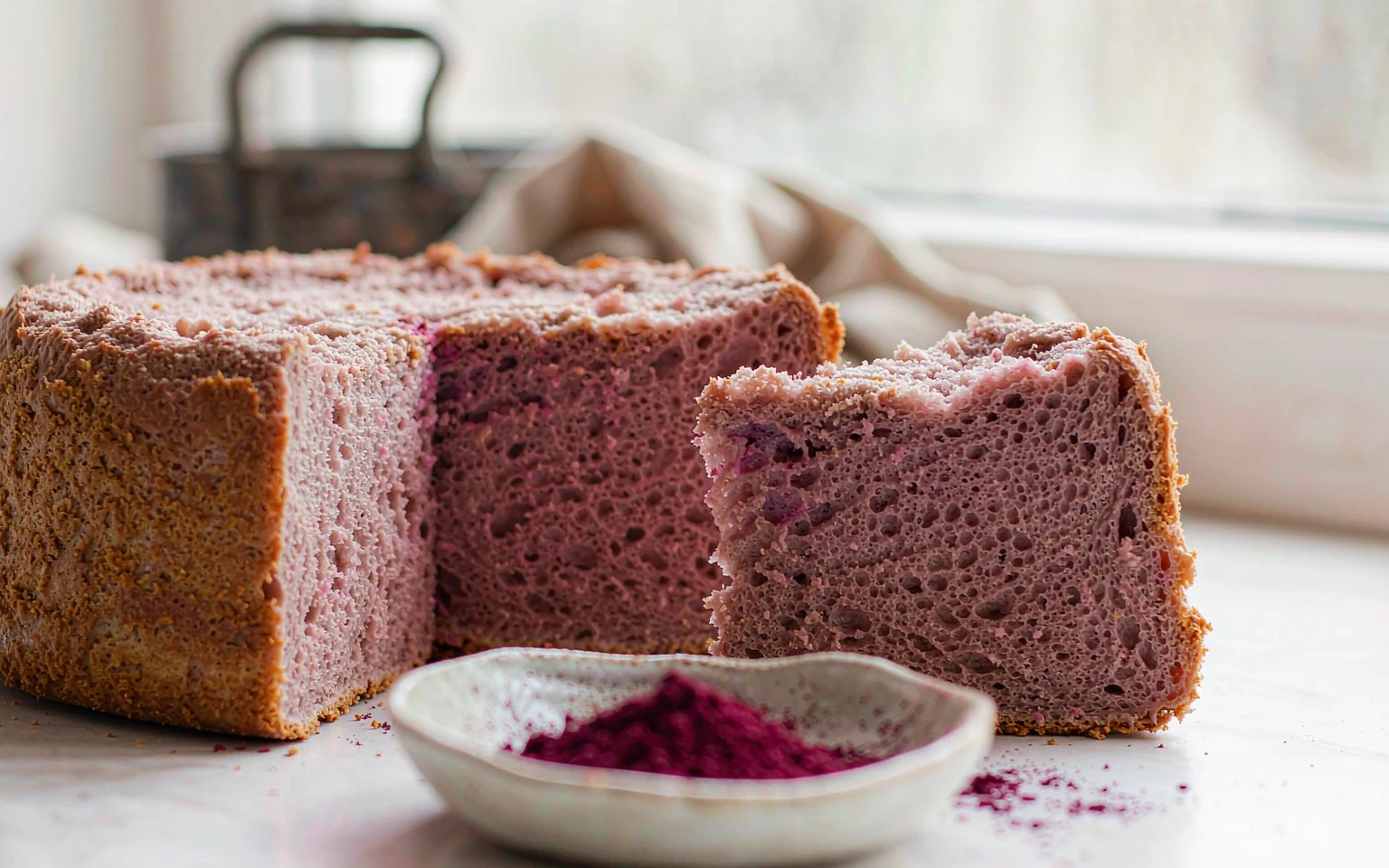
"Is it heat stable?" is the wrong question: betalains have a rate, not a threshold. The stability literature puts degradation from about 50 °C, first-order kinetics in time, and a visible shift to yellowish-brown at 100 °C.
Reported losses climb steeply with both variables: single-digit percentages after a minute in boiling water, more than half after three minutes, and from roughly a quarter to the great majority of the pigment across half an hour between 105 and 125 °C. Figures vary with matrix, pH and method, so treat them as orders of magnitude rather than as a specification.
They come from beet material rather than bakery crumb, so read them as a shape rather than a prediction: what you pay is time multiplied by temperature, and a short exposure at a high temperature can be gentler than a long one at a lower one.
Trade sources quote working doses around 0.1% to 0.8%, with earthy notes detectable from roughly 0.1% to 0.3% upward. The ranges overlap, which is the point: no dose colors everything untasted. Ask what the percentage is a percentage of — 0.4% of flour weight and 0.4% of batter weight are different products, so put the basis in the specification. Raising the dose to cover thermal loss raises color, earthy taste and cost on the same curve.
Metal ions catalyse betanin degradation and oxygen drives it. Citrate binds trace metals; ascorbic acid consumes oxygen. Both have limits: ascorbate brings its own color and flavor at dose, and citrate shifts pH in a system where pH is already the problem.
Pairing the powder with a beetroot red (E162) concentrate allows a lower total color load while keeping beetroot on the label. Not because the concentrate is heat-tolerant — it degrades on substantially the same curve, and calling it heat-tolerant would be wrong — but because it carries far more betanin per kilogram. The total mass of pigment-bearing ingredient falls, and cost and earthy flavor fall with it.
A gardenia blue pushes the shade toward purple or blue: a hue correction, not a stability fix, and it carries its own US regulatory question — the status of gardenia blue under US color additive rules is separate homework. The grade you start from also matters: beetroot powder comes air-dried or freeze-dried, from juice or whole root, standardised on betanin or red intensity.
Send us the recipe, the bake profile and the shelf life you need, and we will tell you where the color is being lost and what to do about it. Request samples and application data
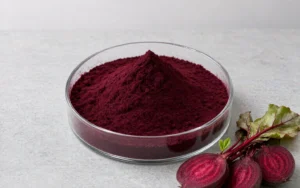 Beetroot PowderAir-dried or freeze-dried from juice or whole root, standardised on betanin or red intensity.Read More »
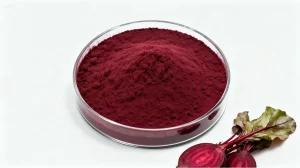 Beetroot RedA heat-tolerant red that can carry part of the colour load alongside beetroot powder.Read More »
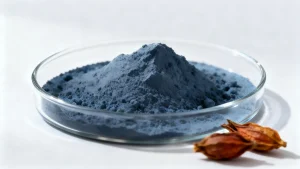 Gardenia BlueUsed to shift the hue towards a direction that survives baking better.Read More »
Yes, but the dosage has to account for thermal loss. Betalain pigments degrade during a high-temperature bake, so the shade in the finished product will be lighter than the shade in the raw mix. Formulate against the colour you need after baking rather than the colour in the bowl, and confirm it with a bake test in your own recipe instead of relying on bench dispersion.
That pattern points to light exposure rather than heat. The surface receives the light and the interior does not, so the fade tracks the geometry of the product. The fix is normally packaging — an opaque or light-barrier material — or a pigment with better light tolerance for the exposed surfaces, rather than a higher dose of the same colour throughout.
Blending is usually more effective than simply increasing the dose. A heat-tolerant red such as beetroot red can carry part of the colour load while keeping beetroot on the ingredient list, and gardenia-derived colours can shift the hue towards a direction that survives baking better. The right ratio depends on the target shade and the bake profile, so it is worth testing two or three ratios rather than one.
It does. Beetroot carries earthy and faintly sweet notes that become more noticeable as the dosage rises, and compensating for bake loss means raising the dosage. Run the sensory assessment at the final corrected level rather than the first trial level, because that is the level your consumer will actually taste. Where the taste becomes limiting, a blend is normally the more practical answer than more powder.