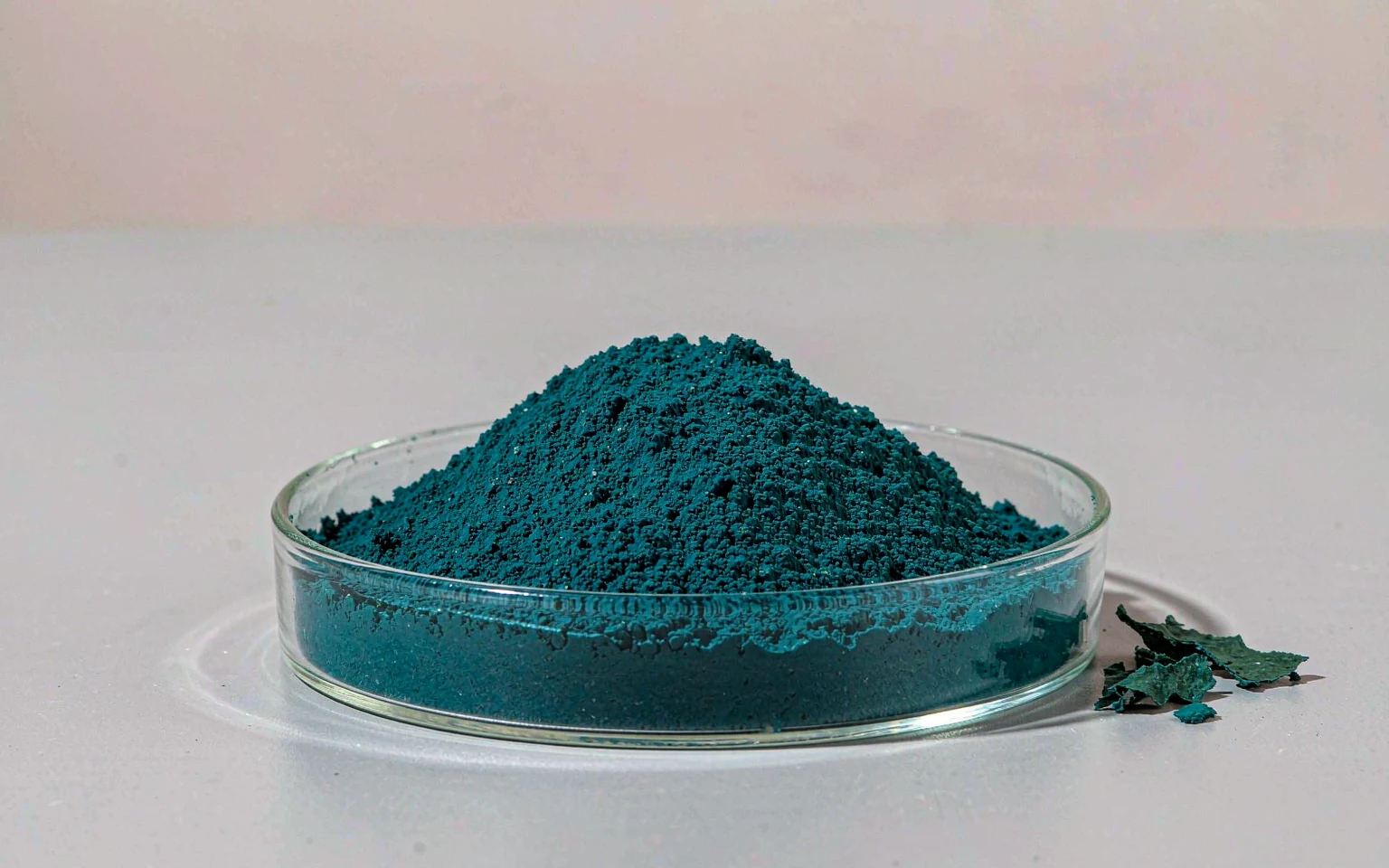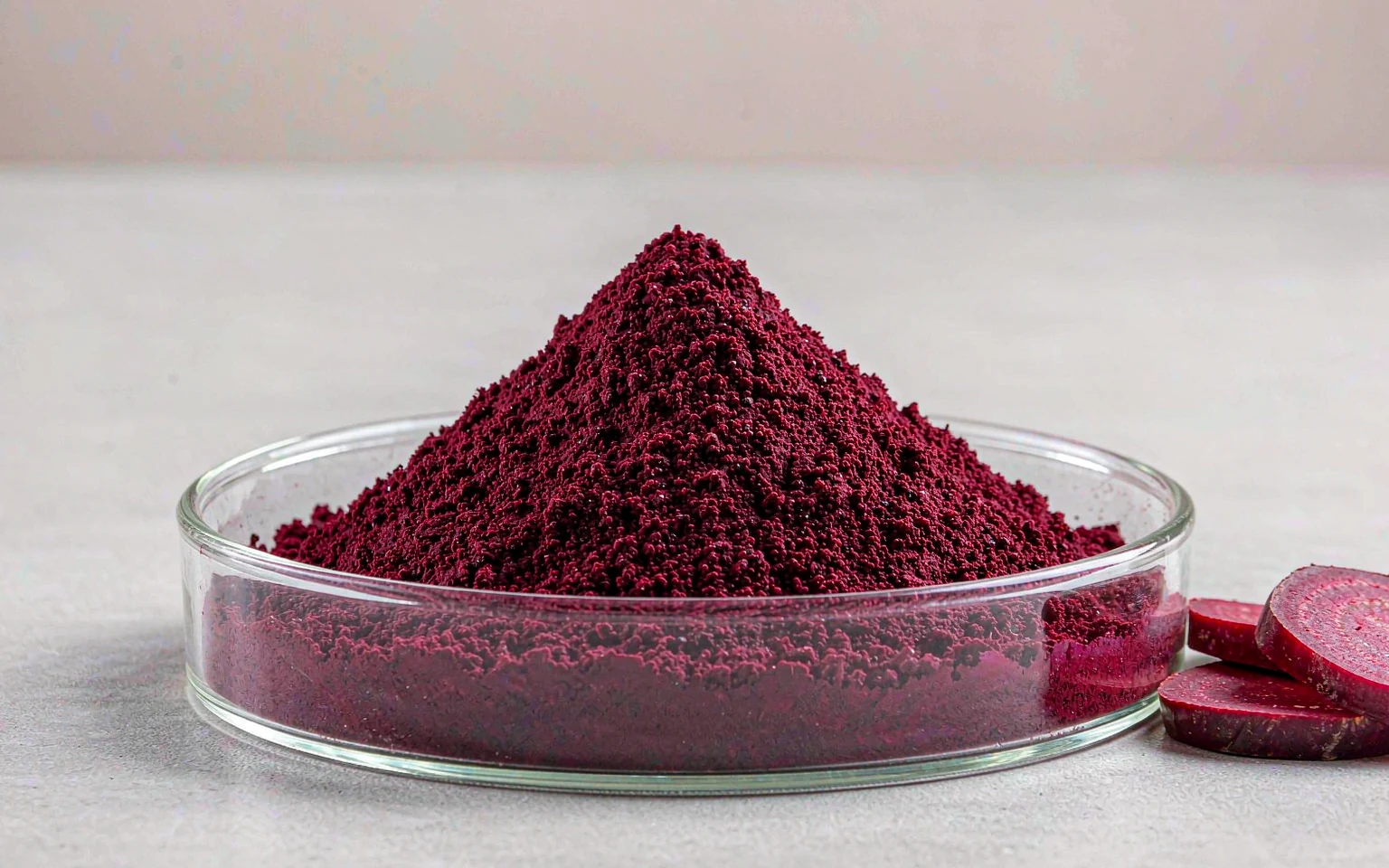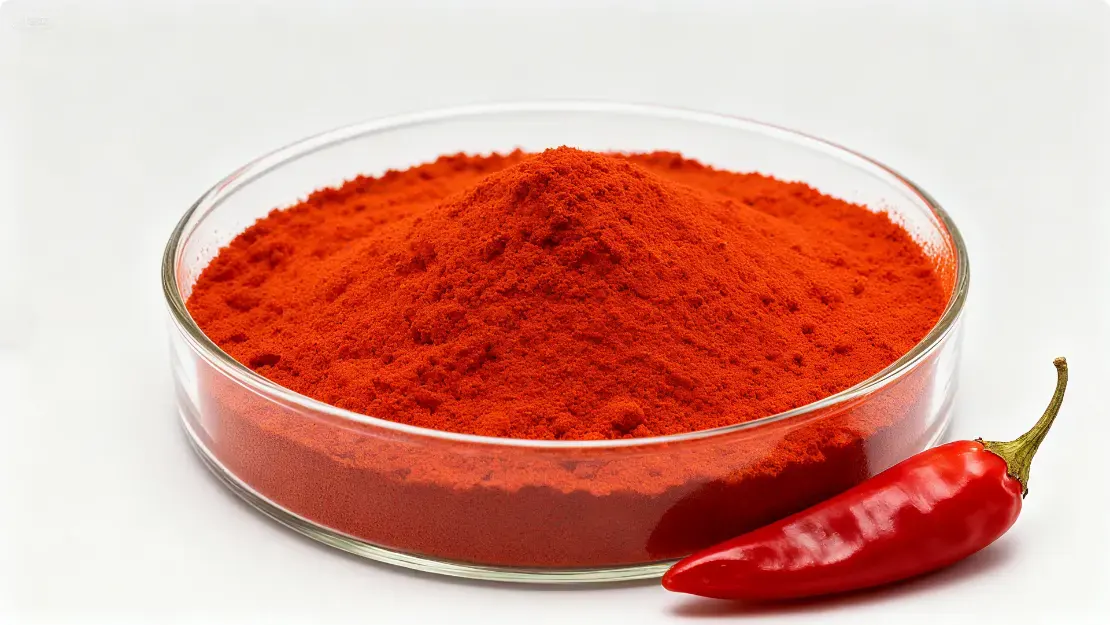

Buyers arrive at this category with a question that sounds simple: which bulk sweetener has the lowest glycemic index? The honest answer is that the number they are looking for does not exist in the form they expect. The glycemic index is measured on a food, in people, against a fixed portion of available carbohydrate. It is not a specification line you can put on a purchase order, and two suppliers quoting "GI 0" are not necessarily quoting the same measurement, or any measurement at all.
What can be specified is the ingredient: its identity, its assay, its particle size, its energy contribution, and the way it behaves when you take sugar out of a formula. Those are the things that decide whether a low-GI claim survives contact with a production line.
This guide covers the four bulk sweeteners we supply — stevia extract, monk fruit extract, erythritol and allulose — and the decisions that sit between a low-GI brief and a repeatable wholesale order. It is a formulation and labelling guide, not dietary advice.
The glycemic index compares the blood glucose response to a test food containing 50 g of available carbohydrate against the same amount from a reference food, usually glucose or white bread. Three consequences follow, and each one changes how you should read a supplier's claim.
First, the measurement belongs to the finished food, not the raw material. A biscuit made with erythritol still contains flour, and the flour sets the response. Replacing the sugar changes one input into a multi-input system; it does not transfer a number from the ingredient to the pack.
Second, the index is defined per 50 g of available carbohydrate. A high-intensity sweetener contributes almost no available carbohydrate, so the test cannot be run on it in any meaningful way. When a supplier writes "GI 0" against stevia or monk fruit, what is usually meant is that the material is not a carbohydrate source and produces no measurable glucose response at the doses tested. That is a reasonable statement. It is not a glycemic index.
Third, dose and matrix decide the outcome. The same polyol at 3% and at 30% of a formula produces very different post-prandial curves, and co-ingested protein, fat and fibre shift the curve again. This is why a formulation that tests well in a yoghurt can behave differently in a beverage, even with identical sweetener and identical percentage.
The practical translation: specify the ingredient precisely, then measure the food. A supplier who offers to send sensory and analytical data on your application is more useful than one who sends a glycemic index table.
Bulk sweeteners split into two jobs that are easy to confuse. High-intensity materials deliver sweetness with almost no mass. Polyols and rare sugars deliver sweetness and the mass that sugar used to occupy. A low-GI project almost always needs both, because removing sugar removes roughly a kilogram of solids for every kilogram of sugar replaced.
| Material | Type | Sweetness vs sucrose | Energy | Glycemic impact | What it contributes |
|---|---|---|---|---|---|
| Stevia extract (Reb A / Reb M) | High-intensity | 200–350× | Negligible | No measurable response | Sweetness only; no bulk, no browning |
| Monk fruit extract (10–50% mogroside V) | High-intensity | 150–250× | Negligible | No measurable response | Sweetness with a rounder profile; no bulk |
| Erythritol | Polyol | 0.6–0.7× | 0 kcal/g (US and EU labelling) | No measurable response | Bulk, cooling effect, no browning |
| Allulose | Rare sugar | 0.7× | 0.4 kcal/g (US) | Negligible response | Bulk, browning, softer texture |
The sweetness multiples are ranges because they depend on the grade. A 95% Rebaudioside A extract and a Reb M-rich extract do not taste identical at the same sweetness equivalence, and a 50% mogroside V monk fruit powder is not a 10% grade with water added — the impurity profile changes both the potency and the flavour.
Published glycemic index values are useful for orientation and dangerous for labelling. The table below gives the figures most commonly cited, with the caveat that study design, subject population and reference food all move them.
| Material | Typical published GI | Note |
|---|---|---|
| Glucose (reference) | 100 | Definitionally |
| Sucrose | 65 | Fructose component lowers it below glucose |
| Fructose | 15 | Low GI, but not low calorie and not low in liver load |
| Isomaltulose | 32 | Fully digested, slowly; still 4 kcal/g |
| Tagatose | 3 | Rare sugar; limited commercial supply |
| Maltitol | 35–50 | Polyol with a real glycemic response and a low laxative threshold |
| Erythritol | Not measurable | Absorbed unchanged and excreted; no available carbohydrate |
| Allulose | Not measurable | Minimal metabolism; 0.4 kcal/g in US labelling |
| Steviol glycosides | Not applicable | Not a carbohydrate source at use levels |
| Mogrosides | Not applicable | Not a carbohydrate source at use levels |
Two cautions. A low glycemic index is not the same as low calorie — fructose is the clearest example, and it is also the reason "low GI" alone is a poor brief. And "not measurable" is not a physiological guarantee; it describes the result at the doses tested in the studies available, not a promise about your product.
If your specification calls for isomaltulose or tagatose, treat that as a separate sourcing exercise. They are legitimate options and they are not part of the four grades we ship.
Sugar is not only a sweetener. In most formulas it is also bulk, water activity control, browning substrate, freezing point depressant and crystal former. A low-GI brief that addresses only sweetness produces a product that tastes right and behaves wrong. The failures cluster in six places.
Sweetness timing is the seventh, and the one that decides whether a panel accepts the product. Steviol glycosides can read bitter or linger at high dose; Reb M is cleaner than Reb A at equivalent sweetness. Monk fruit is rounder but carries its own back note at high inclusion. Blending is usually how that gets solved, and it is covered below.
Wholesale sweetener quotes are almost always per kilogram, and per kilogram is the wrong denominator for everything except freight. The number that decides your cost is price divided by sweetness delivered.
The arithmetic is simple and it reverses intuitions. If erythritol costs five times as much as sucrose per kilogram but delivers 0.7 of the sweetness, one kilogram of erythritol replaces 0.7 kg of sucrose, so the cost per sweetness unit is roughly seven times the sugar baseline — before you count the extra freight, because you are shipping 1.43 tonnes for every tonne of sugar removed.
High-intensity materials invert the picture. A steviol glycoside extract at 200× costs far more per kilogram and dramatically less per sweetness unit, and it saves freight because the mass is negligible. What it does not save is the bulk you still have to buy back with a polyol. That is why the two families are quoted together in a serious cost model, not separately.
Build the comparison on four lines: price per kg, sweetness equivalence at your target intensity, mass required per tonne of finished product, and freight plus duty to your port. Suppliers who quote only the first line are quoting a number, not a cost.
Two suppliers can both ship "99% erythritol" and behave differently on the same line. These are the lines worth fixing in writing before the first purchase order.
This is where low-GI projects fail after the product works. The claim you intend to print decides which ingredient you can use, not the other way round.
European Union. There is no authorised "low glycaemic" health claim for sweeteners under Regulation (EC) 1924/2006, so a pack cannot simply state a glycemic index. "No added sugar" is a nutrition claim with conditions in the Annex: the product may not contain added mono- or disaccharides, and where it contains naturally occurring sugars the label must say so. Foods containing more than 10% added polyols must carry the statement that excessive consumption may produce laxative effects, under Regulation (EU) 1169/2011. Allulose is not authorised in the EU.
United States. FDA has no defined regulatory meaning for "low glycemic", and a glycemic claim would need substantiation appropriate to the product. "Sugar free" is defined as less than 0.5 g sugars per serving. Allulose is permitted and, under the 2019 labelling guidance, is excluded from total and added sugars and declared at 0.4 kcal/g — a labelling rule that applies in the US only.
United Kingdom. Retained EU rules apply in substance, and allulose is not authorised there either, so a US formulation cannot simply be shipped.
Indonesia and Southeast Asia. Halal certification runs through BPJPH, and registration sits with BPOM. Glycemic claims need local substantiation, and the certificate has to come from a body registered with BPJPH rather than any halal issuer.
Write the label before you write the purchase order. It is cheaper to change a sweetener than to reprint a pack.
The brief that reaches suppliers as "replace sugar with a low-GI sweetener" is really two briefs: replace the sweetness, and replace the mass. Handled separately, each one creates a defect. Handled together, they cancel out.
A typical architecture pairs a high-intensity material for the sweetness curve with a polyol or rare sugar for the bulk. Stevia or monk fruit carries the top note at a fraction of a percent; erythritol or allulose fills the volume and takes over the functional jobs — moulding, mouthfeel, freezing point. The ratio is set by the application, not by the sweetener: a beverage needs far less bulk than a chocolate, and a baked good needs browning that only allulose will supply.
Granulation matters as much as ratio. A blended powder where the two components have different particle sizes will separate in the bag and dose unevenly on a volumetric feeder. Co-granulating the blend fixes both segregation and dust, which is why we offer it rather than shipping two bags and leaving the mixing to the customer.
Most sweetener projects lose time in the same place: a bench sample that proves sweetness and says nothing about the line. Sequence the trial so each stage answers one question.
Send five things with the sample request and the first reply becomes useful instead of generic: the application, the process temperature and pH, the target sugar reduction, the destination market, and the claim you intend to print. With those, a supplier can tell you which grade is worth trialling and which claim will not survive the label review.
Samples ship in 1 kg bags. Production volumes ship in 25 kg drums, palletised for export. Erythritol and allulose are quoted by the pallet once volume is fixed; stevia and monk fruit extracts can move from a few kilograms upward, which is what lets a formulation be finalised before anyone commits to a drum.
Minimum order quantity, lead time and price are confirmed per specification and destination port rather than published as a list, because freight and duty move more than the material cost does. In-stock standard grades typically ship within one to two weeks; a custom granulation or a private-label pack adds a production slot.
If you are working on a sugar-reduction project, send the application, the target reduction and the market you sell in, and we will propose a starting blend with the documents your label needs. Free samples of stevia extract, monk fruit extract, erythritol and allulose are available for bench trials, and the natural sweeteners range sets out the grades side by side. Request a quote or a sample.
 Stevia ExtractReb A and Reb M grades at 200 to 350 times the sweetness of sucrose, with…Read More »
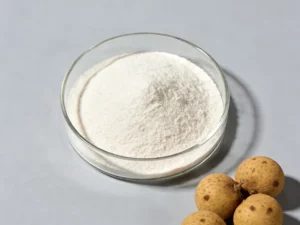 Monk Fruit ExtractMogroside V grades at 10%, 20%, 25% and 50%, where the grade decides both the potency…Read More »
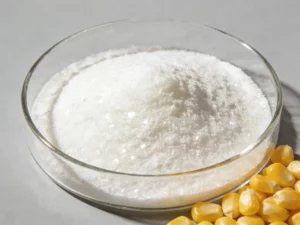 ErythritolA polyol that supplies bulk with no measurable glycemic response and 0 kcal/g under both US…Read More »
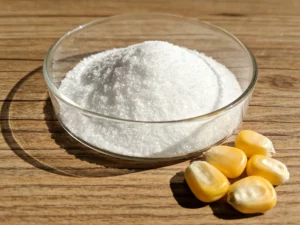 AlluloseThe only bulk sweetener in the range that browns, counted at 0.4 kcal/g in the US…Read More »
Erythritol, allulose, stevia and monk fruit all produce no measurable glucose response at the doses tested, so ranking them against each other is not meaningful. The glycemic index is defined per 50 g of available carbohydrate, and none of these materials contributes a meaningful amount. What matters for your pack is the response of the finished food, which depends on the flour, starch and sugars that remain in the formula.
No, and the two claims are governed by different rules. Sugar-free is a defined nutrition claim, for example less than 0.5 g sugars per serving in the United States, and it says nothing about glycemic response. Fructose is the clearest illustration of the gap: it has a low glycemic index and is still a sugar with the same energy density as sucrose.
It depends on the market, and in most of them the answer is more restrictive than buyers expect. The European Union has not authorised a low glycaemic health claim for sweeteners, so the claim cannot simply be printed. The United States has no defined regulatory meaning for low glycemic, so any statement needs substantiation appropriate to the product. Write the label before you fix the formulation.
Erythritol dissolves with a negative heat of solution, so it absorbs heat from the mouth as it dissolves. In chocolate, gum and mint applications that reads as refreshment; in a dairy drink at high dose it reads as a defect. Allulose has a much milder effect, which is one reason the two are often blended rather than used alone.
Yes, and it is the usual architecture for a sugar-reduction project. The high-intensity material carries the sweetness curve at a fraction of a percent, while the polyol or rare sugar replaces the bulk that sugar used to provide. The ratio is set by the application, and co-granulating the blend prevents the two components from separating in the bag.
Samples ship in 1 kg bags and production volumes ship in 25 kg drums, palletised for export. Erythritol and allulose are normally quoted by the pallet once volume is fixed, while stevia and monk fruit extracts can be supplied from a few kilograms upward. Minimum order, lead time and price are confirmed per specification and destination port.