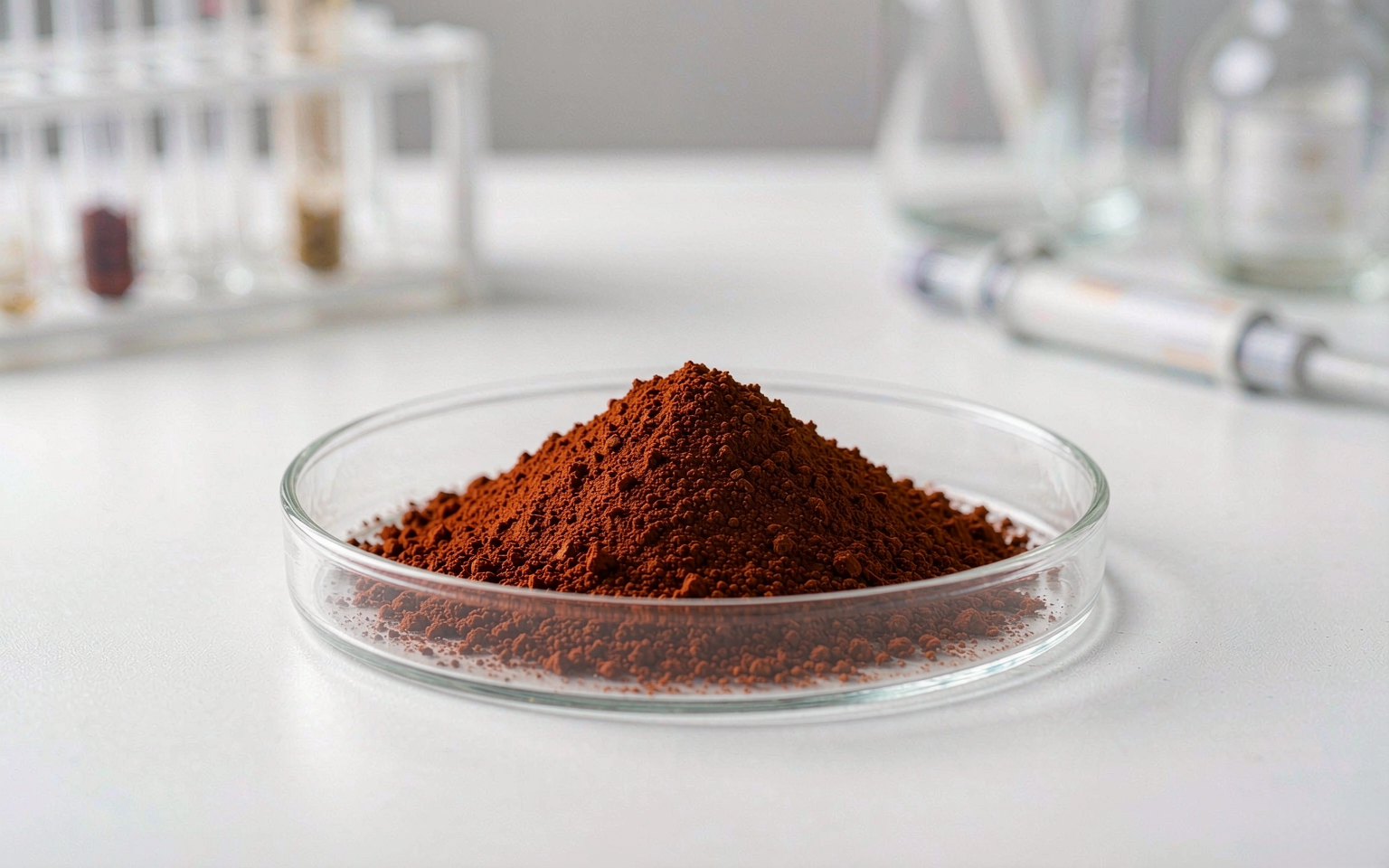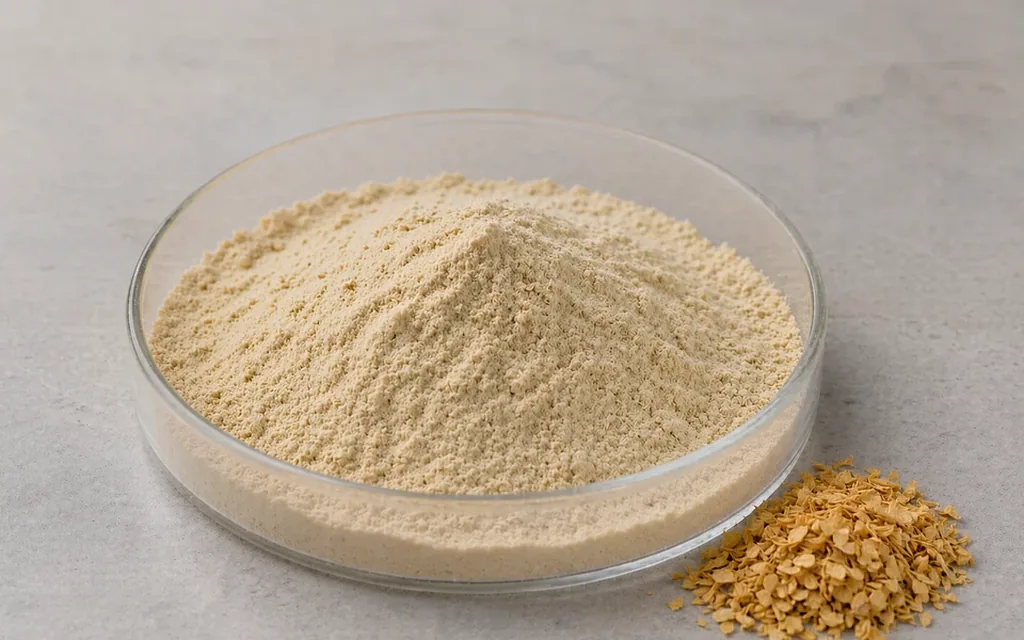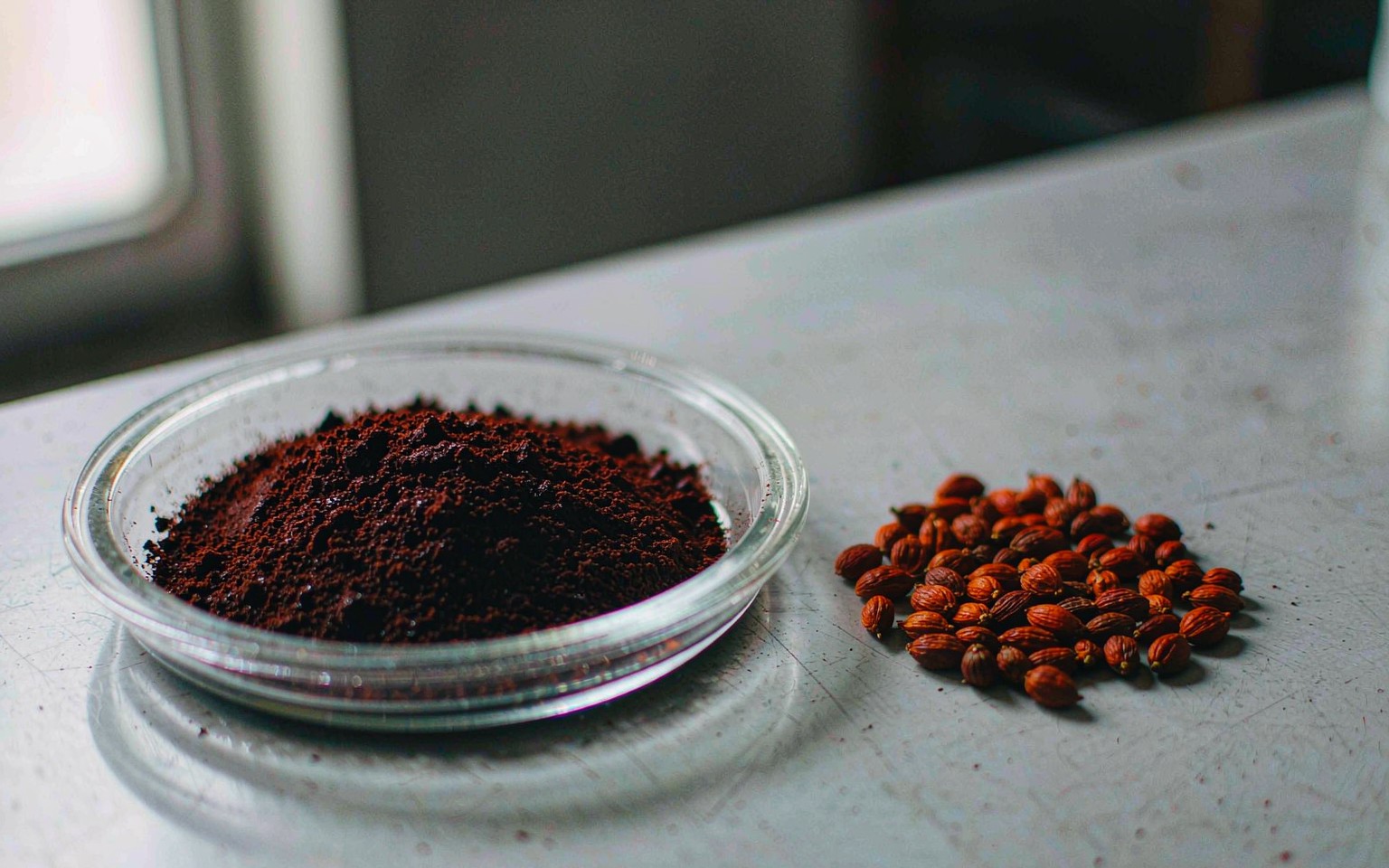

Shelves worldwide are built on soy and pea, and both have spent the last decade absorbing criticism that yeast protein never had to answer: allergen declarations, antinutritional factors, beany off-notes and GMO sourcing questions. That does not make yeast protein the right choice for every project — it is more expensive per kilogram than either — but the comparison is more lopsided than ingredient-category labels suggest. What follows is organised around the attributes that actually decide the substitution: what each protein is, how the labels read, what the amino acid data shows, what each does to flavour, and where the cost difference stops mattering. The dairy-side comparison is covered separately in our yeast protein versus whey analysis.
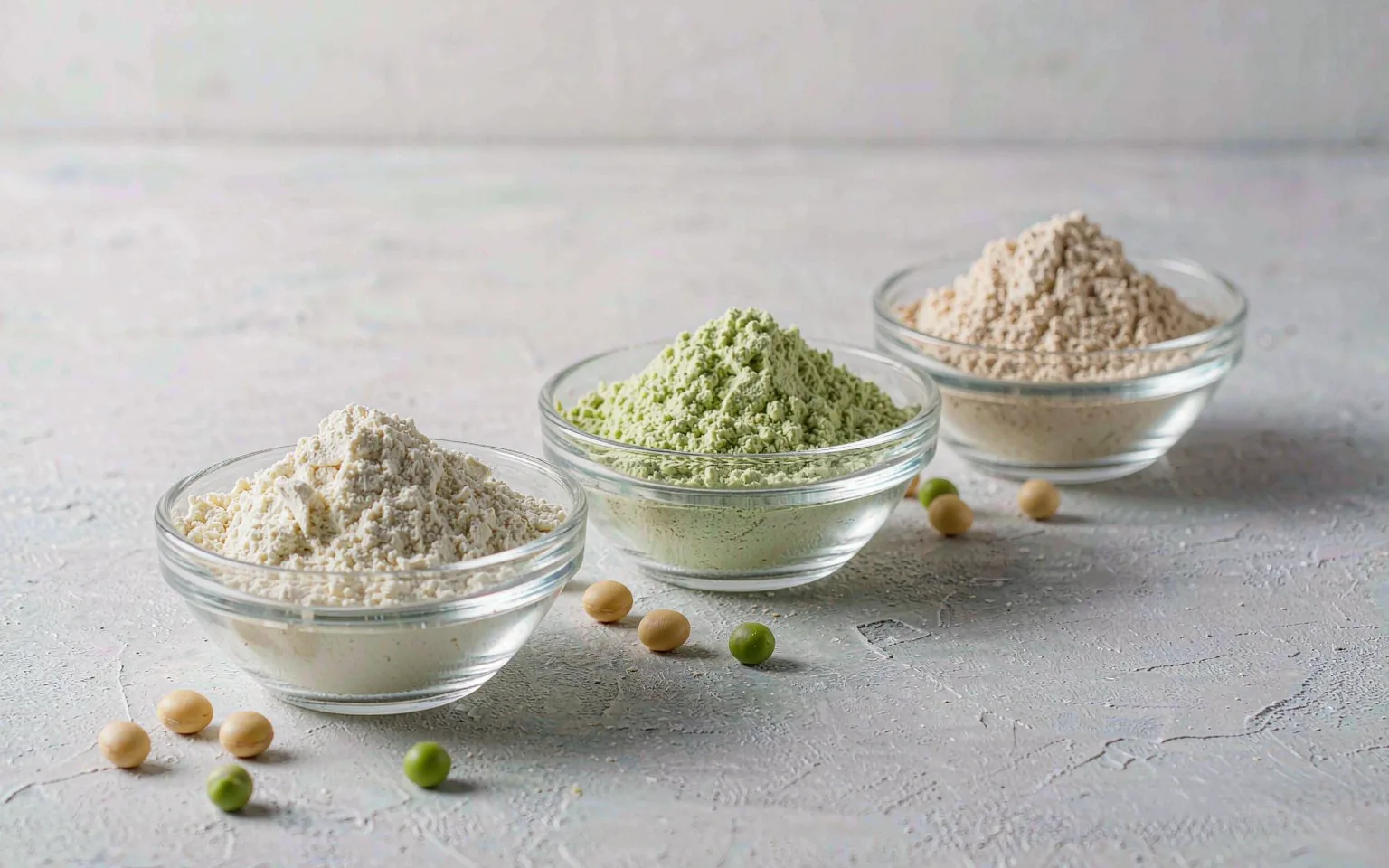
One correction before the comparisons start. Yeast protein is not a plant protein. It is produced by fermenting Saccharomyces cerevisiae and separating the protein fraction from the cell mass, which places it in a different regulatory and labelling category from soy or pea. That single fact drives several of the differences below.
| Attribute | Yeast protein (80%) | Soy protein isolate | Pea protein isolate |
|---|---|---|---|
| Source | Fermentation of S. cerevisiae | Defatted soy flakes, extracted | Dry or wet-milled yellow peas |
| Protein (typical, dry basis) | 80% min | 85–90% | 80–85% |
| Declared allergen (US Big 9 / EU 14) | No | Yes (soy, both lists) | No (EU 14: no; UK FSA lists as an allergen to watch) |
| GMO status of source crop | N/A — not a crop; substrate origin must be traced | Mostly GM unless identity-preserved | Mostly non-GM; verify per lot |
| Antinutritional factors | None of note | Trypsin inhibitors, oligosaccharides | Oligosaccharides, some lectin residue |
| Characteristic flavour | Light savoury / umami | Beany, bitter at high use | Beany, green, bitter at high use |
| Pectin or gum synergy | Moderate | Well-characterised | Good in beverage systems |
| Relative cost per kg protein | Highest | Lowest | Mid |
Soy is one of the nine major allergens declared under the US Food Allergen Labelling and Consumer Protection Act and one of the fourteen under Annex II of Regulation (EU) 1169/2011. That is not a defect — it is a fact of the ingredient — but it shapes what the finished label can claim. A soy-based protein bar cannot carry an allergen-free statement, and every export market's labelling review has to account for the declaration, which is the supply-chain evidence behind a soy-free claim — a separate problem from the chemistry.
Pea protein occupies an intermediate position. It is not on either statutory allergen list, but it is an emerging allergen: the UK Food Standards Agency added pea to its list of allergens requiring attention, and clinical literature has documented IgE-mediated reactions with increasing frequency as pea protein use has spread into mainstream foods. Some buyers now ask suppliers to confirm pea protein is absent from shared lines, which would have been an unusual question five years ago.
Yeast protein carries no allergen declaration in any of the frameworks we supply into. The practical consequence for a formulator is a label that lists the protein without a "contains" line, and a clean cross-over story for consumers avoiding soy or dairy.
The full nine-row comparison of yeast, whey and soy against the FAO/WHO reference pattern is published on the yeast protein product page and is not repeated line by line here. The row that matters when soy and pea are in the frame is the sulphur amino acid one:
| Amino acid (mg/g protein) | Yeast protein | Soy isolate | Pea isolate | FAO/WHO adult pattern |
|---|---|---|---|---|
| Sulphur amino acids (Met + Cys) | 34.9 | 26.0 | 18 | 23 |
| Lysine | 94.8 | 62.0 | 72 | 48 |
Values are published reference figures for the ingredient classes; individual supplier lots differ. Confirm against the supplier's own certificate before formulation.
Read that table twice. Soy isolate clears the lysine bar comfortably but sits below the reference on methionine plus cysteine; pea isolate misses both rows and is the reason pea formulations are routinely blended with a second protein rather than standing alone. Yeast protein clears both rows with margin. That single asymmetry explains most of the blending behaviour seen in commercial formulations: when a project blends, it is usually solving this row, not chasing a headline protein number.
Pea protein's beany and green notes are well documented and usually need masking systems — added flavours, sweeteners, or processing steps — that carry their own cost and label implications. Soy protein is more neutral than pea but develops bitterness at higher inclusion rates, which is why high-protein soy formulations often list cocoa, salt or flavourings earlier in the ingredient statement than buyers expect.
Yeast protein carries a light savoury note instead. At low single-digit inclusion rates most consumers read it as richness rather than as a flavour defect. In savoury applications — meat analogues, soups, sauces — the note is an asset. In neutral-flavoured applications such as vanilla beverages or unflavoured powders it still has to be managed, but it is a different problem to solve than beany masking: usually a formulation question rather than a flavour-system purchase.
Soy is the most GMO-exposed protein ingredient in commerce. Non-GM soy isolate is available but commands a premium and requires identity preservation through the supply chain. Pea protein is mostly non-GM at source, but the question still has to be asked per supplier and per lot.
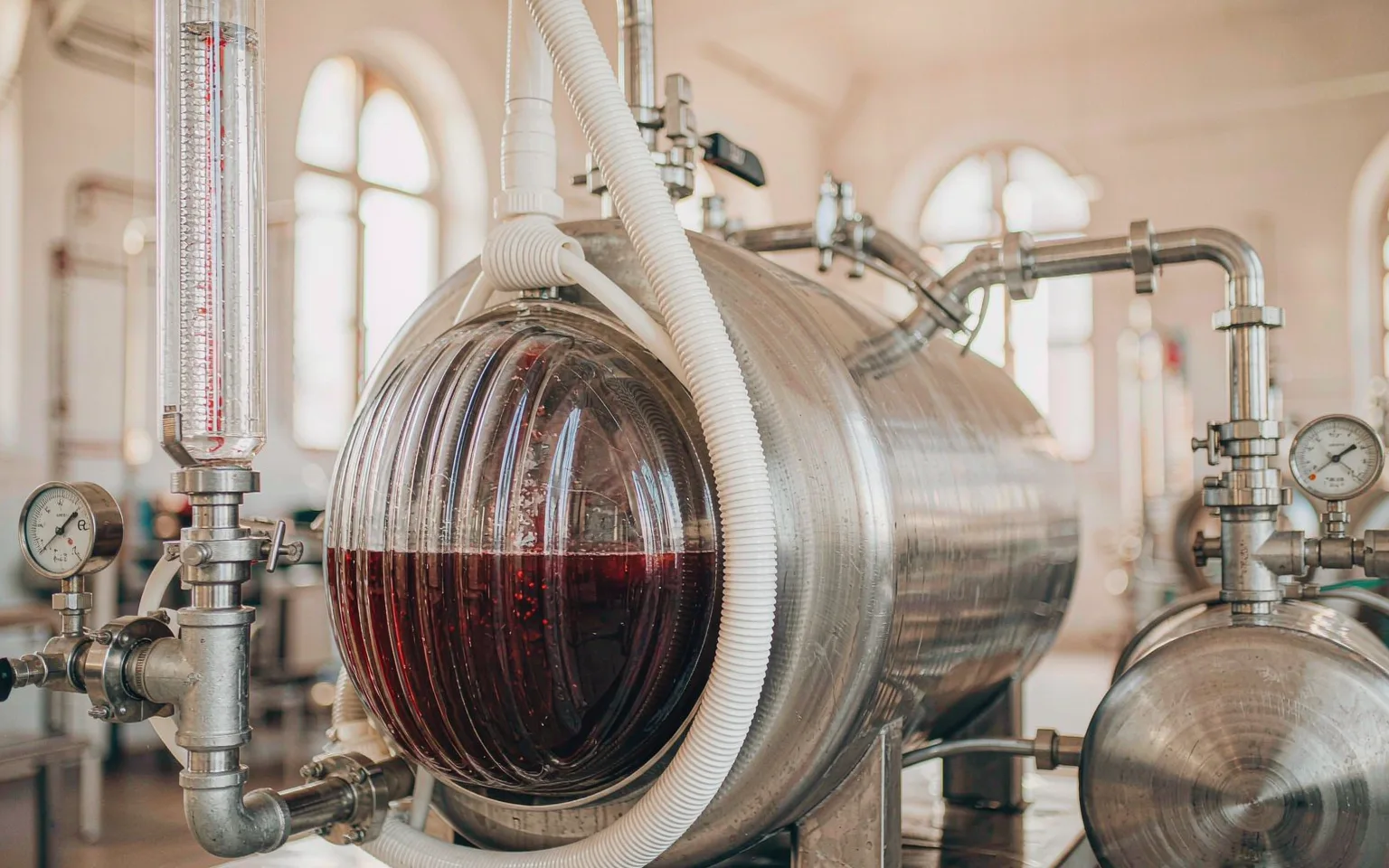
Yeast protein is not a crop, so the question changes shape. The organism is not genetically modified in our process, but the fermentation substrate — typically molasses or a glucose source — has an agricultural origin of its own. Buyers who need a non-GM claim should ask two questions of any yeast protein supplier: what the substrate is, and whether the claim rests on the organism, the substrate, or both. We answer both questions in writing on request.
The substitution question has a different answer depending on what the project is optimising for, and pretending otherwise is how bad ingredient decisions get made.
| Project priority | Usually the better fit | Why |
|---|---|---|
| Lowest cost per gram of protein | Soy isolate | Mature supply chain, largest volume, lowest price |
| No mandatory allergen declaration | Yeast or pea | Soy is a declared allergen; pea is an emerging one |
| Dairy-free, soy-free positioning | Yeast | No allergen declaration, no legume association |
| Neutral-flavour beverage at high protein | Pea + masking, or yeast | Pea needs flavour work; yeast has a different, smaller problem |
| Savoury applications | Yeast | Savoury note contributes rather than conflicts |
| Non-GM sourcing with documentation | Yeast or verified pea | Soy non-GM chain is costly to maintain |
If the comparison above lands on yeast protein for your project, the supplier questions differ from the ones you would ask a soy or pea vendor. The documents that matter are the same in kind — specification, certificate of analysis, regulatory position — but the content differs because the ingredient is made differently.
The framing of this article as a head-to-head slightly misrepresents how the market works. In practice, yeast protein most often enters a formulation as a partial replacement or a label solution rather than a total substitution: a soy-based bar adds yeast protein to drop the allergen statement, or a pea-based beverage blends it to close the sulphur amino acid gap. What the blend then does at pH 3.8 is a separate question, and whether that blend survives an acidic drink is where that one starts. The comparison that matters is not which protein is universally best, but which combination meets the label, the amino acid target and the cost envelope simultaneously.
Soy wins on cost and supply depth. Pea wins on supply availability and mid-range price, and needs flavour work and blends to reach its best form. Yeast protein wins wherever the label, the amino acid ceiling or the sourcing story is the binding constraint, and costs more for that position. The way to decide is the same as for any ingredient decision: run the three candidates through your own formulation, on documents rather than on category names. The yeast protein buyer's guide collects the document and regulatory questions in one sequence.
Better for what? Soy isolate is cheaper per kilogram and has a deeper supply chain, which makes it the right choice where cost per gram of protein is the binding constraint. Yeast protein is not a declared allergen in any major framework, has no antinutritional factors, and its amino acid profile does not fall short on sulphur amino acids the way soy does. If the label, the allergen statement or the sourcing story matters to the product, yeast protein usually wins; if price is the only variable, soy usually does.
Pea is not on the US Big 9 list or EU Annex II, but it is recognised as an emerging allergen: the UK Food Standards Agency has flagged it and clinical reports of IgE-mediated reactions have risen as pea protein use has spread. Some buyers now specify that finished products be free of pea protein cross-contact, which affects co-manufacturing choices. It is a manageable position, but it is not the unqualified "allergen-free" reputation pea sometimes gets.
It can functionally replace either in many applications, but complete replacement is rarely the right starting point. Yeast protein costs more per kilogram, so the usual approach is partial replacement — enough to move the label claim or close the amino acid gap — then reformulation around flavour and texture. Running a full replacement trial alongside a partial one costs little extra and often finds the cheaper answer.
It is not a plant ingredient, strictly speaking — it is produced by fermenting Saccharomyces cerevisiae, a fungus. It is generally accepted within vegan and vegetarian diets because no animal is involved, and it is free of dairy, soy, egg and the other major allergens. If your label makes a "plant-based" claim, that claim needs to be worded against your own market's regulations rather than assumed.
Specification sheet, recent batch certificate of analysis, allergen statement, GMO status declaration and the regulatory pathway for your destination market. For yeast protein specifically, also ask for the fermentation substrate origin and the nucleic acid figure. The same request list works for soy and pea suppliers, which makes the three candidates directly comparable.
 Yeast ProteinThe 80% fermentation protein this comparison describes, with per-batch amino acid data and COA.Read More »
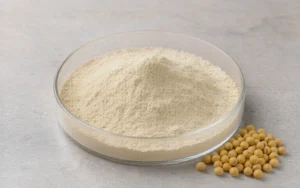 Soy Protein IsolateThe cost benchmark of the three, with the allergen declaration that shapes finished labels.Read More »
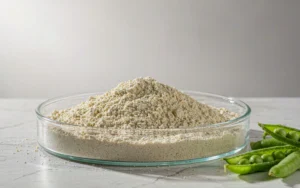 Pea Protein IsolateMid-price and widely available; the blending partner that closes sulphur amino acid gaps.Read More »
Better for what? Soy isolate is cheaper per kilogram and has a deeper supply chain, which makes it the right choice where cost per gram of protein is the binding constraint. Yeast protein is not a declared allergen in any major framework, has no antinutritional factors, and its amino acid profile does not fall short on sulphur amino acids the way soy does. If the label, the allergen statement or the sourcing story matters to the product, yeast protein usually wins; if price is the only variable, soy usually does.
Pea is not on the US Big 9 list or EU Annex II, but it is recognised as an emerging allergen: the UK Food Standards Agency has flagged it and clinical reports of IgE-mediated reactions have risen as pea protein use has spread. Some buyers now specify that finished products be free of pea protein cross-contact, which affects co-manufacturing choices. It is a manageable position, but it is not the unqualified allergen-free reputation pea sometimes gets.
It can functionally replace either in many applications, but complete replacement is rarely the right starting point. Yeast protein costs more per kilogram, so the usual approach is partial replacement — enough to move the label claim or close the amino acid gap — then reformulation around flavour and texture. Running a full replacement trial alongside a partial one costs little extra and often finds the cheaper answer.
It is not a plant ingredient, strictly speaking — it is produced by fermenting Saccharomyces cerevisiae, a fungus. It is generally accepted within vegan and vegetarian diets because no animal is involved, and it is free of dairy, soy, egg and the other major allergens. If your label makes a plant-based claim, that claim needs to be worded against your own market's regulations rather than assumed.
Specification sheet, recent batch certificate of analysis, allergen statement, GMO status declaration and the regulatory pathway for your destination market. For yeast protein specifically, also ask for the fermentation substrate origin and the nucleic acid figure. The same request list works for soy and pea suppliers, which makes the three candidates directly comparable.