
Whey protein has dominated the protein ingredient market for thirty years, and for good reason: it is well characterized, functionally versatile and supported by decades of clinical research. But it is also a dairy derivative, which means it carries dairy's supply volatility, dairy's price cycles, and — for a growing segment of the market — dairy's allergen problem. Yeast protein has entered this space as the most credible non-dairy alternative with a comparable amino acid profile, and procurement teams are now being asked the question directly: can yeast protein replace whey in our formulation, and under what conditions?
This article is a buyer's comparison, not a laboratory review. It works through the five decision points that actually determine whether the substitution succeeds: amino acid adequacy, allergen and label positioning, functional behavior in real matrices, cost structure, and regulatory status. Where the data matters, it is cited; where it is uncertain, the uncertainty is stated.
The most cited argument against plant proteins is amino acid adequacy. Yeast protein largely escapes that criticism. Published reference values comparing fermentation-derived yeast protein against whey protein concentrate and soy protein isolate show the two animal-adjacent profiles converging:
| Amino acid (mg/g protein) | Yeast protein | Whey protein | Soy protein | FAO/WHO adult pattern |
|---|---|---|---|---|
| Isoleucine | 57.4 | 50.7 | 42.9 | 30 |
| Leucine | 92.2 | 109.9 | 71.6 | 61 |
| Lysine | 94.8 | 97.8 | 61.8 | 48 |
| Sulfur AA (Met + Cys) | 34.9 | 36.9 | 26.3 | 23 |
| Aromatic AA (Phe + Tyr) | 98.8 | 75.3 | 83.2 | 41 |
| Threonine | 54.6 | 51.4 | 37.3 | 25 |
| Tryptophan | 10.4 | 19.5 | 14.8 | 6.6 |
| Valine | 51.1 | 49.8 | 44.0 | 40 |
| Histidine | 26.0 | 21.3 | 26.1 | 16 |
| Essential / total AA ratio | 0.53 | 0.53 | 0.43 | >0.40 |
Source: published reference values (Chen Zhixian et al., Journal of Henan University of Technology (Natural Science Edition), 2019) comparing three protein sources under identical in-vitro digestion protocols. These are literature values, not batch-specific data — always request the amino acid certificate for the material you are actually buying.
Three observations matter for a buyer. First, the essential amino acid ratio is identical between yeast and whey (0.53), and both clear the FAO/WHO adult requirement comfortably. Second, leucine — the branched-chain amino acid most associated with muscle protein synthesis signaling — runs about 16% lower in yeast than whey. For a sports nutrition product marketed on an anabolic claim, that difference may be commercially relevant; for a general nutrition or food application, it is not. Third, lysine and the aromatic amino acids are effectively at parity, which is precisely where soy and pea fall short against dairy proteins.
The caveat: these are reference values for well-produced material. Yeast protein quality is process-dependent — the same fermentation and extraction parameters that reduce nucleic acid also influence protein integrity. A supplier who cannot produce a full amino acid certificate per batch should not be compared against these numbers at all. For a line-by-line reading of the document that carries those numbers, see what every value on a yeast protein specification means.
This is where the comparison stops being close. Whey is a milk derivative and is therefore a declared allergen under every major regulatory framework: the US Food Allergen Labeling and Consumer Protection Act (FALCPA), EU Regulation 1169/2011 (Annex II), and their equivalents in China, Canada, Australia and elsewhere. A whey-containing product must carry a milk allergen statement, which excludes the vegan, dairy-free and dairy-allergic segments by definition.
Yeast protein is not among the declared allergens in any of these frameworks. The practical consequences for a product developer:
One labeling nuance deserves attention in the EU: yeast protein, as a novel ingredient derived by conventional means from Saccharomyces cerevisiae with a history of food use, generally does not require a novel food authorization — but extracts produced by novel processes may. Confirm the production process with your supplier and, where the process is non-conventional, the novel food status with a regulatory consultant before committing to EU market entry. The US position is more settled: yeast protein from conventional fermentation is recognized as a food ingredient with GRAS determinations on file for comparable materials.
Amino acid tables do not make beverages; functionality does. Here the differences are real and matrix-dependent:
Solubility and clarity. Whey protein isolate disperses readily and can produce clear beverages at low pH after filtration. Yeast protein at 80% typically shows solubility in the 20–40% range depending on grade, and the residual fat phase — a byproduct of the yeast cell wall — creates a separate stability question in liquid systems. In practice, yeast protein performs best in semi-solids and powders: protein bars, meal-replacement shakes consumed within hours of mixing, bakery, pasta and snack systems. Clear ready-to-drink beverages remain the hardest matrix for both yeast protein and most plant proteins, for a reason that has nothing to do with the grade you buy — why plant protein settles in acid drinks.
Flavor. Whey at high inclusion carries a distinct dairy note that formulators either accept or mask. Yeast protein carries a savory, umami-adjacent note — sometimes described as "brothy" — which is an asset in savory applications (soups, snacks, meat alternatives) and a masking question in neutral or sweet applications. Grade selection matters: the 75% grade with lower flavor intensity exists precisely for this reason, and flavor-masked 80% grades are available from established suppliers.
Heat stability. Both materials withstand UHT and baking conditions better than most globular plant proteins. In bakery, yeast protein contributes structure as well as protein content, and it does not carry the beany note that limits soy at high inclusion.
The honest comparison is not "which is cheaper today" but "whose price behaves better over a planning horizon." Whey protein concentrate is a byproduct of cheese manufacturing: its price tracks dairy markets, which have cycled between roughly USD 6,000 and 12,000 per metric ton for WPC80 over the past five years, with sharp moves driven by milk supply in New Zealand, the EU and the US. Buyers of whey are effectively long dairy futures whether they intend to be or not.
Yeast protein pricing is driven by fermentation input costs — molasses and glucose substrates, energy, and fermentation capacity — which are structurally less volatile than dairy markets. At the 80% protein level, yeast protein currently prices in a comparable band to WPC80 in most B2B channels; at the 70% grade (which carries useful immune-associated polysaccharides as a co-feature), it prices below. The commercial argument is therefore less about a headline discount and more about price predictability plus hedging diversification: formulators carrying both materials are less exposed to any single commodity cycle.
Synthesizing the four points above into a procurement position:
| If your priority is… | Whey | Yeast protein |
|---|---|---|
| Maximum leucine per gram for an anabolic claim | Stronger fit | Acceptable; ~16% lower leucine |
| Vegan / dairy-free claim | Not possible | Stronger fit |
| Clear RTD beverage | Stronger fit | Limited; test stability first |
| Bar, bakery, pasta, savory applications | Fit | Fit, with umami advantage in savory |
| Price stability over 12–24 months | Exposure to dairy cycle | Structurally less volatile |
| Supply diversification | Adds dairy exposure | Adds fermentation exposure — complementary |
The pattern that has emerged among commercial food manufacturers is not wholesale replacement but portfolio blending: yeast protein carrying the no-mandatory-allergen and price-stability load in bars, bakery and savory lines, with whey retained where its functional clarity or leucine density is genuinely needed. A blended protein system also softens the label impact of either material's cost movement.
If you would rather see the whole comparison set out as a purchasing sequence than a single head-to-head, the complete yeast protein buyer's guide collects the grade, document and regulatory questions in one place.
A structured evaluation on those five documents, run against one whey control in your own formulation, will answer the substitution question for your product specifically — which is the only version of the question that matters.
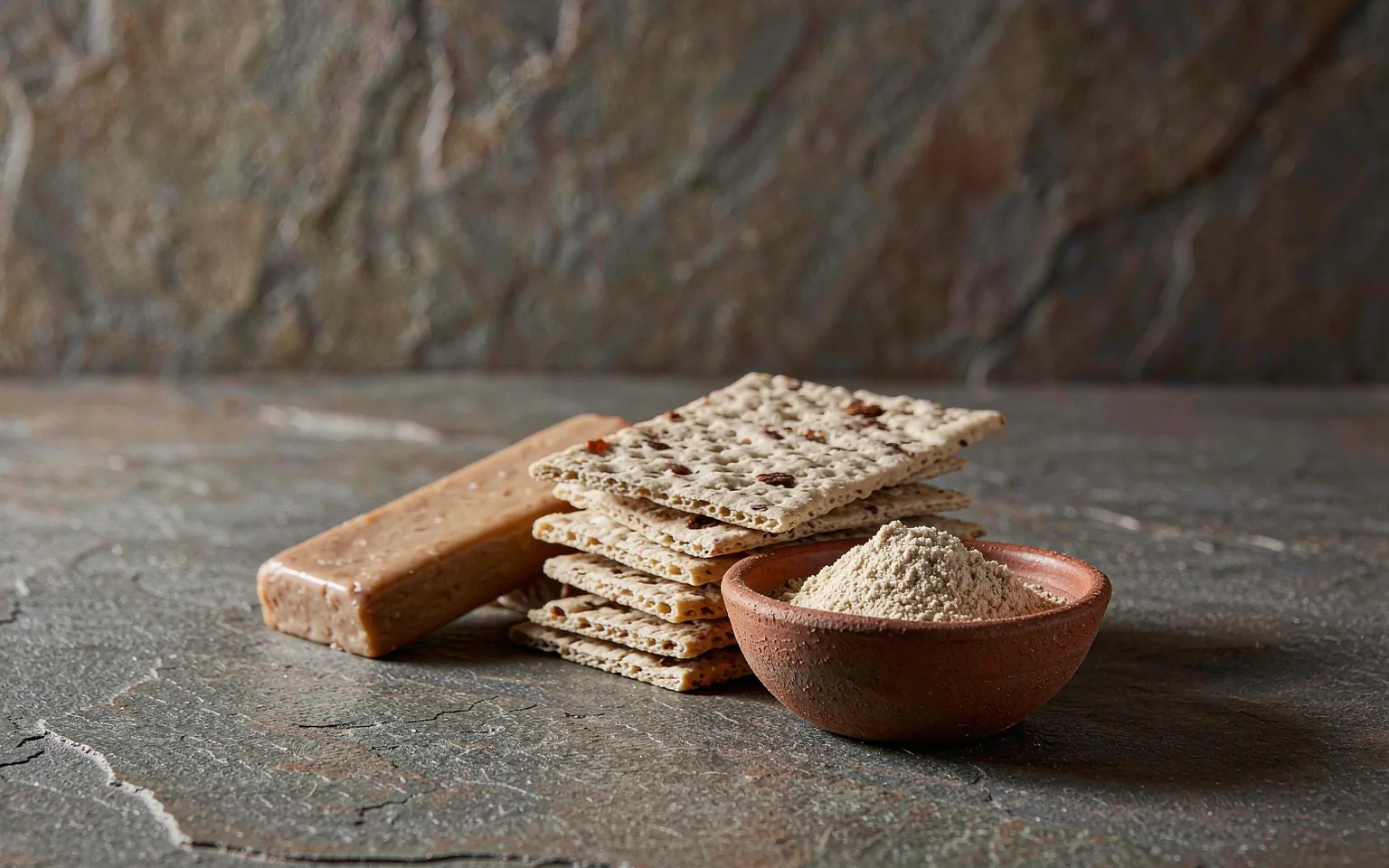
 Yeast Protein80% fermentation protein with per-batch amino acid data and COA, for evaluation against dairy benchmarks.Read More »
 Soy Protein IsolateHigh-PDI plant isolate; the allergen-labelling contrast to both whey and yeast protein.Read More »
 Pea Protein IsolateThe other common dairy-free comparison; lysine-limited relative to both whey and yeast.Read More »
Published reference values show the same essential-to-total amino acid ratio (0.53) and near parity on lysine and the sulfur amino acids. The one meaningful gap is leucine, about 16% lower in yeast protein. For general nutrition and most food applications the profiles are functionally equivalent; for a product marketed specifically on leucine or BCAA content, the difference is worth formulating around.
Not universally. In bars, bakery, pasta, savory and powder blends the substitution is usually straightforward. In clear ready-to-drink beverages, whey's solubility and clarity advantages remain hard to match, and a yeast protein trial should include stability testing in the finished matrix before committing.
At the 80% protein level the two currently price in a comparable band in most B2B channels; the 70% yeast grade prices below. The stronger commercial argument is volatility: whey tracks dairy commodity cycles, while yeast protein pricing follows fermentation inputs, which are structurally more stable. Many manufacturers carry both to diversify exposure.
Yes, in the buyer's favor. Whey is a declared milk allergen under FALCPA, EU Regulation 1169/2011 and their equivalents; yeast protein is not a declared allergen in any major framework. Substitution removes the milk allergen statement and can simplify a facility's allergen changeover controls.
Five documents: a per-batch amino acid certificate for the specific grade, solubility and stability data in a matrix matching your application, a site-level allergen statement, regulatory documentation (GRAS position for the US, process detail for an EU novel food assessment), and flavor-masked or low-flavor grade samples if the application is neutral or sweet.