
Every export enquiry about yeast protein eventually reaches the same question: is it legal where I am selling it? The honest answer is that there is no single answer, because the regulatory status of a yeast protein depends on three things at once — the species, the production process, and the form that is placed on the market.
This note sets out where yeast protein stands in four of the most common destination markets, what each framework actually turns on, and which questions your regulatory team will need answered before a filing or a label review.
The confusion starts with the species. Saccharomyces cerevisiae is one of the best-established microorganisms in the food supply, with a documented history of use in brewing and baking that long predates modern food law. That history is real, and it is the foundation of most favourable assessments.
But the ingredient is not the species. A yeast protein is an isolated, concentrated fraction produced by a specific combination of fermentation, enzymatic treatment, separation and drying. In several jurisdictions, including the European Union, the regulatory question attaches to that fraction and to the process that produced it, not to the organism it came from. This is why a blanket statement such as "yeast protein is permitted in the EU" should be treated as an unfinished sentence rather than a conclusion.
The United States position is the most developed of the four, and it has two independent legs.
The first is a direct additive listing. Baker's yeast protein appears at 21 CFR 172.325 among the substances permitted for direct addition to food, with nutrient supplementation as its stated use and no numerical use limit attached. Being listed means the pathway is established rather than something a supplier has to argue for.
The second is the pre-1958 history of use. Single-cell protein derived from Saccharomyces cerevisiae has a history of consumption predating the 1958 Food Additives Amendment, which places it within the GRAS framework rather than requiring pre-market approval.
Two cautions follow. First, the pathway applies to a defined ingredient form; if the form you are placing on the market differs materially from the listed or historically used material, the analysis has to be repeated. Second, the regulatory environment is moving: FDA has been signalling a shift away from the self-affirmed GRAS route and towards the submission of a GRAS Notice with a "no questions" letter. A claim of self-affirmed GRAS is therefore a weak position to build a launch on, and it is not a claim worth putting in marketing material.
The European Union framework under Regulation (EU) 2015/2283 defines a novel food as one not used for human consumption to a significant degree within the Union before 15 May 1997, and it explicitly covers food consisting of, isolated from, or produced from microorganisms, fungi or algae.
That definition is the crux. Saccharomyces cerevisiae itself has a documented history of consumption in the Union well before 1997, which supports a non-novel position at species level. Whether a particular protein isolate is a novel food is a separate question, because the definition reaches food isolated from or produced from a microorganism.
The practical route to an answer is the consultation procedure under Article 4 of the Regulation, submitted to a member state competent authority, supported by evidence of consumption history for the specific product. Suppliers should be able to describe the production process in enough detail to make that assessment possible. If a product does require authorisation rather than a non-novel determination, the process is a full novel food application: measured in years rather than months, and with a correspondingly large cost base.
The EU Novel Food Catalogue is a useful starting point but not a determination; it records the status of specific products as understood by the authorities and is updated over time.
The United Kingdom operates a retained version of the novel food framework, with the same 15 May 1997 reference date and a comparable requirement to establish status for the individual product. The practical consequence for exporters is that a favourable EU determination does not automatically carry across, and a separate UK position should be documented rather than assumed.
Turkey is the market where the position has changed most recently, which makes it the one most worth checking rather than recalling.
The Turkish Food Codex novel food regulation took effect on 20 May 2026, aligning the national framework more closely with the European approach but with a different reference point. The relevant date is 31 December 2025: a food falling within the categories the regulation covers, and not significantly consumed in Turkey before that date, is treated as novel. The categories expressly include food consisting of, isolated from or produced from microorganisms and fungi.
Three practical points follow. A product treated as novel has to appear on the applicable novel food list before it may be placed on the market, and where the status is unclear the route is a consultation with the General Directorate of Food and Control, which runs to a defined period and can be extended. A third-country traditional food with a substantial documented history of safe consumption may qualify for a faster notification route rather than a full assessment. Imports are handled through the electronic food import system, with documentary, label and physical checks.
For a supplier sampling into Turkey, the useful action is early: raise the novel food status question at sample stage rather than at order stage, so the timeline is understood before a launch date is set.
Yeast protein has an advantage that applies in every market, and it is worth stating precisely. Yeast is not on the United States "Big 9" list, the EU and UK 14-item list, the Canadian list, the Japanese mandatory list or the Chinese list.
Two disciplines go with that. The claim should be phrased as a statement about the regulatory lists — the ingredient is not one of the allergens that must be declared — rather than as "allergen-free", which is a different and stronger assertion. And where an ingredient is exempt from allergen declaration but the product is manufactured on shared equipment, that is a separate statement your quality team will want to make.
Two further European requirements are worth building into documentation now: allergen information must be emphasised in the ingredient list, and traceability records must be maintained at batch level. Both are easier to satisfy when the supplier already issues per-batch certificates of analysis.
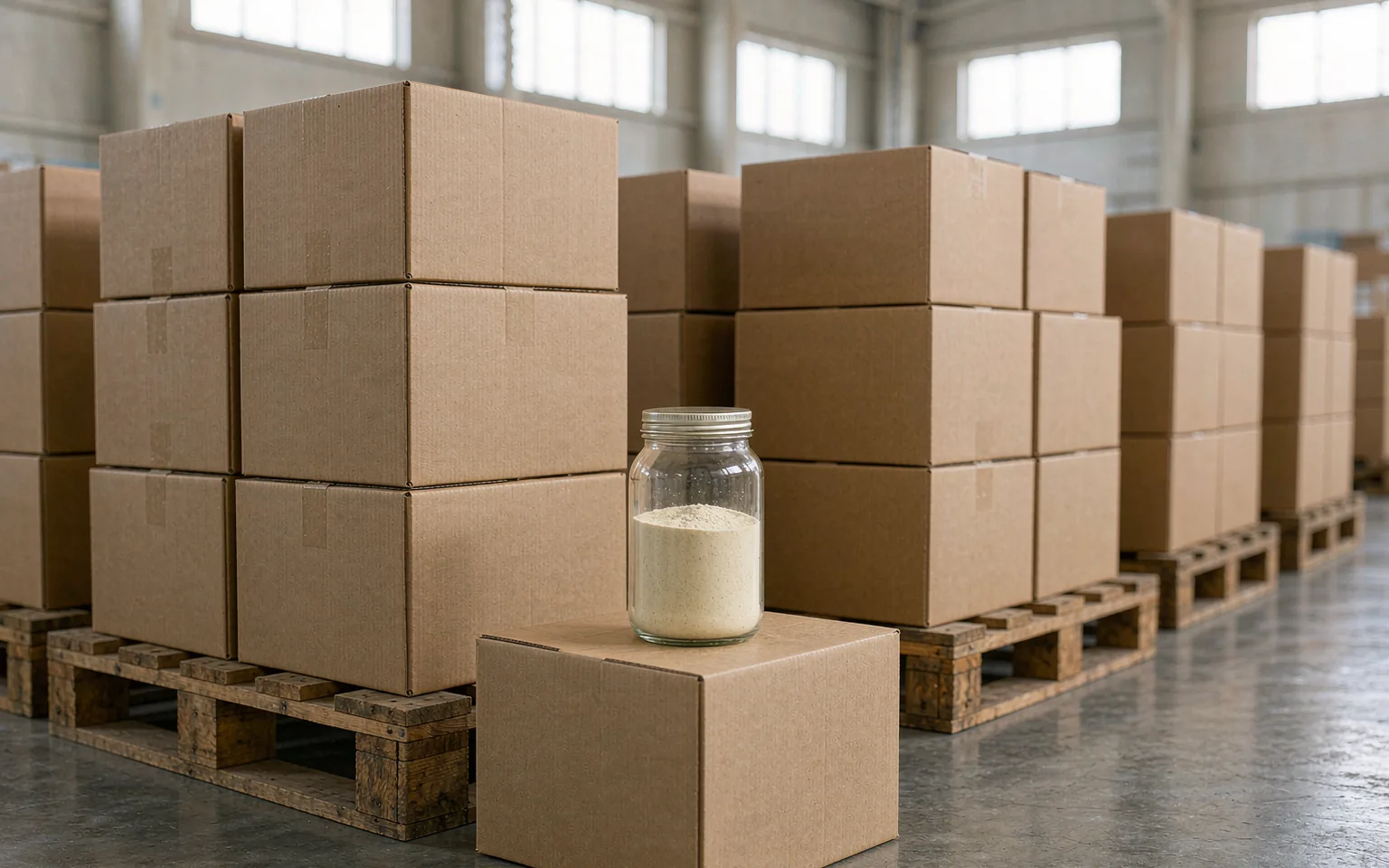
Whatever the market, the same set of documents does most of the work, and assembling it before the question is asked is what shortens the timeline.
| Document | Why the regulator or your own team asks for it |
|---|---|
| Full process description | Novel food status turns on the process, not just the organism; a description at the level of "fermentation, enzymatic treatment, separation, drying" is usually the minimum. |
| Specification and batch certificate of analysis | Establishes the composition actually being assessed, including moisture, ash and nucleic acid content. |
| Species identification | Confirms the production organism and supports the consumption-history argument. |
| Consumption-history evidence | The core of a non-novel determination in the EU and UK, and of the traditional-food route in Turkey. |
| Allergen and labelling statement | Needed for label review in every market; should state the position for the specific grade, not the category. |
| Certification set | Quality system and any site certifications, which support supplier approval even where they are not a regulatory requirement. |
One closing note on how this should be used. Everything above describes the framework as it applies to yeast protein as a category. It is not a determination about any specific product, and regulatory status depends on the ingredient form and the process. Confirm the position for your destination market and your intended use with your own regulatory team before filing.
Regulatory status is one gate a project passes through, and not the only one. Our guide to sourcing yeast protein in bulk covers the commercial side of the same decision — grade selection, documentation and sample evaluation.
If you are working through a regulatory review for a yeast protein project, send us the destination market and the intended application and we will provide the process description, specification and batch documentation that a review will ask for. The product page for yeast protein sets out the specification and grade range in more detail.
 Yeast ProteinFermentation protein supplied with the specification and batch documentation a regulatory review asks for.Read More »
 Pea Protein IsolateLegume protein with a well-established status, useful as a comparison on labelling.Read More »
 Mung Bean ProteinPulse protein with a distinct allergen position across export markets.Read More »
It depends on the product, not only the species. Saccharomyces cerevisiae has a documented history of consumption in the EU before 15 May 1997, but Regulation (EU) 2015/2283 covers food isolated from or produced from a microorganism, so a specific protein isolate may still be assessed as novel. The route to a determination is the consultation procedure under Article 4, submitted to a member state authority with evidence of consumption history.
Baker's yeast protein is listed at 21 CFR 172.325 as permitted for direct addition to food for nutrient supplementation, with no use-level limit, and single-cell protein from Saccharomyces cerevisiae has a pre-1958 history of use within the GRAS framework. The pathway applies to a defined ingredient form, so it should be confirmed for the specific form being placed on the market.
The Turkish Food Codex novel food regulation took effect on 20 May 2026 with a reference date of 31 December 2025. A product within the covered categories and not significantly consumed in Turkey before that date requires a listing on the novel food list, or a consultation with the General Directorate of Food and Control. A third-country traditional food with a long documented history of safe use may qualify for a faster notification route.
No. Yeast is not on the United States Big 9 list, the EU and UK 14-item list, the Canadian list, the Japanese mandatory list or the Chinese list. The accurate statement is that the ingredient is not one of the allergens requiring declaration, rather than that the product is allergen-free, which is a stronger claim.